
rabbit feeding bowl non slip heavy is one of those product searches people make right after the third flipped bowl, wet pellets, and a rabbit that looks proud of the mess.
A stable bowl matters more than most new owners expect, not just for keeping food off the floor, but for portion control, hygiene, and reducing the “I’ll just throw it around” habit some rabbits pick up.
This guide breaks down why bowls tip, what “non-slip” and “heavy base” actually mean in practice, how to choose materials and shapes, plus a simple setup routine that makes feeding calmer and cleaner.
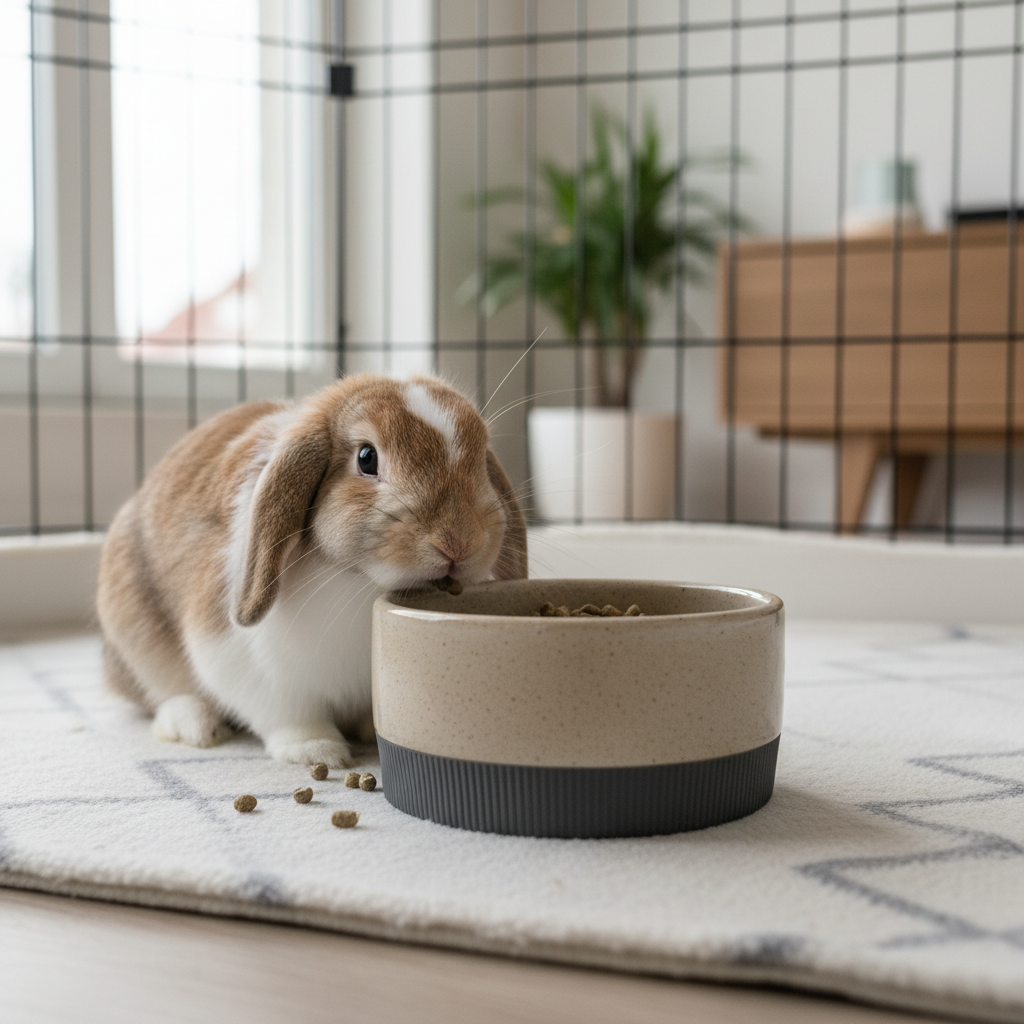
Why rabbit bowls tip (and why “non-slip” sometimes fails)
Most tipped bowls are not “bad behavior,” they’re physics mixed with curiosity. Rabbits nudge, hook, and push objects with their nose and chin, and a light bowl becomes a toy.
- Center of gravity too high: tall sides or narrow bases flip easier when nudged.
- Bowl too light for the surface: lightweight plastic on smooth flooring slides like a puck.
- Wrong placement: corners encourage leverage, rugs create uneven footing, wire floors shift under pressure.
- Food style mismatch: big pellets or chopped veg invite “digging” motions that lift the rim.
Also worth saying out loud, “non-slip” is not a single feature. A rubber ring helps on tile, but can still slide on fleece, and suction bases can fail if the surface has texture or hair.
What to look for in a non-slip heavy base bowl
When people ask for a rabbit feeding bowl non slip heavy, they usually want two outcomes: no tipping and easier cleanup. These features tend to deliver that, in real cages and pens.
Weight that matches your rabbit
A small dwarf rabbit may stop flipping a 1–1.5 lb ceramic bowl, while larger rabbits might still move it if the base is narrow. As a rule, more base contact beats “just heavier.”
A wide, flat footprint
Look for a bowl that sits low and spreads weight outward. Wide bases resist tipping even if the bowl isn’t extremely heavy.
Non-slip surface design that fits your flooring
- Silicone/rubber ring: good for tile, sealed wood, smooth plastic tray surfaces.
- Textured bottom: better grip on fleece or foam mats than a smooth ring.
- Suction: can work on truly smooth surfaces, but hair and water reduce grip.
Safe materials and easy cleaning
According to the FDA, food-contact materials should be appropriate for intended use and kept clean to reduce contamination risk. For pet bowls, the practical takeaway is simple: choose materials that don’t trap residue and that you can wash thoroughly.
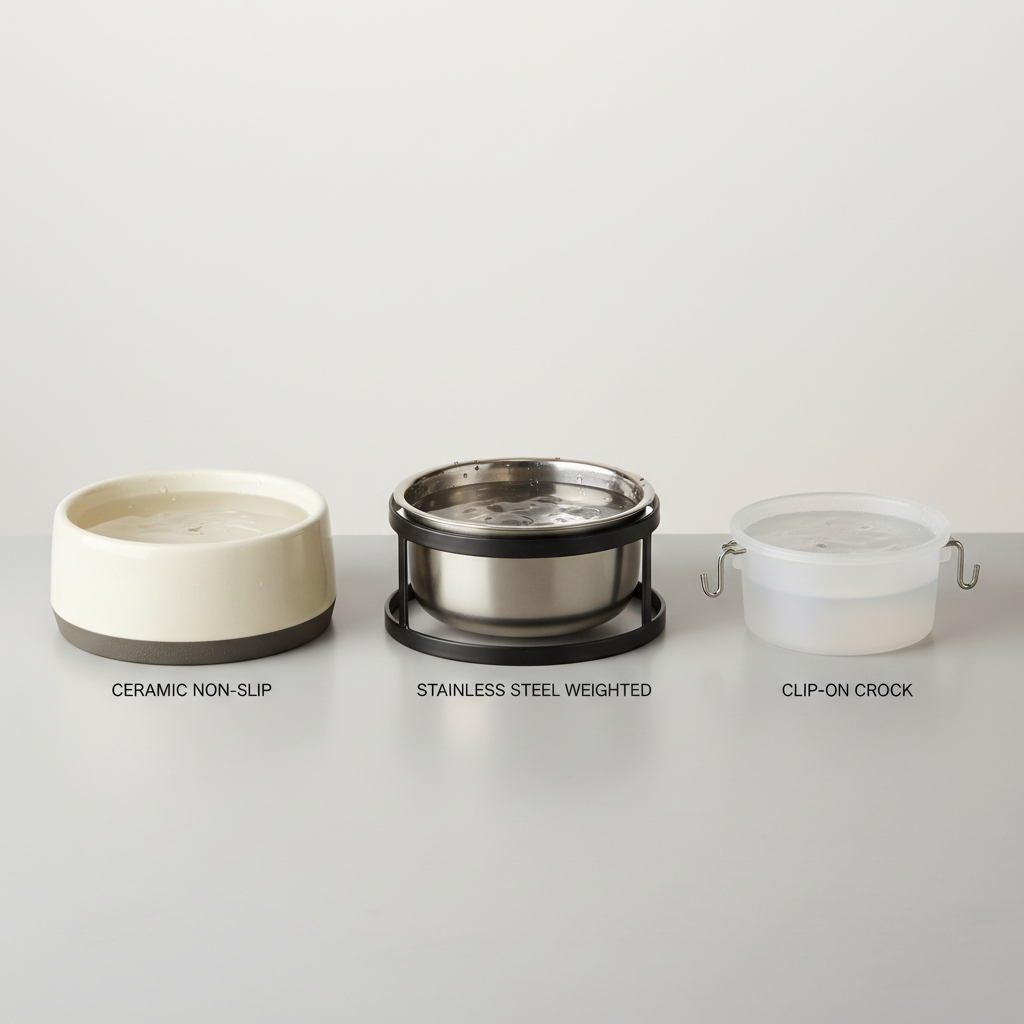
- Ceramic: heavy, stable, usually dishwasher-friendly, check for chips and crazing.
- Stainless steel in a weighted holder: hygienic and durable, weight comes from the stand.
- Plastic: light and easier to flip, can scratch and hold odor over time.
Quick comparison table: which bowl type fits which home setup
Different pens, floors, and rabbits make the “best” choice vary. This table is a shortcut for narrowing options.
| Option | Stability | Cleaning | Best for | Watch-outs |
|---|---|---|---|---|
| Heavy ceramic bowl + rubber ring | High | Easy | Most indoor pens, tile/wood | Can chip if dropped, check glaze wear |
| Stainless bowl + weighted base/stand | High | Very easy | Owners who want fast daily washing | Some stands rattle, choose low-noise designs |
| Crock-style bowl that clips to bars | Very high | Medium | Wire enclosures, rabbits that “bulldoze” bowls | Height/angle matters, can trap crumbs behind |
| Melamine/plastic bowl with non-slip bottom | Low–Medium | Medium | Temporary travel setup | Scratches, odor retention, still slide on fleece |
Self-check: do you actually need “heavy,” “non-slip,” or both?
Before buying another bowl, do a 30-second check. It saves money and frustration.
- Your bowl slides without tipping → prioritize a better grip bottom, or change the feeding surface.
- Your bowl tips in place → prioritize a wider base and lower profile.
- Your rabbit picks up the bowl → go heavier, or use a clip-on crock.
- Mess happens mainly with veggies → a wider shallow dish often works better than a deep bowl.
- Only messy at night → check placement, rabbits often “rearrange” when bored.
If your rabbit has dental issues or mobility limits, bowl height and rim shape may matter as much as stability, and a rabbit-savvy vet can help you dial that in.
Practical setup steps that stop flipping (even with the right bowl)
Buying a rabbit feeding bowl non slip heavy helps, but setup is where most people either win or keep cleaning forever.
1) Choose the right spot
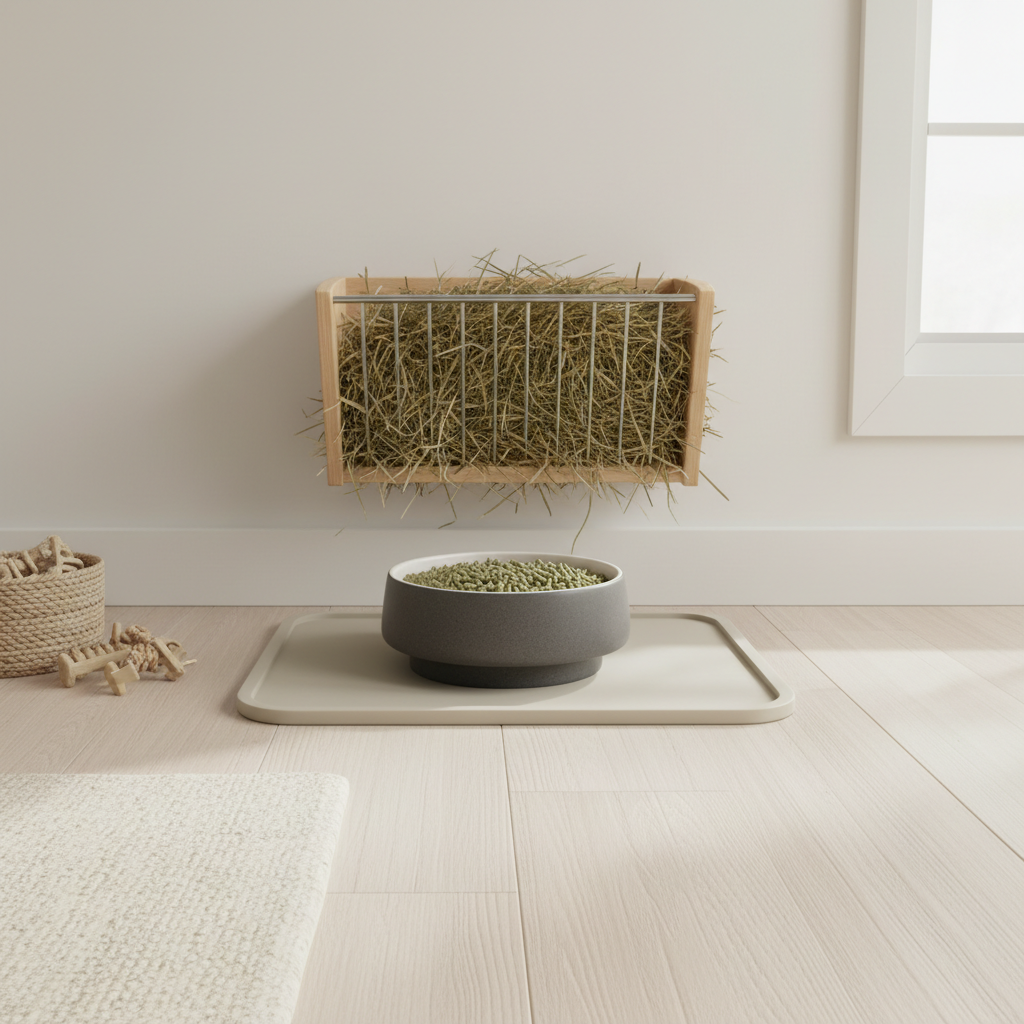
- Place the bowl on a hard, level surface when possible, a plastic feeding mat can work well.
- Leave a little space around it, tight corners give rabbits leverage to wedge and tip.
- Keep it away from the litter box edge if your rabbit kicks litter forward.
2) Add a “traction layer” if your flooring is soft
Fleece and foam are comfortable, but they reduce grip. A thin silicone mat or a rigid tray under the bowl often changes everything.
3) Reduce digging cues
- Serve pellets in a shallower dish to limit scooping motions.
- For greens, consider a larger plate-style dish so your rabbit can “graze” without lifting the rim.
4) Train the environment, not the rabbit
Some rabbits flip bowls because it gets a reaction. Quietly reset, avoid making it a game, and make the bowl less “fun” to move through weight and placement.
Safety and cleaning notes people skip (but shouldn’t)
Food bowls get gross faster than they look, especially with wet greens and pellet dust. According to the CDC, cleaning pet items and washing hands after handling pet-related materials can reduce germ spread in the home. You don’t need to panic, just build a simple routine.
- Daily: rinse and wash with hot water and dish soap, then dry.
- Weekly: dishwasher if the bowl is dishwasher-safe, or soak to loosen residue.
- Replace when needed: retire bowls with chips, cracks, or rough interior surfaces that can hold residue.
If you use ceramic, watch for hairline cracks in the glaze, those can trap food and moisture. If you use a rubber ring base, check that it stays intact and doesn’t become a chew target.
Common mistakes (and what to do instead)
- Mistake: buying “heavy” but tall and narrow
Try a lower, wider bowl even if the weight is slightly less. - Mistake: trusting suction on textured floors
Use a rigid tray or switch to a rubber-ring ceramic bowl. - Mistake: placing the bowl on bedding
Move it to a stable feeding station, keep bedding for resting areas. - Mistake: going too deep
Choose a shallow dish so food stays accessible and your rabbit doesn’t dig.
When it’s worth asking a professional
If the mess is new or sudden, it may not be about the bowl. Appetite changes, dropping food, pawing at the mouth, or refusing harder pellets can point to dental pain or other issues, and rabbits hide discomfort well.
- Frequent food dropping, wet chin, or chewing changes
- Reduced eating or selective eating that lasts more than a day
- Any sign of weight loss, lethargy, or GI slowdown
In these cases, it’s smart to check in with a rabbit-savvy veterinarian, since feeding setup tweaks won’t solve an underlying health problem.
Conclusion: a stable bowl is a small upgrade with daily payoff
If you’re tired of cleaning scattered pellets, choosing a bowl with a wide footprint and real grip usually beats chasing gimmicks. Pair that with a simple feeding station, and most tipping problems fade fast.
Key takeaways:
- Prioritize wide, low bowls over “heavy but tall.”
- Match the non-slip design to your actual flooring, not the product label.
- Stability improves a lot when you add a rigid tray or silicone mat.
If you want one next step, do this today: set a stable feeding spot, then test your bowl with a gentle nudge. If it slides or tips easily, you already know what to change.
FAQ
What is the best material for a rabbit feeding bowl that won’t slip?
Many homes do well with heavy ceramic plus a rubber ring, because it combines weight and friction. Stainless steel can be excellent too, but usually works best when it sits in a weighted holder.
How heavy should a rabbit bowl be to stop tipping?
It depends on rabbit size and how determined they are. In many cases, a heavier bowl helps, but the bigger factor is a wide, low base that resists leverage.
Will a non-slip bowl work on fleece liners?
Sometimes, but fleece can reduce friction. A thin silicone mat or rigid tray under the bowl often works better than relying on the bowl bottom alone.
Is a clip-on crock safer than a bowl on the floor?
It can be more stable, especially for rabbits that toss bowls. The main thing is mounting it at a comfortable height and keeping the area behind it clean so crumbs don’t build up.
Can rabbits chew rubber non-slip rings?
Some will ignore them, others won’t. If your rabbit starts chewing, switch to a design with the grip material recessed or use a feeding tray approach instead.
How often should I wash my rabbit’s food bowl?
Daily washing is a good baseline, especially if you feed fresh greens. If you notice residue or odor, increase frequency and replace bowls that have chips or deep scratches.
Why does my rabbit flip only the pellet bowl but not the water bowl?
Pellets invite digging and pushing because they move and make noise. A wider shallow dish for pellets, plus a stable feeding station, usually reduces that “game.”
If you’re trying to pick a bowl without buying three different ones, start by matching bowl weight and base shape to your flooring and your rabbit’s habits, then build a simple feeding station around it, that combo is usually what finally makes the mess stop.