
lizard heat mat adjustable is usually what people search when they realize a “one-temp” heater doesn’t match real-life tank conditions, their room gets cold at night, or their lizard starts hiding and refusing food.
A heat mat can be a solid tool, but the payoff comes from control: dialing in a stable warm zone, preventing burns, and avoiding the guesswork that stresses both you and your reptile.
This guide breaks down when an adjustable heat mat makes sense, how to set it up with a thermostat, what temperatures to aim for in a practical way, and the mistakes that tend to cause problems.
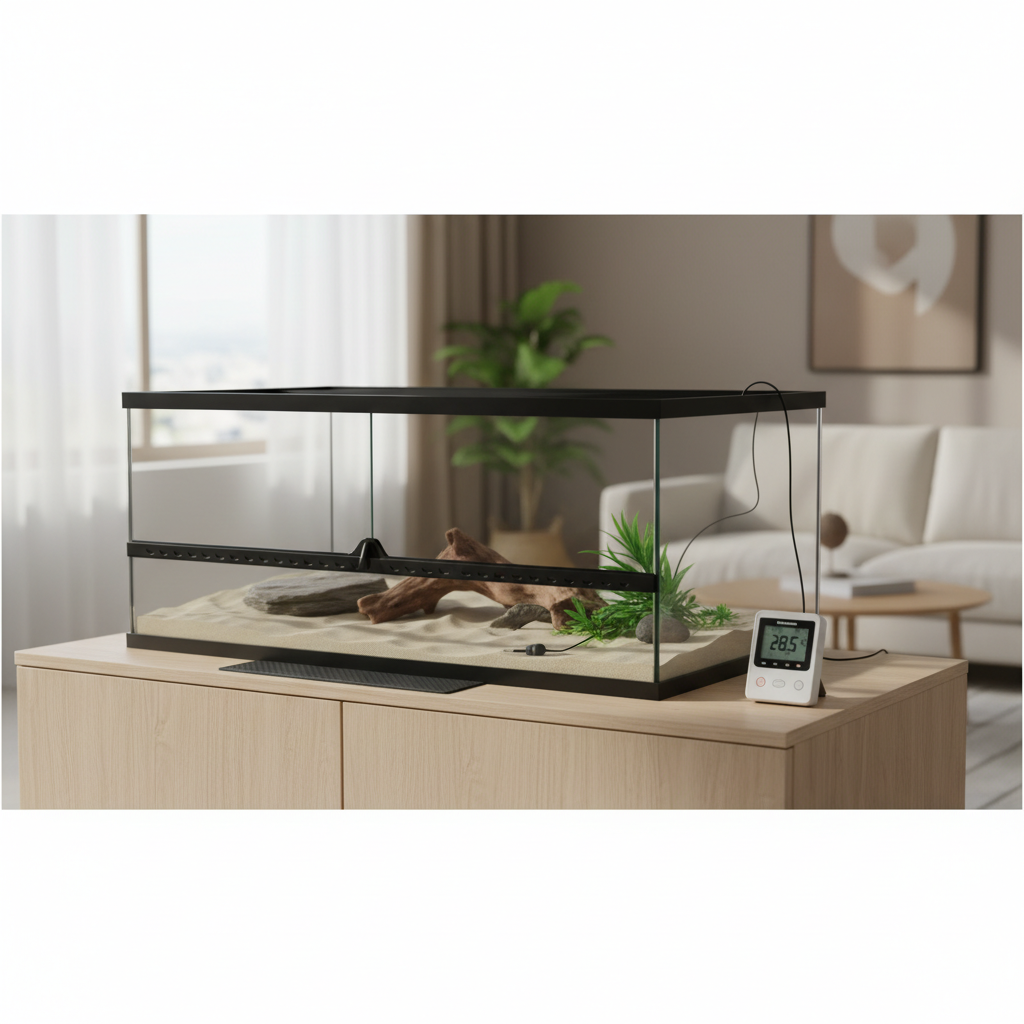
Why adjustable temperature matters (more than the mat itself)
The “adjustable” part matters because a heat mat’s surface temperature can swing based on room temperature, ventilation, tank material, substrate depth, and even what furniture the tank sits on. A mat that felt fine in summer can run too cool in winter, or too hot if you change the enclosure setup.
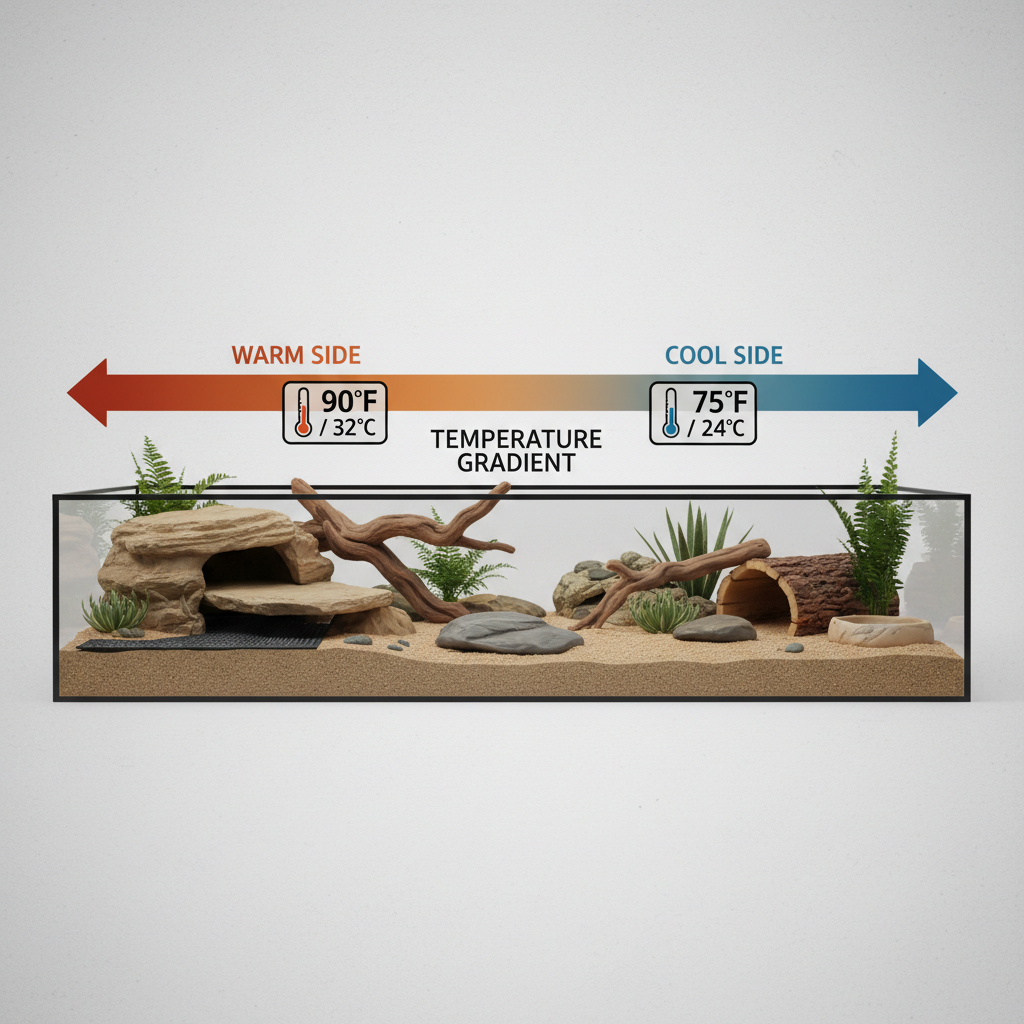
In many home setups, you’re also trying to achieve a temperature gradient, meaning a warm side and a cool side so your lizard can self-regulate. A fixed-output mat makes that harder, especially in smaller tanks.
According to The Humane Society of the United States, reptiles need an enclosure that provides a proper temperature range and appropriate heating to support normal behavior and health. In plain terms, stable heat is not a luxury, it’s part of basic husbandry.
Common reasons your lizard isn’t thriving with a basic heat pad
People often blame the heat mat first, but the real issue is usually the setup around it. These are the patterns that show up most:
- No thermostat: a mat plugged straight into the wall can overheat, even if the packaging implies it’s “safe.”
- Probe placed wrong: measuring air temp while the floor surface gets much hotter, or vice versa.
- Mat size mismatch: too large and you lose the cool zone, too small and you never create a usable warm area.
- Thick substrate: great for digging species, but it can insulate heat so the surface stays cool while the glass gets hot.
- Wrong heat type for the species: some lizards do better with overhead radiant heat for basking, using a mat only as support.
If you’re shopping for a lizard heat mat adjustable model, treat it as one piece of a system: heat source + thermostat + correct placement + verification with a temp gun.
Quick self-check: do you actually need an adjustable heat mat?
Not everyone needs one, but these questions usually settle it fast:
- Does your room temperature change a lot between day and night, or season to season?
- Are you struggling to keep a consistent warm-side floor temp without overheating?
- Do you have a species that benefits from belly heat (and you can’t keep it stable)?
- Are you upgrading from “plug and pray” to a thermostat-controlled setup?
- Do you need separate day/night setpoints (or a planned nighttime drop)?
If you answered yes to two or more, an adjustable setup with a thermostat controller is usually the more reliable direction.
Recommended setup: heat mat + thermostat (step-by-step)
If you want fewer surprises, this is the workflow most keepers end up using.
1) Choose placement based on your enclosure
- Under-tank (outside, bottom): common for glass tanks, but only cover about 1/3 of the footprint to preserve a cool side.
- Side-mounted (outside, on a wall): can reduce direct belly-contact risk, sometimes easier for species that climb or when substrate is deep.
Many mats warn against placing them inside the enclosure. Follow the manufacturer instructions, and if anything conflicts with safe temperature control, default to safer practice and consult a reptile vet or experienced keeper community.
2) Use a thermostat, not just a dimmer
A dimmer changes power, but it doesn’t “know” the temperature. A thermostat uses a probe to regulate heat automatically. For a lizard heat mat adjustable plan, this is the real adjustment tool.
- On/off thermostats: budget-friendly, good for heat mats, may create small temperature swings.
- Pulse proportional thermostats: smoother control for mats, often preferred when you’re fine-tuning.
3) Put the probe where it reflects the risk
Most burn risks come from surface contact. In many setups, that means placing the probe on the warm-side floor area directly above the mat, secured so the lizard can’t move it.
- If the probe floats in the air, the mat may keep heating until the air warms, and the floor can get too hot.
- If substrate is deep, you may need to measure both surface and below-surface to understand what’s happening.
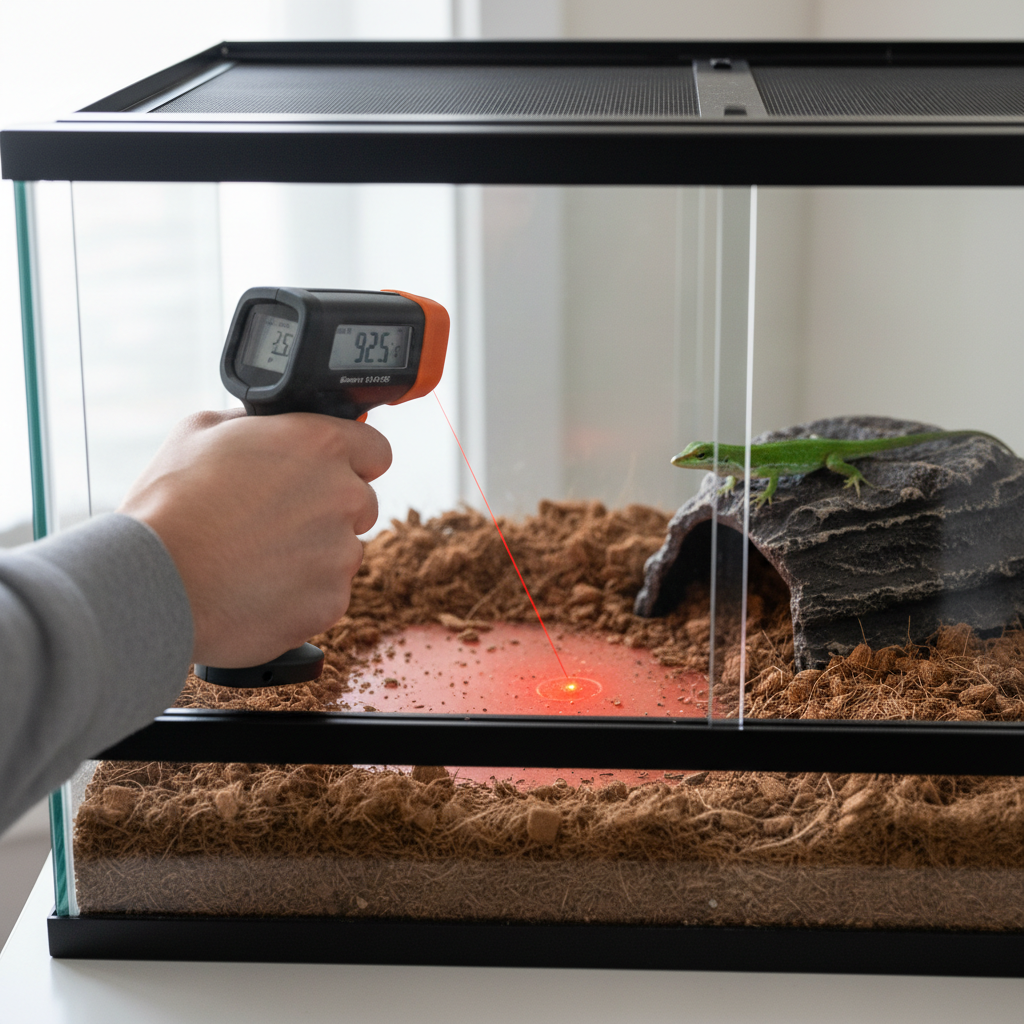
4) Verify with two tools, at least once
Use a digital thermometer for ongoing monitoring, and an infrared temp gun for quick surface checks. It’s common for stick-on analog gauges to be off enough to matter.
Temperature targets: a practical table (because “warm” is vague)
Exact targets vary by species, age, and health status. If you’re unsure, a reptile veterinarian or reputable care sheet for your exact species is the safest reference. The table below is meant as a planning aid so you can think in ranges, not guesses.
| Species (common) | Warm side (ambient) typical range | Basking area (if used) typical range | Notes for heat mats |
|---|---|---|---|
| Leopard gecko | Mid 80s°F | High 80s to low 90s°F | Often paired with a thermostat; avoid overheating floor contact points |
| Bearded dragon | Upper 80s to low 90s°F | 100–110°F range is common in guides | Overhead heat/light usually primary; mat is typically supplemental |
| Crested gecko | Low to mid 70s°F | Often not required | Mats can overdo it; careful control, especially in warm rooms |
| Blue-tongue skink | Upper 80s°F | Mid 90s°F range often cited | Overhead basking is common; mat may help nighttime stability |
Key point: For many lizards, the mat supports a stable warm zone, but basking heat (from above) is often what drives natural thermoregulation. If your species needs basking, don’t try to “force” a mat to do that job.
Safety and burn prevention: what experienced keepers watch for
Heat mats can cause burns when temperatures run away or when an animal can’t move off the hot spot. A thermostat reduces the risk, but good habits matter too.
- Never run a mat without control unless a manufacturer explicitly provides a regulated controller and you still verify temps.
- Keep a cool zone so the animal can choose, not endure.
- Avoid trapping heat under the tank, allow airflow, and don’t sandwich the mat between insulating layers unless the manufacturer allows it.
- Watch hides on the warm side: they can become “heat sinks” where contact temps climb.
- Check after changes: new substrate, a new stand, moving the tank near a vent, all can shift temperatures.
According to the American Veterinary Medical Association (AVMA), exotic pets have specialized care needs and owners should seek veterinary guidance for proper husbandry. If you suspect a burn or chronic stress, it’s worth getting professional help rather than trying to “tune it out.”
Buying checklist: what to look for in an adjustable setup
There are many “adjustable” products, but not all adjustment is meaningful. Here’s what tends to matter in day-to-day use:
- Thermostat compatibility: clear wattage rating and safe use with external thermostats.
- Mat size options: enough choices so you can cover roughly 1/3 of the enclosure floor, not 2/3 by accident.
- Even heat distribution: reduces hot spots, though you should still verify surface temps.
- Durability and adhesive quality: peeling mats can create weird air gaps and inconsistent heating.
- Controller features (if included): probe length, display readability, alarm, and night drop options.
If the product is “adjustable” only because it ships with a simple inline dimmer, consider budgeting for a thermostat anyway. In most enclosures, that’s where stability comes from.
Practical tips for dialing in temps (without chasing numbers all week)
The goal is not a perfect number every minute, it’s a stable range your lizard can use. A few habits make this much easier:
- Set, wait, re-check: after adjusting the thermostat, give the enclosure a few hours before deciding it “didn’t work.”
- Measure the right surface: check the warm-side floor where your lizard actually rests.
- Log once per day for a week: morning and evening temps show if you need a different night setting.
- Don’t ignore behavior: constant glass surfing, hiding all day, or refusing food can be temperature-related, but can also be stress, illness, or habitat issues.
If you’re using a lizard heat mat adjustable plan to fix appetite or lethargy, keep expectations realistic. Heat is foundational, but it’s not the only variable.
Conclusion: the “best” heat mat is the one you can control and verify
An adjustable heat mat can be a smart upgrade when your enclosure temps drift, your room changes seasonally, or you’re ready to stop guessing. Pair it with a thermostat, place the probe where surface temps matter, and confirm results with a temp gun at least occasionally.
If you want one next step that actually moves the needle, do this: add a thermostat-controlled setup and map your warm/cool zones for seven days. You’ll learn more from that than from any product description.
FAQ
Do I need a thermostat if my heat mat says “adjustable”?
Usually yes. “Adjustable” often means power can be changed, but a thermostat regulates to a target temperature using a probe, which is what helps prevent overheating and keeps temps steady.
Where should I place the probe for a heat mat?
In many cases, place it on the warm-side floor area directly above the mat, secured so it can’t be dragged away. That setup tends to reflect the contact temperature your lizard experiences.
Can a heat mat replace a basking lamp for lizards?
For many basking species, not really. Heat mats mainly warm surfaces and lower layers, while basking involves overhead radiant heat. Some setups use both, but the “primary” heat source depends on the species.
How big should the heat mat be for my tank?
A common approach is covering about one third of the enclosure footprint so you maintain a cool side. Exact sizing depends on tank dimensions, insulation, and the temperature range you’re trying to maintain.
Why is the air temperature okay but my lizard still seems cold?
Because air temperature and surface temperature can differ a lot, especially with thick substrate or hides. Checking the warm-side floor surface with an infrared thermometer often reveals what’s missing.
Is it safe to put a heat mat inside the enclosure?
Many manufacturers advise against it, and it can increase burn risk if the animal rests directly on the heater. If you’re considering it for a specific setup, follow the product instructions and consider asking a reptile vet.
What are signs my heat mat setup may be too hot?
Frequent avoidance of the warm side, staying on the glass, unusually restless behavior, or reddened skin can be warning signs. Because symptoms overlap with other issues, a cautious response is to re-check surface temps and consult a professional if you suspect injury.
If you’re trying to simplify your heating routine, a thermostat-controlled adjustable mat kit, plus a basic infrared temp gun, is often the “set it and verify it” combo that saves time and reduces stress for new keepers.