
Choosing a bird cage toy acrylic colorful option can be a smart way to fight boredom, but only if the materials, hardware, and size match your bird and cage setup.
Acrylic toys get popular for a reason: they’re bright, easy to wipe clean, and usually hold up better than soft wood when a bird goes into “destroy mode.” The catch is that “acrylic” on a listing does not automatically mean safe, and the wrong rings, dyes, or tiny parts can turn a fun toy into a stressor.
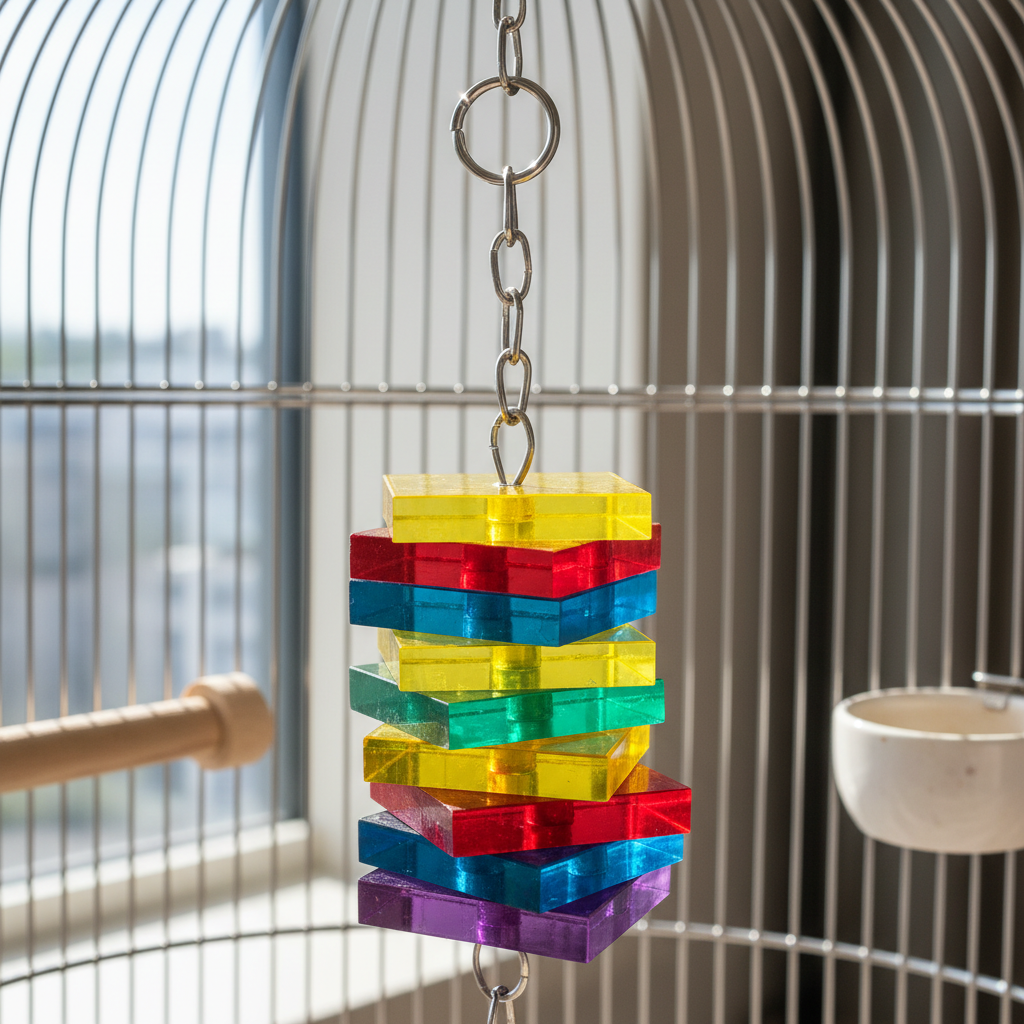
This guide focuses on real-life buying and setup decisions: what “safe acrylic” usually means, how to spot common risk points fast, and how to use colorful toys to encourage healthy play instead of anxious chewing or mess-making.
Why acrylic colorful toys work (and when they don’t)
Acrylic is a hard, non-porous plastic, so it tends to resist soaking up droppings and fruit juices. For many households, that alone makes cleaning less of a weekly battle.
But durability can be a double-edged sword. A bird that can’t shred or manipulate a toy may lose interest, while a bird that obsessively chews may focus on edges or hardware instead of “playing.” The goal is the right mix: acrylic for structure and color, plus other components that encourage natural behaviors.
- Great for: visual stimulation, foot toys with smooth edges, puzzle-style toys, easy-clean setups.
- Less ideal for: birds that need lots of shredding (many conures, cockatoos) unless acrylic is combined with paper, palm, or soft wood.
- Watch closely: heavy chewers that may create sharp edges or loosen parts over time.
Safety first: what “safe acrylic” usually includes
Safety is mostly about the stuff around the acrylic: dyes, metal parts, and how the toy is assembled. According to AVMA (American Veterinary Medical Association), household pets can be harmed by ingesting foreign material, and birds are especially prone to injury when parts break or get swallowed, so “inspect and replace” matters more than people expect.
When you’re shopping for a bird cage toy acrylic colorful product, look for these practical signals:
- Bird-safe colorants: sellers may say “non-toxic,” but you still want reputable pet brands and clear material notes. If the listing is vague, assume you’ll need to inspect more often.
- Stainless steel hardware: many owners prefer stainless steel to reduce corrosion risk. “Nickel-plated” hardware can wear over time.
- No sharp cut marks: acrylic edges should feel smooth, not gritty or razor-like.
- Parts too large to swallow: avoid tiny beads or caps for small birds, and avoid “mini” toys for medium/large birds that can snap pieces.
If you’re unsure about a specific toy’s materials, a cautious move is to choose simpler designs with fewer components, then add variety using safer shreddables you control.
Quick self-check: is this toy a good match for your bird?
People often ask “Is acrylic safe?” when the more useful question is “Is this acrylic toy safe for my bird’s size and habits?” Run this quick check before you hang anything up.
- Species/size match: can your bird fit its head through any ring or opening?
- Chewing style: does your bird bite-and-release, or clamp down and grind?
- Cage spacing: can hooks or quick links sit securely without wobbling into bars?
- History: has your bird ever gotten a nail caught, or started over-preening near a new toy?
- Noise tolerance: some acrylic toys click loudly; noise-sensitive birds may avoid them.
If you check two or more “concerns,” pick a different design or plan a supervised introduction period.
Buying guide: what to look for (and what to avoid)
Listings can be messy, so it helps to shop by risk factors rather than marketing words. Here’s a quick comparison table you can use like a cheat sheet.
| Feature | Prefer | Be cautious with |
|---|---|---|
| Hardware | Stainless steel, solid quick links | Rust-prone metals, flaking coatings |
| Openings & rings | Size-appropriate, no head-trap risk | Large loops for small birds, narrow slots for toes |
| Color & finish | Even color, smooth edges | Chipping paint, rough laser-cut edges |
| Complexity | Simple shapes for strong chewers | Many small parts, tiny beads, loose caps |
| Cleaning | Easy-to-wipe surfaces | Cracks/crevices that trap food |
Common “avoid” signs that show up in real homes: a strong chemical smell out of the package, paint that rubs off on a wet paper towel, and hardware that already looks dull or pitted.
How to introduce and place acrylic toys in the cage
Even a safe toy can cause stress if it appears overnight in the “wrong” spot. Many birds need a short adjustment period, especially with bright colors or reflective surfaces.
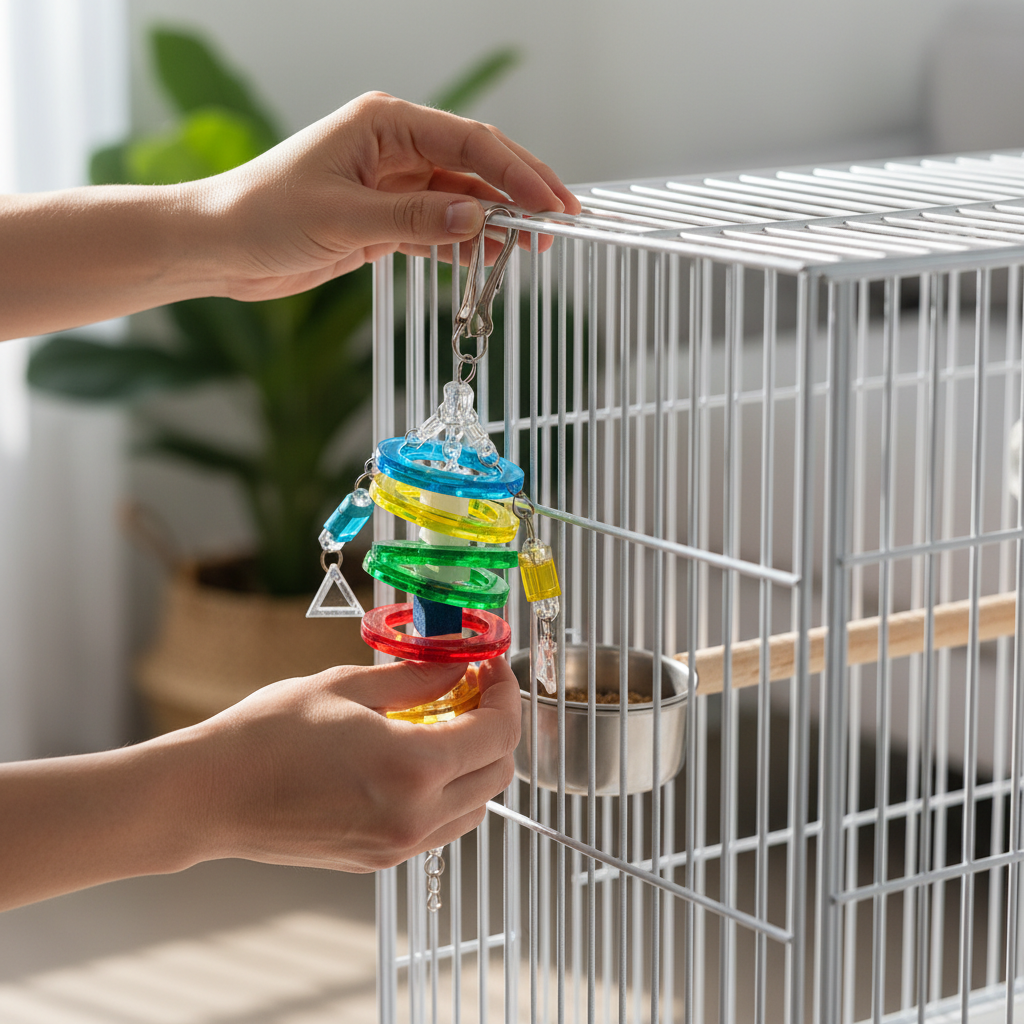
Practical setup steps that tend to work across species:
- Start outside the cage: let your bird see it nearby for a day if your bird spooks easily.
- Hang it away from food and water: this reduces contamination and prevents “guarding.”
- Leave a clear flight path: don’t block the main perch-to-perch route.
- Match toy height to purpose: puzzle/foraging toys often work mid-cage, comfort/foot toys may belong lower.
- Rotate, don’t overload: a few good toys beat a crowded cage that makes movement awkward.
If your bird ignores a new acrylic item, that’s not failure. Sometimes it takes a week and a little “showing” with treats to make it click.
Real-world cleaning and inspection routine (simple but consistent)
Acrylic’s big win is cleanup, but only if you keep it simple. According to CDC, cleaning reduces germ load in animal environments, and while pet birds are a special case, the general principle still applies: remove debris, wash surfaces, and dry properly.
A low-friction routine most owners can stick to:
- Daily: quick visual check for cracks, sharp edges, loose links, or missing parts.
- Weekly: wipe acrylic with warm water and mild dish soap, rinse well, dry fully before rehanging.
- Monthly: deeper inspection of hardware threads and any hidden crevices where food paste builds up.
Avoid using harsh cleaners unless a veterinarian recommends something specific for your situation, strong residues and fumes can be a problem in small indoor spaces.
Common mistakes with colorful acrylic toys (and how to avoid them)
Most “toy issues” aren’t dramatic, they’re the slow stuff: a frayed link, a hairline crack, a bird that quietly starts fearing the cage corner where the toy swings.
- Mistake: buying purely by color. Fix: pick by size, hardware, and shape first, color second.
- Mistake: leaving a damaged toy up. Fix: if you feel a sharp edge, retire it immediately.
- Mistake: one toy type forever. Fix: mix acrylic with shreddables and foraging to cover different instincts.
- Mistake: “too much, too fast”. Fix: introduce one new item at a time for sensitive birds.
Key takeaway: a bird cage toy acrylic colorful setup works best when it’s part of a rotation, not the only category of enrichment.
When to ask a professional (vet or behavior support)
If you see repeated toe injuries, bleeding, sudden cage avoidance, or persistent chewing that seems frantic rather than playful, it’s worth pausing toy changes and talking to an avian veterinarian. Behavior shifts can have multiple causes, stress, environment, diet, even underlying pain, and guessing wrong wastes time.

Also consider professional input if your bird has a history of ingesting non-food items, because even “non-toxic” materials can still cause blockage, which is an urgent medical concern.
Practical recommendations you can apply today
If you want a quick plan without overthinking it, use this as your baseline:
- Pick one acrylic toy with stainless steel hardware and larger, smooth parts.
- Add one shreddable or foraging option beside it to keep motivation high.
- Place toys so the bird can move without brushing them on every hop.
- Schedule a weekly wipe-down and a daily 10-second inspection.
This approach keeps the benefits of bright acrylic enrichment while reducing the most common household risks.
Conclusion: safe color is possible, but “fit” matters most
A bird cage toy acrylic colorful choice can be safe and genuinely enriching when the edges are smooth, the hardware is solid, and the design matches your bird’s size and chewing habits. The best results usually come from simple toys you can inspect easily, plus a rotation that includes shredding and foraging.
If you’re shopping today, choose one well-built acrylic toy, introduce it calmly, then watch how your bird actually interacts with it for a week, that feedback is more valuable than any product description.
FAQ
Are acrylic bird toys safe for parakeets and budgies?
They can be, but budgies are small, so ring size and tiny parts matter a lot. Pick smooth pieces and avoid large loops that could create head-trap risk.
What hardware is safest for hanging acrylic toys?
Many bird owners look for stainless steel quick links or clips because they resist rust. If a listing doesn’t say what metal it uses, inspect frequently and replace at the first sign of corrosion.
My bird chews acrylic—should I remove the toy?
Light chewing is common, but if your bird is creating sharp edges or breaking off pieces, remove it and switch to a design with thicker parts, then consider adding shreddables to redirect chewing.
How do I clean an acrylic bird cage toy without harsh chemicals?
Warm water and mild dish soap usually work for routine cleaning, followed by a thorough rinse and full dry. If you’re dealing with illness or contamination concerns, ask an avian vet what disinfectants are appropriate.
Why does my bird fear a new colorful toy?
Bright color, shine, or movement can trigger caution. Move the toy outside the cage for a day or two, then reintroduce it in a quieter corner before placing it near favorite perches.
How many toys should be in a bird cage at once?
Enough to prevent boredom, but not so many that the cage feels cluttered. A good rule is to keep clear movement lanes, then rotate toys weekly or biweekly based on how fast your bird loses interest.
Do “non-toxic” labels guarantee the toy is safe?
No, because “non-toxic” doesn’t cover choking hazards, entanglement risk, or foreign-body blockage. Treat it as one data point, not the final answer.
What’s a good mix with acrylic to keep birds entertained?
Acrylic pairs well with paper/palm shredding and simple foraging cups. That combination tends to cover visual interest, beak work, and problem-solving without forcing one toy to do everything.
If you’re trying to build a safer, more interesting cage setup and you’d rather not gamble on random listings, look for bird-toy brands that clearly state materials and hardware, then start with one acrylic piece and one foraging option so you can learn what your bird actually likes.