
The best dog id tags personalized for your pet are the ones that stay readable, stay attached, and share the right info without creating noise, snagging, or irritation.
If you’ve ever heard a tag clanging all night, seen engraving fade after a few months, or watched a split ring bend open, you already know why “any tag” isn’t enough, small failures create big headaches.
This guide focuses on what actually matters in 2026: durable materials, engraving methods that hold up, comfort for daily wear, and practical privacy choices. I’ll also add a quick checklist, a comparison table, and some scenario-based picks so you can decide fast.
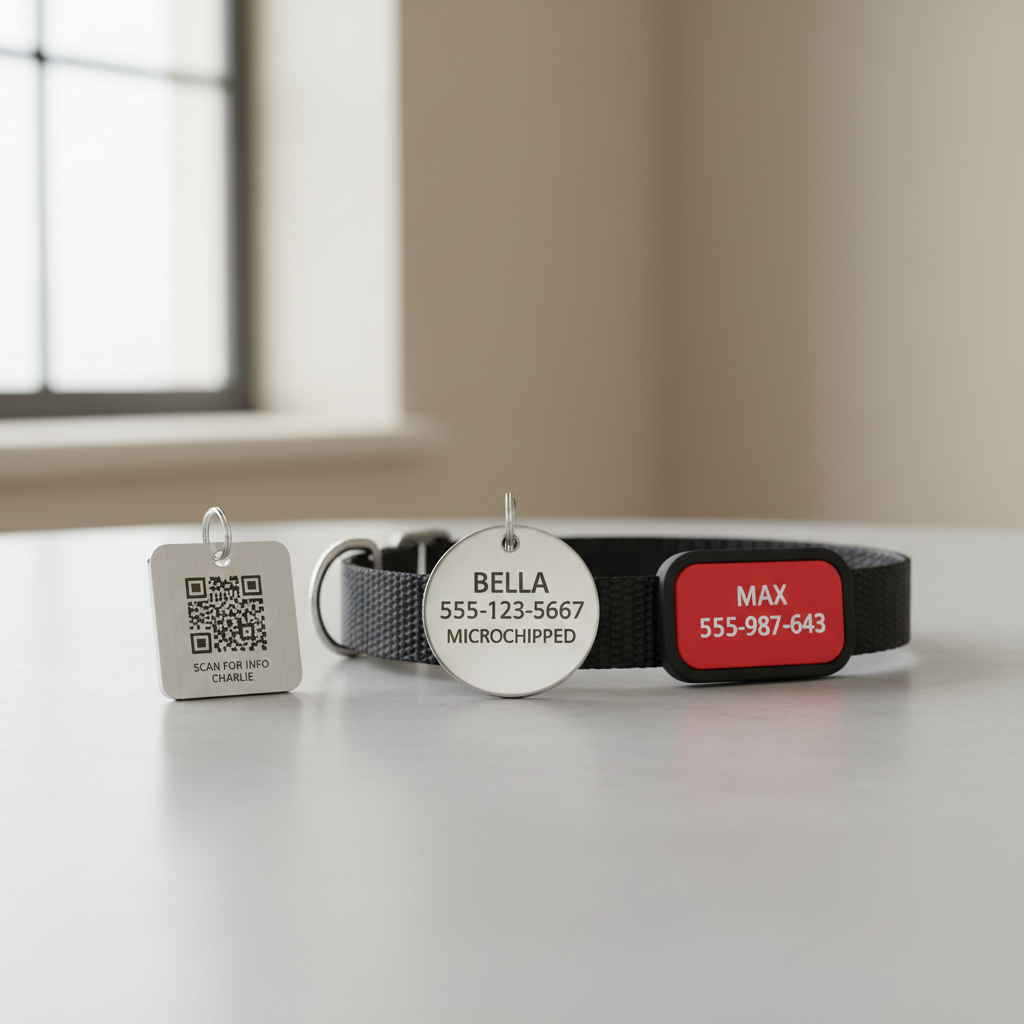
What “best” really means for personalized dog ID tags
When people search for the best dog id tags personalized, they usually want two things at once: better odds of getting a lost dog back, and less day-to-day annoyance.
In practice, “best” tends to come down to four criteria.
- Legibility over time: Deep engraving or laser marking that stays readable after rubbing, water, and dirt.
- Attachment security: Strong split rings, rivets, or slide-on designs that resist snagging and bending.
- Comfort and noise: Rounded edges, lighter builds for small dogs, and quiet options for indoor life.
- Information choices: Enough detail to help a finder, without oversharing your home address if that worries you.
According to the American Veterinary Medical Association (AVMA), collars with identification and microchips both play a role in reuniting lost pets, a tag is still the fastest “no tools needed” way for someone to contact you.
Materials and engraving: what holds up, what wears out
You can get a tag in almost any material, but durability varies a lot, and it shows up months later, not day one.
Stainless steel
Usually the safest bet for everyday wear. It resists rust, stays readable with decent engraving, and handles wet climates well. If you want one “set it and forget it” choice, start here.
Brass
Solid and classic, with a warm look. It can tarnish, which many people don’t mind, but the engraving quality matters. If the maker does shallow engraving, the text can get muddy sooner.
Aluminum
Lightweight and often cheaper, which helps for tiny dogs. The tradeoff is faster wear, especially if your dog plays hard or tags hit metal bowls and crates all day.
Titanium
Light and tough, with excellent corrosion resistance. Often pricier, and not every vendor engraves it well, so check reviews for real-world legibility.
Silicone and rubber (often for quiet tags)
Great for noise reduction and comfort. The catch is the text method varies, printed text can fade, molded or embedded text tends to last longer. These are popular for apartment living.
Engraving methods that matter
- Deep mechanical engraving: Often stays readable longest, especially on steel and brass.
- Laser engraving: Can be excellent, but depth and contrast depend on the vendor and material.
- Printed text: Looks crisp initially, but many situations wear it down faster.
Quick comparison table: pick a tag style that matches your dog
Below is a practical way to narrow choices without overthinking.
| Tag style | Best for | Pros | Watch-outs |
|---|---|---|---|
| Engraved stainless steel dangle tag | Most dogs, everyday use | Durable, widely available, readable | Can jingle, split rings can fail if cheap |
| Slide-on silicone ID tag | Noise-sensitive homes, crate dogs | Quiet, low snag risk | Fit must match collar width, some text methods fade |
| Rivet-on / screw-on plate | Working dogs, high activity | Very secure, low profile | Requires installation, not ideal for frequent collar swaps |
| QR code / digital profile tag | Owners wanting more info without printing it | Can share multiple contacts, medical notes | Finder needs a smartphone and signal, keep a phone number visible if possible |
| Glow-in-the-dark or reflective tag | Night walks, low-light yards | More visible at night | Glow coatings may wear, still need durable engraving |
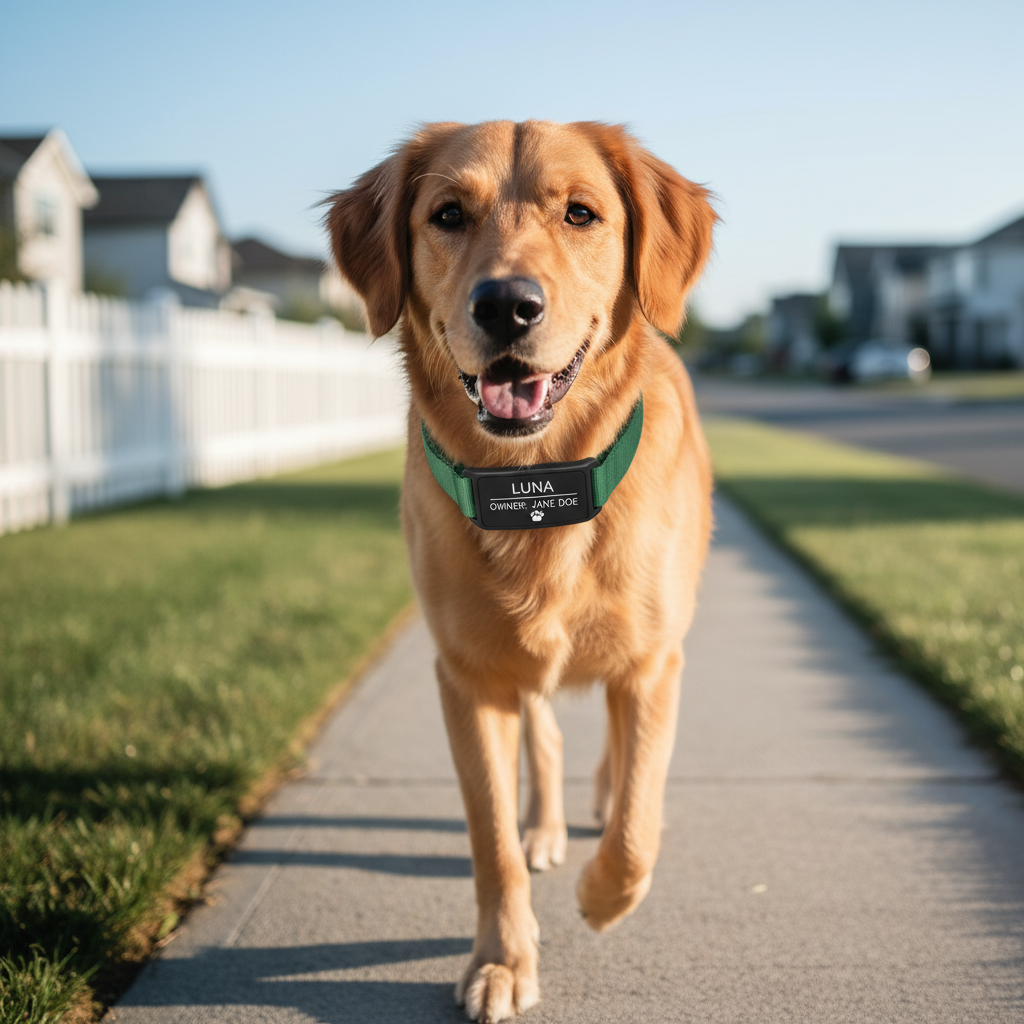
Self-check: what to buy based on your real-life situation
If you’re stuck, run through this quick list, it usually points to the right category fast.
- My dog sleeps in the bedroom and the jingling drives us nuts: try a slide-on silicone tag or a rivet-on plate.
- My dog roughhouses, swims, hikes, or goes to daycare: prioritize stainless steel or titanium with a strong attachment.
- My dog has long fur and the tag flips/gets hidden: a larger face with high-contrast engraving helps, or a low-profile plate on the collar.
- My dog is tiny: go lighter, but avoid ultra-thin aluminum if wear is a concern.
- I don’t want my address public: use two phone numbers and city/state, or pair a phone number with a QR profile.
- We swap collars a lot: dangle tags are easier than rivet-on plates, just upgrade the ring hardware.
What to put on a personalized dog ID tag (and what to skip)
There’s a sweet spot: enough info for a quick reunion, not so much that the tag becomes cluttered or risky.
Recommended lines for most US owners
- Dog’s name: optional, but often helps a finder approach calmly.
- Your phone number: include at least one, two is better.
- City + state: helpful context without full address in many cases.
- “Microchipped”: useful nudge, if your dog is chipped and registration stays current.
Info to think twice about
- Full home address: some owners prefer it, others avoid it for privacy, either choice can be valid.
- Medical details: keep it short if you include it, “Needs meds” or “Diabetic” can help, but confirm with your veterinarian if you’re unsure what’s appropriate to share.
- Too many lines: tiny text becomes unreadable, then the tag fails its main job.
According to the American Animal Hospital Association (AAHA), microchips work best when registration information stays updated, a tag and a chip complement each other rather than competing.
Practical buying tips for 2026: how to spot a good tag listing
Product pages can look similar, so you’re really shopping the details.
- Look for engraving depth or process details: if a seller won’t say how it’s marked, durability is a question mark.
- Check hardware quality: many failures come from weak split rings, consider replacing with a heavier-duty ring or a small carabiner-style connector designed for pets.
- Edge finishing matters: rounded edges reduce fur wear and skin irritation, especially for short-coated dogs.
- Choose high contrast: dark text on light metal or clear laser contrast helps a stressed finder read fast.
- Match size to collar width: slide-on tags must fit snugly, too loose and they migrate, too tight and they distort.
Key takeaway: if you only upgrade one thing, upgrade the attachment method and ring quality, it’s the part most likely to fail quietly.
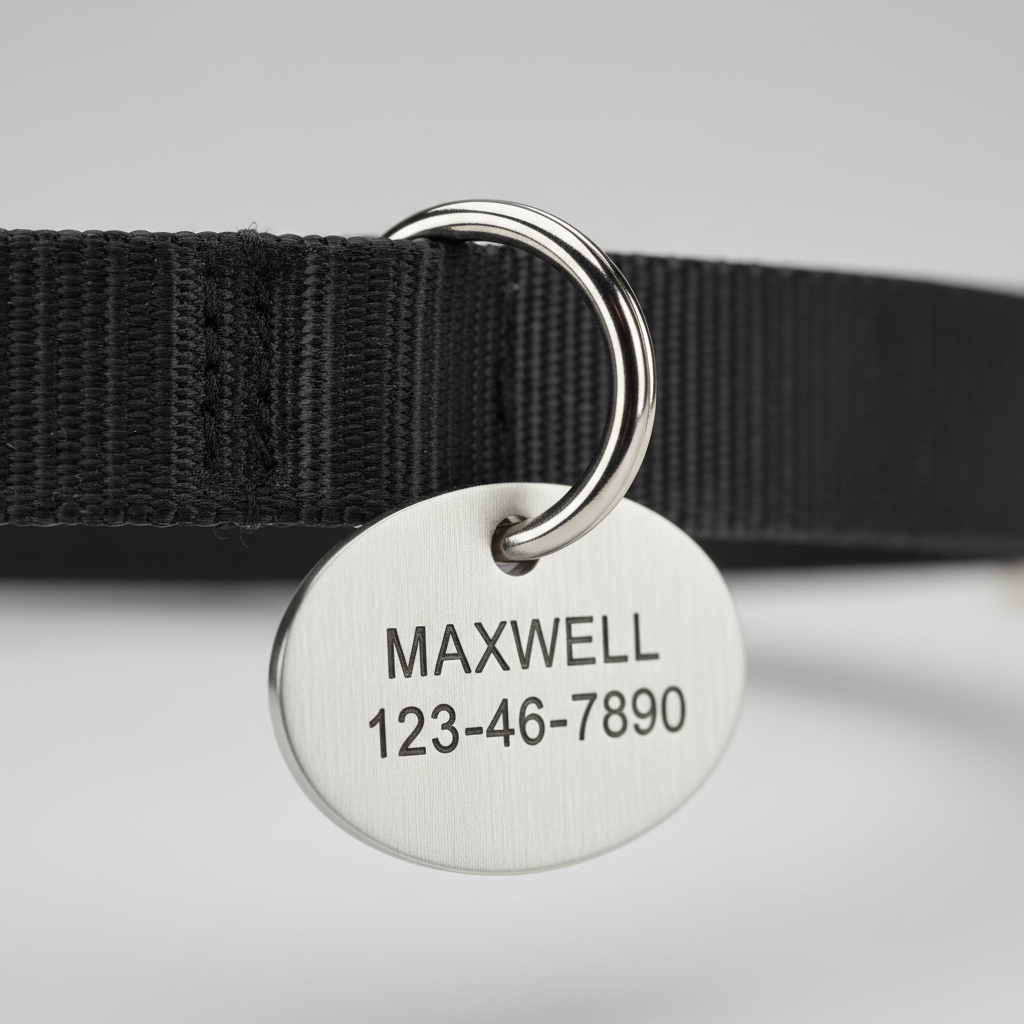
Step-by-step: choose, order, and set up your tag without regrets
This is the simple workflow that prevents most “I should’ve…” moments.
1) Pick the tag type based on failure risk
- High activity or water: stainless steel or titanium, deep engraving, strong hardware.
- Quiet home: slide-on silicone or rivet-on plate.
- Privacy-focused: phone + city/state, consider QR as a supplement.
2) Decide what to engrave (keep it readable)
- Line 1: Dog name (optional)
- Line 2: Phone number
- Line 3: Second phone or city/state
- Line 4: “Microchipped” or short note if needed
3) Inspect and test on day one
- Give the ring a firm twist check, if it spreads easily, replace it.
- Read the text at arm’s length in normal light, if you squint now, a stranger will squint more.
- Listen for noise during sleep hours, if it’s annoying, it won’t get better.
4) Maintain it like a safety item
- Monthly glance for wear, bending, or fading.
- Update if your phone number changes, don’t wait.
Common mistakes that make “best dog id tags personalized” fail in real life
None of these are dramatic, that’s why they’re so common.
- Overstuffing the engraving: smaller text trades “more info” for “no info.”
- Buying a heavy tag for a small dog: it swings, irritates, and owners remove it.
- Ignoring collar fit: a tag doesn’t help if the collar slips off, check fit and condition.
- Relying on a QR tag only: QR can be great, but a visible phone number still matters if the finder can’t scan.
- Skipping microchip upkeep: chips help reunions, but only if registration points to you.
Conclusion: the smart “best” pick for most dogs
For many households, the most reliable choice is a stainless steel personalized tag with deep, high-contrast engraving plus upgraded attachment hardware, it’s boring in the best way and tends to keep working.
If noise, snagging, or collar swaps are your daily reality, adjust the format instead of forcing a dangle tag to fit, a quiet slide-on or a rivet-on plate often solves the problem immediately.
Action to take today: check what’s on your current tag, then decide whether you need a durability upgrade, a comfort upgrade, or simply clearer, more readable text.
FAQ
- What is the best material for a personalized dog ID tag?
Stainless steel is a common go-to because it resists rust and stays readable with good engraving, titanium can also be excellent if the engraving quality is proven. - Are QR code dog tags worth it in 2026?
They can be, especially if you want to share multiple contacts or notes, but many owners still keep a phone number printed on the tag in case scanning fails. - Should I put my address on my dog’s ID tag?
It depends on your comfort level, many people choose phone numbers plus city/state for privacy, while others prefer a full address for fastest return. - How do I stop my dog tag from jingling?
Try a slide-on silicone tag, a rivet-on plate, or a tag silencer, just make sure the text remains readable and the attachment stays secure. - How often should I replace a personalized dog tag?
Replace when the text becomes hard to read, the metal bends, or the attachment hardware deforms, a quick monthly check usually catches issues early. - Can a personalized tag irritate my dog’s skin?
It can, especially with rough edges or heavy swinging tags, choosing rounded edges and the right size helps, and persistent irritation is a good reason to consult a veterinarian. - Do I still need a dog ID tag if my dog is microchipped?
Yes in many situations, a tag gives instant contact info, while a chip requires a scanner and updated registration, using both is a practical pairing.
If you’re trying to pick the best dog id tags personalized for a specific collar setup or a dog with special needs, it can help to narrow it down by noise level, activity, and how often you swap gear, and then choose the simplest option that stays readable all year.