
Bird food holder for cage inside sounds simple, until you’re sweeping seed husks off the floor twice a day and wondering why the “no-mess” bowl still turns into a little sandstorm.
If you’re shopping for a no-spill feeder, you’re usually trying to solve three things at once: reduce mess, keep food clean, and stop waste. The tricky part is that “spill” can come from different behaviors, some birds flick food, some climb into bowls, others just get enthusiastic and toss.
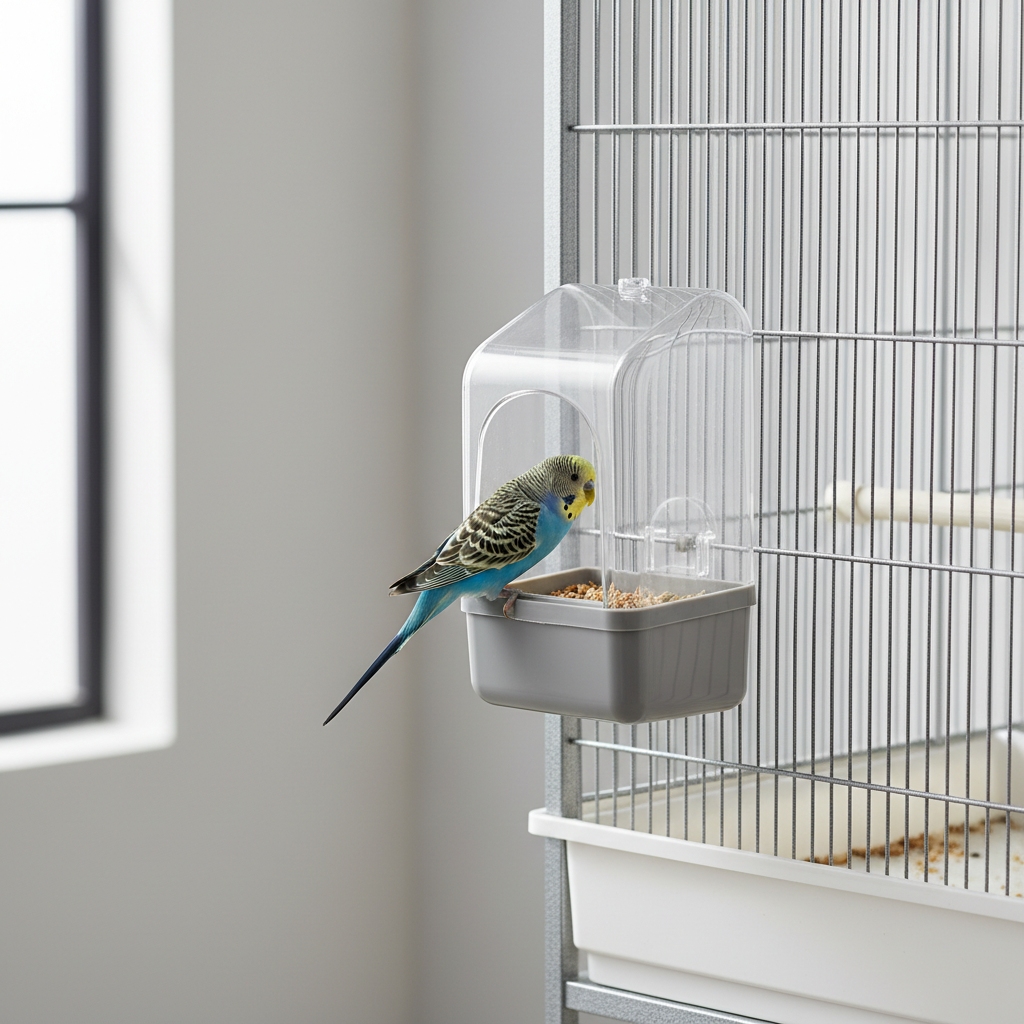
This guide breaks down what actually causes inside-cage feeding mess, how to pick a bird food holder that matches your cage and species, and the setup tweaks that usually matter more than the brand name.
Why “No-Spill” Feeders Still Spill (Common Real-World Causes)
Most cage mess isn’t a single problem, it’s a combo of design + placement + bird habits. If you fix only one, you might still feel like nothing changed.
- Rim height is too low, so a beak scoop or head shake launches seed hulls outward.
- The bowl sits on a high-traffic perch line, meaning wings, tails, and feet bump the feeder all day.
- Bird “foraging” behavior, many birds dig, sort, and flick to find favorite bits, especially with seed mixes.
- Wrong size opening, big opening for a small bird encourages tossing; tiny opening for a bigger bird encourages prying and scraping.
- Loose mounting, even a slight wobble makes birds less careful and increases scatter.
According to the American Veterinary Medical Association (AVMA), good husbandry and a clean environment support overall bird health, and feeding areas are a practical part of that routine. No-spill is partly about cleanliness, not just convenience.
Quick Self-Check: What Kind of Mess Are You Dealing With?
Before you buy a new bird food holder for cage inside, it helps to name the mess. Different mess types point to different feeder styles.
Mess pattern checklist
- Mostly hulls and dust right under the feeder: often normal eating + head shaking, a higher guard helps.
- Whole seeds/pellets scattered far: usually flicking or sorting, consider a covered cup or deeper “well.”
- Food in the water dish: feeder placement issue or the bird carries food around, move bowls apart.
- Food gets soiled (droppings, bedding, feathers): feeder too low or too close to perches, raise and reposition.
- Bird climbs into the bowl: bowl shape and perch layout invite it, you may need a hooded feeder.
If your bird is suddenly scattering far more than usual, or eating drops off, that can be a separate issue. In those cases it’s reasonable to check in with an avian veterinarian, since appetite changes can signal illness.
Choosing the Right No-Spill Feeder: A Practical Comparison
There isn’t one “best” option, but there are a few feeder categories that work more consistently for inside-cage use.
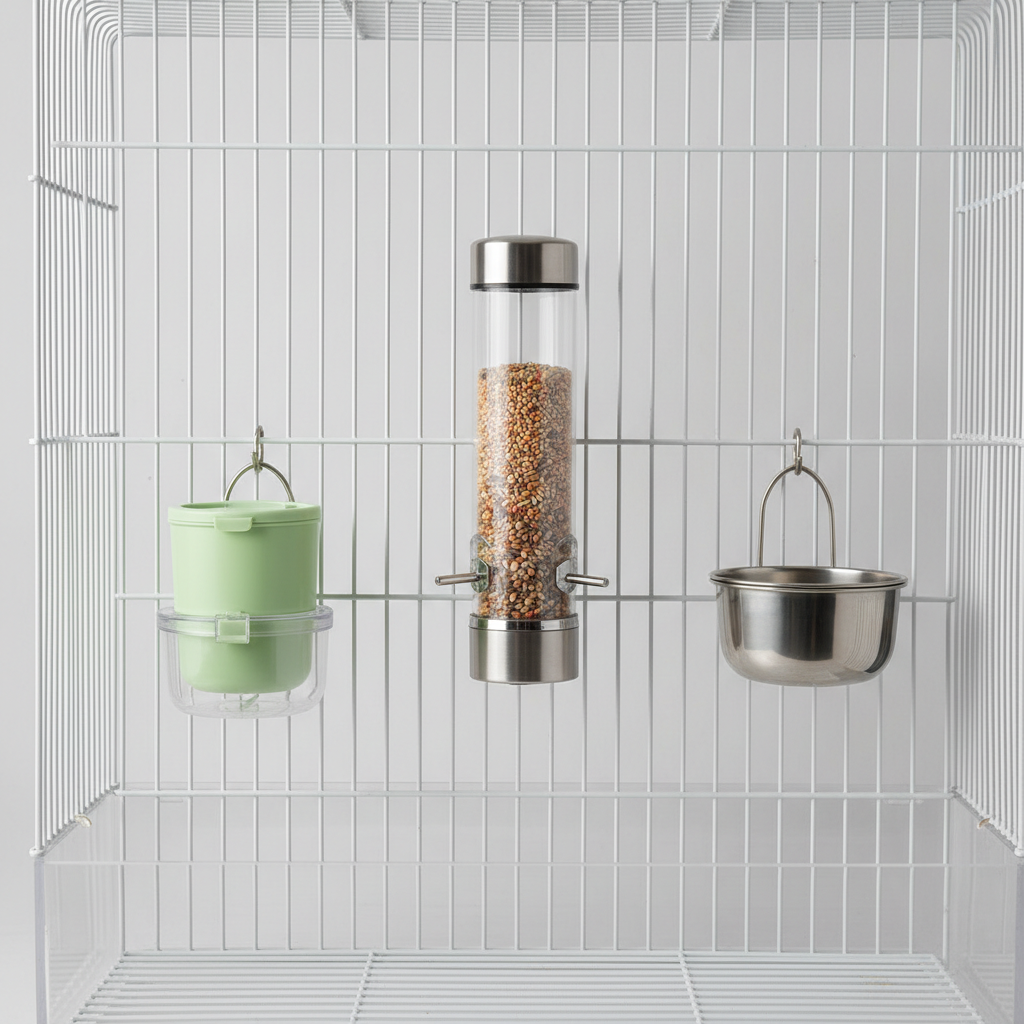
| Feeder type | Best for | Tradeoffs to expect |
|---|---|---|
| Covered cup / hooded feeder | Flickers, seed mixes, messy eaters | Needs regular cleaning, some birds take time to accept |
| Deep cup with seed guard | Daily feeding, moderate mess | Guards can crack on cheaper plastics, guard size must fit species |
| Stainless bowl with high rim | Pellets, heavier foods, easy sanitation | Less effective for seed-husk “spray” unless paired with a guard |
| Silo / gravity feeder | Multi-bird cages, reducing refills | Can still drop crumbs below, clogging can happen with dusty mixes |
Material and hardware: what matters more than marketing
- Stainless steel is easier to sanitize and doesn’t absorb odors, a good pick for pellets and fresh foods.
- Thick, BPA-free plastic is common for covered no-spill cups, but you want smooth seams so food doesn’t cake in corners.
- Mounting style matters: a stable clamp or bolt-on mount reduces wobble and reduces flinging.
Fit and Placement Inside the Cage (Where Most People Lose the Battle)
Even a great bird food holder for cage inside can perform poorly if it sits in the wrong spot. The cage layout decides how often the feeder gets bumped, and how much wind from wings hits the opening.
Placement tips that usually reduce mess fast
- Keep the feeder off the “flight lane”, avoid placing it directly across from the main door or between two favorite perches.
- Mount at chest height for the bird when perched, too low invites bedding contamination, too high encourages awkward digging.
- Leave a small “buffer zone” around the opening so tails and wing tips don’t brush it.
- Separate food and water by a few inches and avoid stacking vertically, so crumbs don’t drop into water.
If you have a cage skirt or seed catcher, it can help, but it shouldn’t be your primary plan. If the feeder is right, the skirt becomes a backup instead of a necessity.
Step-by-Step: Setting Up a No-Spill Feeder Without Stressing Your Bird
Some birds accept a covered cup instantly, others act like you installed a suspicious new machine. The goal is less drama and steady eating.
Setup steps
- Start with the old feeder nearby for 24–48 hours if your bird is cautious, then transition.
- Use familiar food first, don’t combine a new feeder with a diet change on the same day.
- Fill only partway at first, a full cup encourages digging and increases waste.
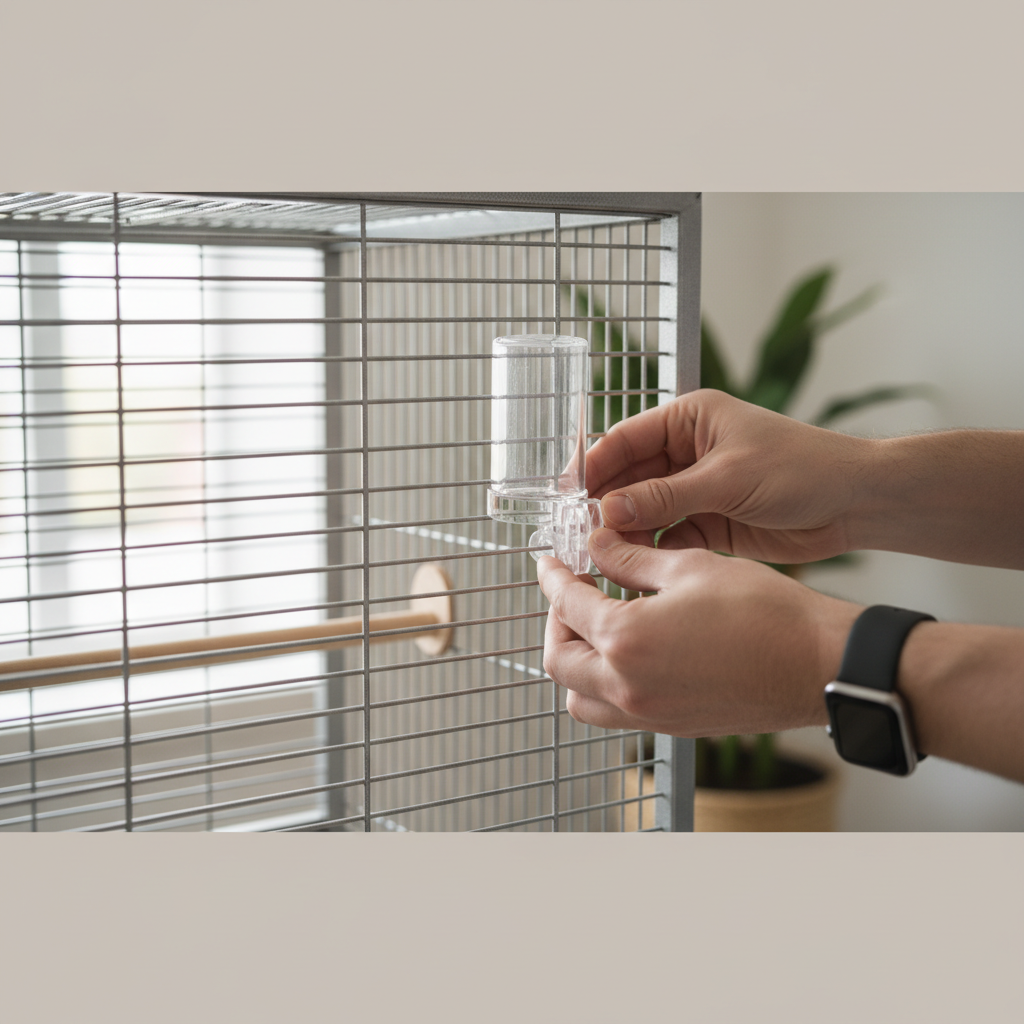
- Stabilize the mount, tighten clamps and confirm there’s no rattle when the bird lands.
- Observe the first few meals, if the bird can’t access food comfortably, adjust height and angle before assuming it “doesn’t work.”
Key point: if your bird is a sorter, the feeder can reduce scatter, but it won’t stop the urge to pick through a seed mix. In that scenario, switching more of the diet to pellets (with guidance from an avian vet) often reduces “search and fling” behavior.
Cleaning and Safety: Keep Food Clean Without Overcomplicating It
No-spill designs can hide crumbs. That’s good for the floor, but it also means you should clean on a predictable rhythm, not only when it looks dirty.
- Daily: dump hulls, wipe the lip/guard area, refresh food if it’s dusty or damp.
- Weekly: wash with hot water and mild dish soap, rinse well, fully dry before refilling.
- Check for cracks: rough edges can irritate feet and collect residue, replace if damage appears.
Avoid harsh cleaners that leave residue. If you need disinfection due to illness risk, it’s safer to ask an avian professional for a cleaner approach that fits your situation.
Common Mistakes That Make Spillage Worse
- Overfilling because it feels efficient, the bird just turns it into a digging box.
- Choosing a feeder by “universal fit” claims instead of checking bar spacing and mount type.
- Putting treats in the main feeder, birds often dig more aggressively when chasing favorites.
- Ignoring perch layout, a feeder under a perch is basically asking for contamination.
If you’re seeing repeated contamination of food or signs of digestive upset, don’t guess. Many things can cause it, and a veterinarian can help you separate husbandry issues from medical ones.
Conclusion: A Cleaner Cage Comes from the Right Match, Not Just “No-Spill” Labels
A bird food holder for cage inside works best when the design matches your bird’s eating style and the cage setup supports it. Covered cups and deeper guards usually reduce scatter, stable mounting and smart placement finish the job.
If you want a quick win, pick one change you can test this week: move the feeder off the main perch line, or switch to a guarded cup and fill halfway, then watch what changes over the next few days.
FAQ
What is the best bird food holder for cage inside to reduce seed mess?
Many households do well with a covered cup (hooded) feeder or a deep cup with a guard, because the higher sides catch the “flick.” The best choice still depends on your bird size and how it eats.
Do no-spill bird feeders work for pellets, or only seed?
They can work for both. Pellets usually scatter less, so a stainless bowl with a higher rim may be enough, while seed mixes often benefit more from a guard or cover.
Why does my bird throw food out even with a guard?
Often it’s sorting behavior, the bird is searching for preferred pieces. Reducing overfill, offering a more uniform diet, or using a covered opening can help, but some birds still toss a little.
Where should I place an inside-cage feeder to keep it cleaner?
Aim for chest height near a stable perch, but not under another perch and not in the busiest flight path. Small placement changes can reduce bumping and droppings in food.
Are plastic no-spill feeders safe for parrots and parakeets?
Many are safe when they’re sturdy and easy to clean, but chewers can damage thin plastic. If your bird gnaws hardware, consider thicker plastic or stainless options and inspect often.
How often should I clean a no-spill feeder?
At minimum, remove hulls and refresh food routinely, then do a full wash weekly. If you feed fresh foods or live in a humid area, you may need more frequent cleaning.
My bird is scared of a covered feeder. What should I do?
Keep the old feeder temporarily, place the new one nearby, and let the bird approach on its own. Reducing change all at once usually lowers stress, and most birds adapt with a short transition.
If you’re trying to pick a no-spill setup and you’re stuck between sizes, mount styles, or feeding habits that seem “extra,” it can help to share your cage bar spacing, bird species, and what the mess looks like, then narrow down options without buying three feeders just to guess.