
Puppy potty bell for house training works best when you treat it like a simple communication tool, not a magic fix: your puppy learns one clear action (ring) that reliably leads to one clear outcome (a quick potty trip outside).
If you’ve been stuck in the loop of accidents, scratching at the door, random whining, and you guessing wrong, a bell can clean up the signal. It’s not about “trying harder,” it’s about making the cue obvious for both of you.
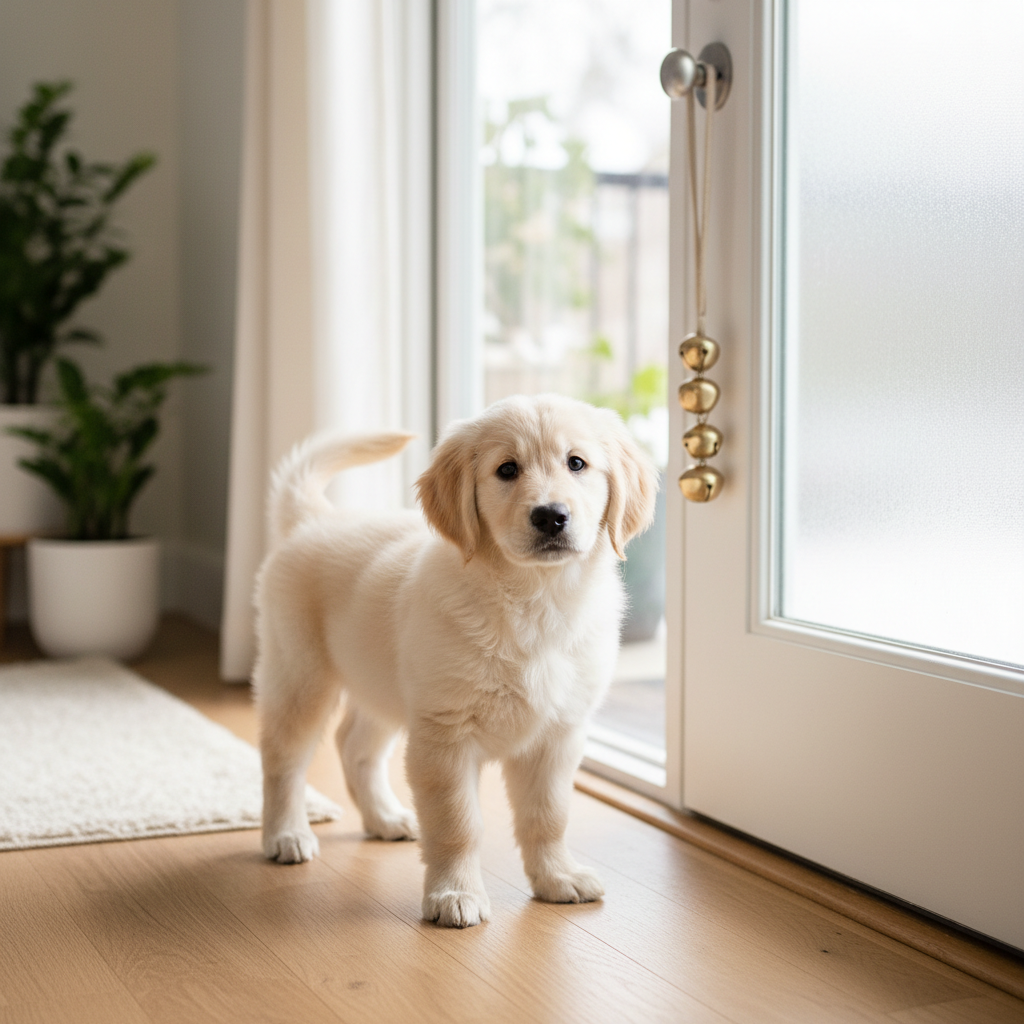
This guide breaks down when bell training helps, when it backfires, and how to install habits that stick, including a quick setup plan, a troubleshooting checklist, and a realistic timeline.
Why a potty bell can speed up house training (and when it won’t)
A bell is useful because it replaces vague signals with one consistent behavior. Many puppies do “something” before they need to go, but it’s easy to miss if you’re cooking, on a call, or your puppy is naturally quiet.
- Clear cue: ring = door opens and you go outside, no guessing game.
- Fewer mixed messages: you stop responding to random whining as a potty request.
- Faster pattern building: the door area becomes the “potty station,” which helps routine-oriented pups.
But bells are not ideal in every situation. If your puppy is highly excitable, mouthy, or prone to demand barking, they may ring the bell for playtime. And if you live in a high-rise and potty means elevator + lobby, the bell still helps communication, but your response time and schedule matter more than the hardware.
According to American Kennel Club (AKC)... house training generally relies on supervision, confinement, consistent schedules, and rewarding the right behavior. A bell can fit into that framework, it doesn’t replace it.
Quick self-check: are you a good candidate for bell training?
Before you buy anything, do a quick reality check. A puppy potty bell for house training tends to work best when the household can respond consistently for at least the first couple of weeks.
- Your puppy already heads toward the door sometimes, even if they don’t ask clearly.
- You can take them out within 30–60 seconds after the bell rings, most of the time.
- You’re willing to keep potty trips boring (no yard party) for a while.
- You can manage supervision so the bell doesn’t become a toy.
If two or more of these are shaky, that’s not failure, it just means you may need extra structure: tighter crate/playpen routines, a shorter leash-to-potty path, or a temporary indoor option recommended by your vet or trainer.
Choosing the right bell: strap, jingle bell, or button?
Most people default to a hanging strap with jingle bells, and it’s usually fine. Still, the “best” bell depends on how your puppy interacts with the world and how much noise your home can tolerate.
| Option | Pros | Cons | Best for |
|---|---|---|---|
| Hanging bell strap | Easy to install, obvious near door, inexpensive | Some pups chew it, can become a game | Most households with quick door access |
| Single service bell (desk bell) | Clear sound, harder to drag/chew, simple target | Needs floor placement, can slide | Puppies that paw more than nose-bump |
| Recordable button | Custom sound/word, lower volume option | More “novelty,” some pups spam it for attention | Noise-sensitive homes, multiple doors |
Small detail that matters: pick something you can clean easily. Potty training involves wet paws and occasional mess, and fabric straps can get gross fast.
Step-by-step: how to teach the bell without creating a doorbell addict
The fastest path is pairing the bell with the exact moment you would have gone outside anyway, then fading your help. Keep it calm and repetitive.
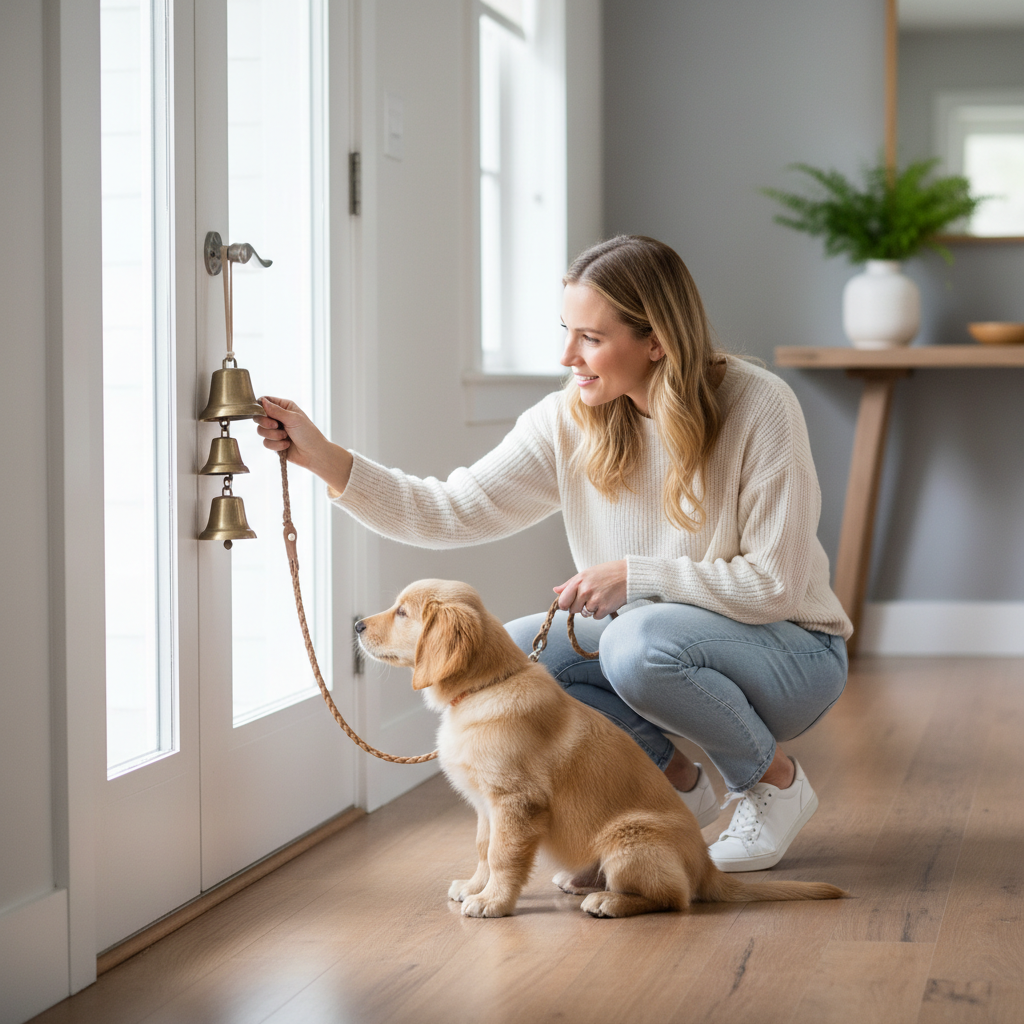
1) Set the environment (this prevents most problems)
- Put the bell at nose or chest height, so your puppy can bump it without jumping.
- Pick one potty door for now. Multiple doors can come later.
- Keep a leash by the door. The bell should predict a leashed potty trip, not free roaming.
2) Pair bell → outside, every time (first 3–5 days)
Before each scheduled potty trip, gently guide your puppy to bump the bell with their nose or paw, then immediately open the door and go out. No long talk, no hype. You’re building a clean cause-and-effect chain.
- Bell rings
- Door opens
- Puppy goes to potty spot on leash
- When they finish, reward within a couple seconds
According to ASPCA... rewarding right after the behavior is what makes the lesson stick. With potty training, timing matters more than treat size.
3) Add the cue after the behavior starts working
Once your puppy is bumping the bell with less help, add a short cue like “Bell” or “Outside.” If you add words too early, you risk teaching background noise instead of the action.
4) Start fading your prompts (week 2)
Wait silently by the door. If your puppy looks confused, point to the bell, then pause. If they still don’t ring it, lightly tap it yourself and continue the routine. The goal is independence, not perfection.
A practical schedule that makes bell training actually work
A bell signal only becomes meaningful if potty chances are frequent enough that your puppy can succeed. This is where many households get stuck: the bell is installed, but the schedule stays random.
- After waking: go out immediately.
- After eating or drinking: try within 10–20 minutes, many puppies need that window.
- After play: excitement often triggers a quick need.
- Before crating and right after: keep it predictable.
If you’re working on this seriously, set a timer for a few days. It feels silly, but it stops you from relying on memory when life gets noisy.
Key point: when the bell rings, respond quickly, walk out, and give a short potty opportunity. If nothing happens in 3–5 minutes, come back inside calmly. That single rule prevents 80% of “my puppy rings just to go play” issues.
Troubleshooting: common issues and what to do instead
Most bell problems are really reinforcement problems. Your puppy repeats what works for them, so you’re not “fighting stubbornness,” you’re adjusting the pattern.
- Puppy rings nonstop for attention: treat the bell like a potty request only. Leash on, outside to potty spot, boring return inside. No games, no wandering.
- Puppy is scared of the sound: switch to a softer bell or a touch target (like a strap without bells) for a few days, then reintroduce sound gradually.
- Puppy chews the strap: raise it slightly, supervise door time, and redirect to a chew toy. Some pups do better with a wall-mounted button or desk bell.
- Accidents still happen even with bell use: you may be missing subtle pre-potty moments, or the schedule is too wide. Tighten supervision and increase trips temporarily.
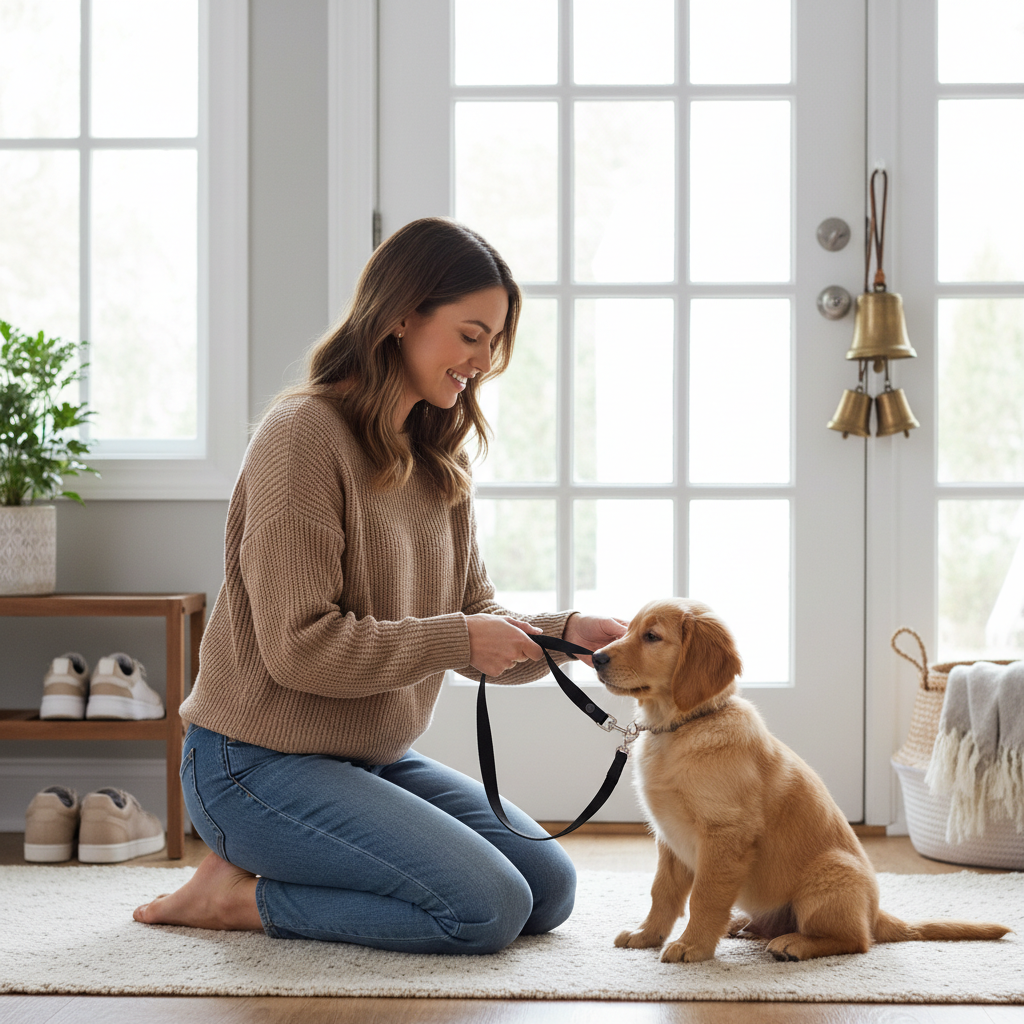
One more thing people don’t love hearing: if your puppy has repeated indoor accidents, the floor can hold odor cues even after you clean. Use an enzyme cleaner made for pet messes, and re-check areas where accidents cluster.
Safety notes, and when to get professional help
A bell shouldn’t create stress. If your puppy starts panicking at the door, vocalizing intensely, or refusing to eliminate outside, slow down and return to basics: scheduled trips, calm rewards, shorter sessions.
- Possible medical issues: frequent urination, straining, blood in urine, or sudden regression can be signs of a health problem. A veterinarian can help rule that out.
- Separation distress: if the bell becomes a way to demand constant access to you or the yard, a certified trainer may help you build independence routines.
- Extreme fearfulness: noise sensitivity or doorway fear can be worked through gradually, but it’s easier with professional guidance.
According to American Veterinary Medical Association (AVMA)... behavior changes can sometimes be linked to health concerns, so checking medical factors is a reasonable step when things shift suddenly.
Conclusion: what to do today for faster progress
A puppy potty bell for house training is most effective when it’s tied to a boring, consistent potty routine and you respond the same way each time. The bell is the message, your follow-through is what makes it true.
- Action step 1: pick one door, install the bell at the right height, and leash up for every bell-triggered trip for the next 10–14 days.
- Action step 2: tighten your schedule for a short sprint, then relax it once accidents drop and the bell use looks purposeful.
FAQ
How long does it take for a puppy to learn a potty bell?
Many puppies start making the connection within a few days, but reliability often takes a couple weeks. If your schedule is inconsistent or your puppy has lots of freedom indoors, it can take longer.
What if my puppy rings the bell just to go outside and play?
That’s common. Make bell trips “potty only” for a while: leash on, stand at the potty spot, give a short window, then go back in. Playtime can happen later, but not as a reward for ringing.
Where should I hang the bell for house training?
Near the handle of the door you use for potty breaks, at a height your puppy can reach without jumping. If the bell swings into their face, they may avoid it, so adjust until it’s easy and comfortable.
Can I use a puppy potty bell in an apartment?
Yes, it can still help communication. The challenge is timing: elevators and long hallways add delay, so you may need more frequent scheduled trips, especially for younger puppies.
Should I use treats every time my puppy goes potty outside?
In many cases, yes during the learning phase. Rewarding right after elimination helps your puppy understand what earned the treat. Later you can reduce treats gradually, keeping praise and routine.
My puppy is scared of the bell sound, what should I do?
Switch to a quieter bell or a touch target temporarily, then reintroduce sound at a lower intensity. If your puppy shows strong fear, working with a trainer can help keep training gentle and effective.
Do potty bells work for older dogs too?
Often they do, especially if the dog already understands house rules and just needs a clearer way to ask. With adult dogs, the main hurdle is breaking old habits, so consistency still matters.
If you’re training in a busy household and want a more “set it up once, then repeat the routine” approach, a bell system plus a simple written schedule on the fridge can make follow-through easier, especially when multiple people share potty duty.