
guinea pig chew log natural wood sounds simple, but the “natural” part can hide big differences in safety, durability, and how well it actually supports healthy chewing.
If you have a guinea pig who ignores chew toys, shreds everything in minutes, or seems picky, you’re not alone, many owners end up buying a few options before finding one that fits their pet’s habits and cage setup.
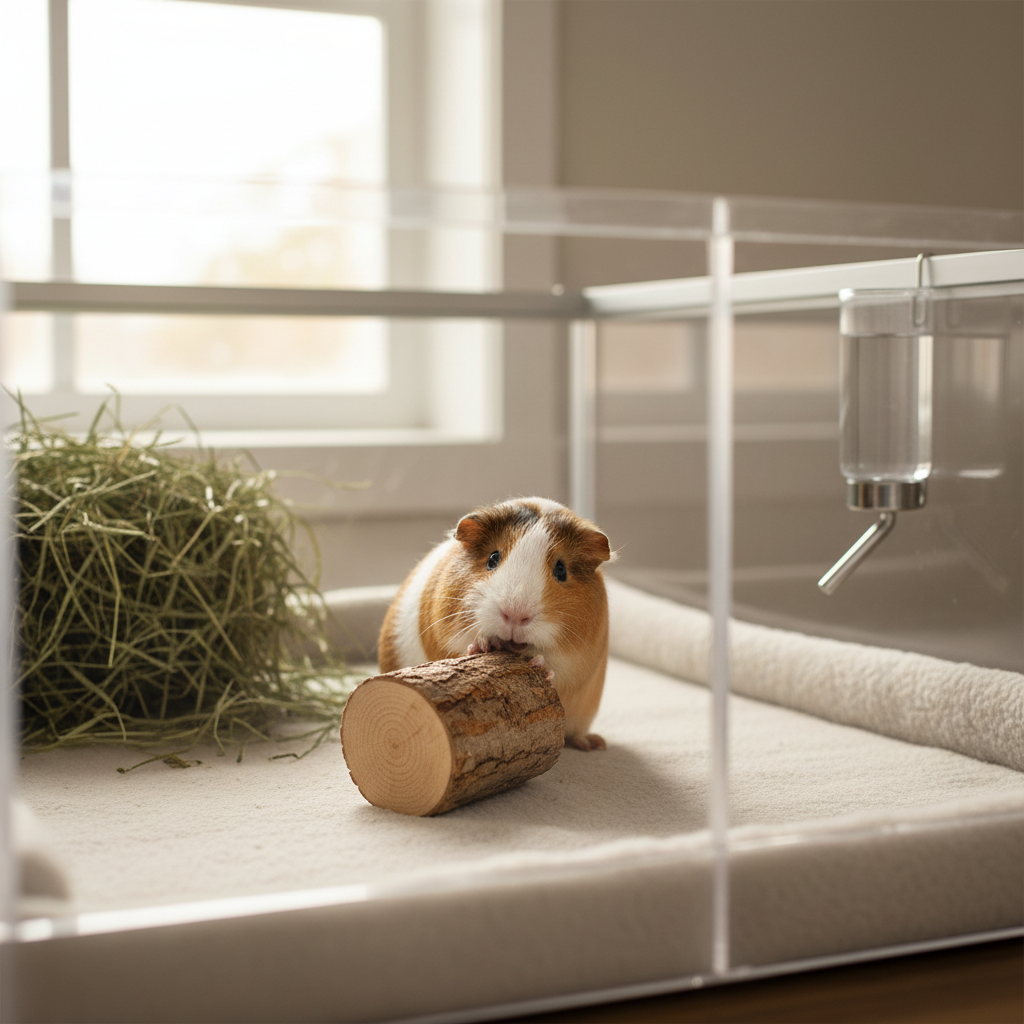
This guide helps you judge whether a chew log is truly safe wood, how to pick the right size and texture, and what to do if chewing seems tied to dental discomfort or stress rather than “normal boredom.”
Why guinea pigs need chewable wood (and what it does not fix)
Guinea pigs have teeth that keep growing, so chewing is part of daily maintenance, not a “nice-to-have.” Still, a chew log is only one piece of the dental puzzle.
According to the American Veterinary Medical Association (AVMA), routine veterinary care and appropriate husbandry matter for overall health, and dental issues in small mammals can require professional evaluation, so a chew toy should not replace a checkup when symptoms show up.
- What a chew log can help with: natural gnawing behavior, mild boredom, adding variety to enrichment, encouraging foraging if paired with hay.
- What it usually cannot solve alone: malocclusion (misaligned teeth), chronic drooling, weight loss, facial swelling, ongoing refusal to eat.
In real life, the biggest win is often behavior, a good wood log keeps them busy in a way plastic toys rarely do, and it can reduce cage chewing in some setups.
What “natural wood” really means: safe vs questionable materials
“Natural” is a marketing word, the useful question is what species of wood it is, whether it has chemical treatment, and how the product is assembled.
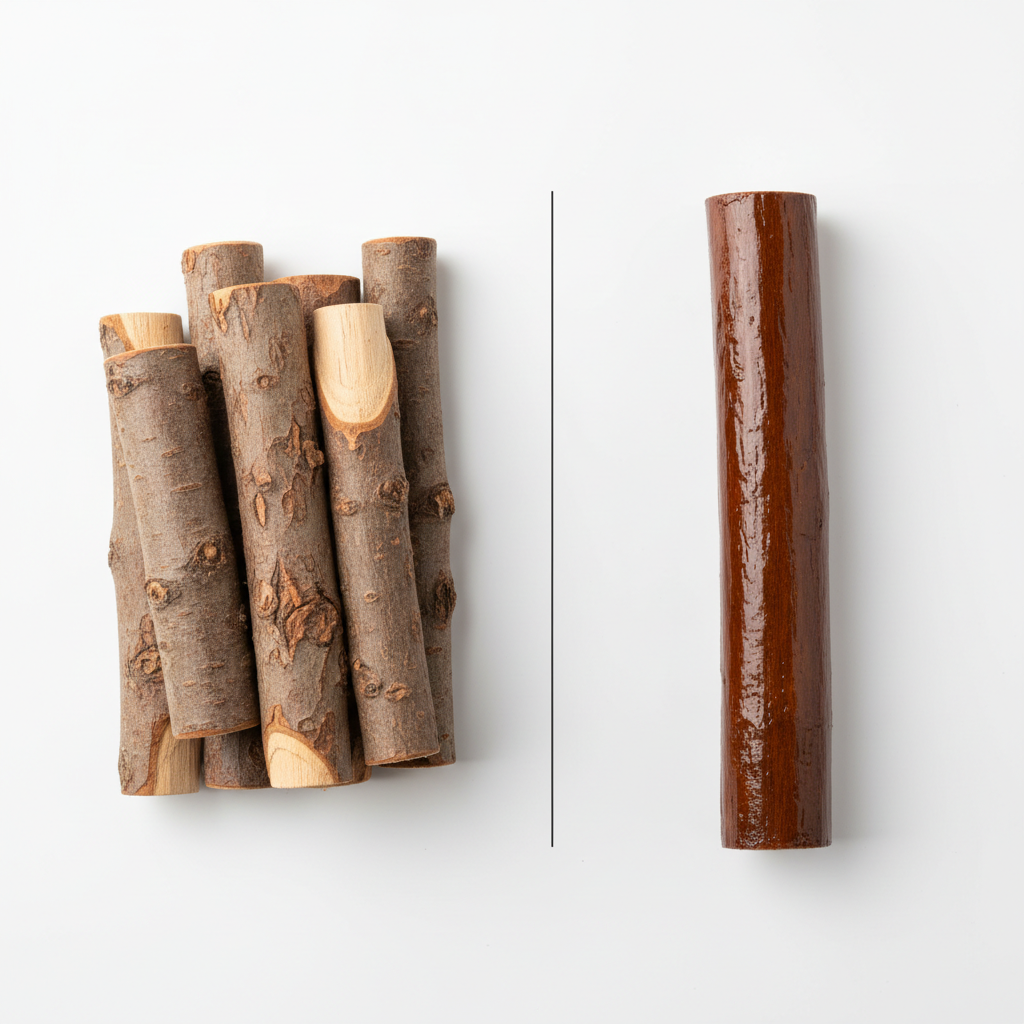
Many guinea pig owners look for fruit woods because they’re commonly sold as pet-safe and tend to be appealing to chew. Pine is where people get confused: kiln-dried pine is commonly used in small-animal products, but aromatic oils and unknown treatments are the real risk factors, so product transparency matters.
Generally preferred traits in a chew log
- Untreated, unpainted, no varnish, no stain, no “scented” additives
- Known wood type listed clearly (not just “natural wood”)
- Solid wood or tightly packed wood pieces that do not shed sharp splinters easily
- Food-safe binder if compressed, minimal glue, no mystery resin smell
Red flags worth walking away from
- Strong chemical odor when the package opens
- Paint, glitter, dyed surfaces, “flavored coating” you cannot identify
- Staples, exposed nails, sharp wire, rough metal hanging hardware
- Very soft wood that collapses into jagged shards after a few bites
Quick self-check: is a chew log the right solution for your guinea pig?
Before you buy three more toys, it helps to figure out what you’re actually trying to fix. This checklist makes the “why” clearer.
- Your guinea pig likely just needs enrichment if: they eat normally, maintain weight, chew intermittently, and show curiosity with new textures.
- Chewing may be stress-related if: they chew cage bars a lot, startle easily, hide more than usual, or share space with a dominant cagemate.
- Dental discomfort is possible if: you notice drool, messy chin, selective eating (soft foods only), reduced poop output, or weight drop.
If the third bucket feels familiar, a chew log can still be offered, but it’s smarter to treat it as support while you consider a vet visit.
How to choose the right guinea pig chew log: size, texture, and build
A good guinea pig chew log natural wood product matches how your pet chews. Some are “nibblers,” some are “demolition crews,” and the wrong density either gets ignored or becomes a splinter pile.
Picking by size and shape
- Small pigs or gentle chewers: thinner branches or smaller logs they can grip and rotate
- Strong chewers: thicker logs, denser woods, or compressed wood blocks with safe binders
- Multi-pig cages: more than one chew piece reduces guarding and minor scuffles
Texture matters more than people expect
- Smoother surfaces can be ignored, adding a rougher bark-like feel often increases interest
- Very rough, flaky bark can create more mess, but many pigs love it
- If splintering happens fast, switch brands or wood type rather than “letting them finish it”
Practical use: where to place it, how to introduce it, and how often to replace
Placement is underrated, pigs are creatures of habit, and they often chew where they already feel safe.
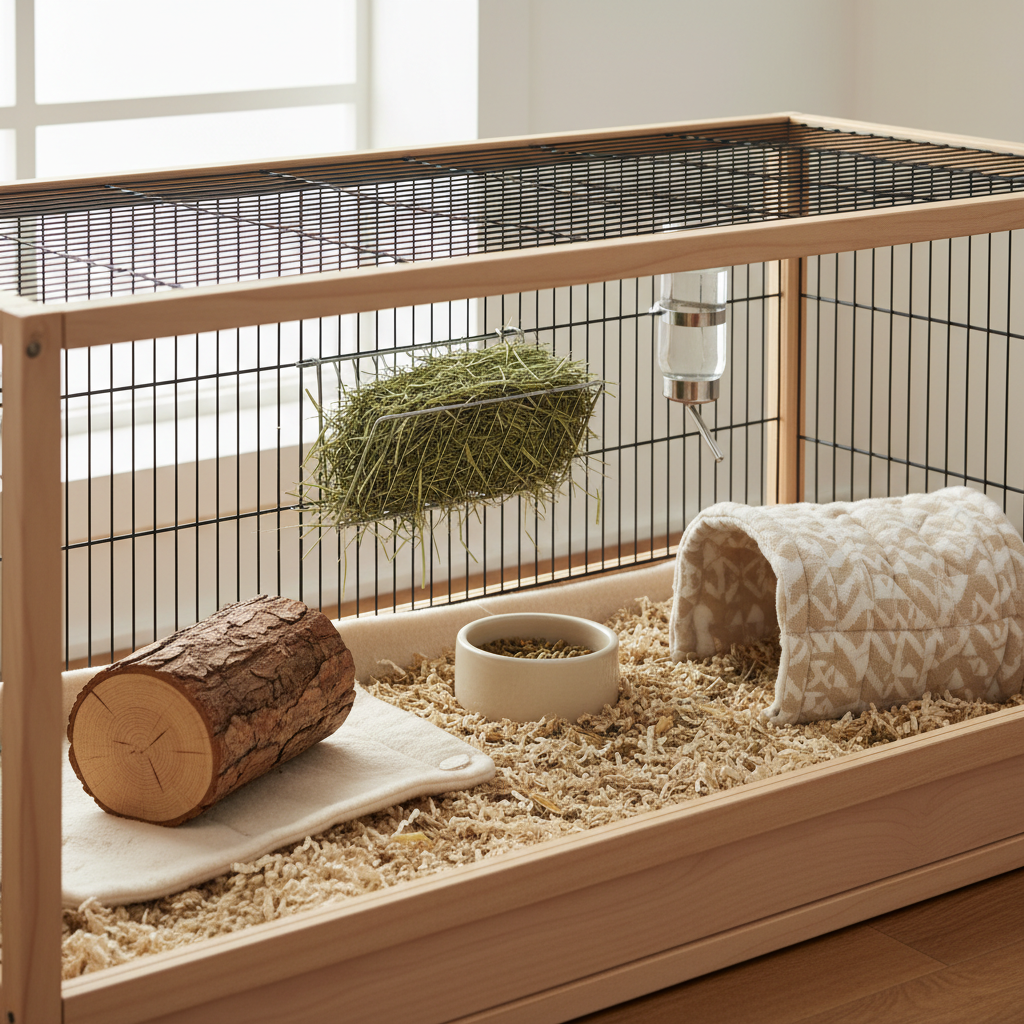
Try putting the log near the hay area, many guinea pigs chew right after eating hay, and this pairing feels natural.
- Day 1-2: place it near a hidey entrance or hay pile, don’t “force interest”
- Day 3-7: rotate position slightly, sprinkle a little hay over it, or tuck it under a tunnel edge
- Ongoing: swap logs or shapes every couple weeks if interest drops
Replacement depends on wear and hygiene. If it stays dry and clean, you can leave it until it becomes too small, too splintery, or starts to smell. If it gets soaked in urine, it’s usually not worth saving.
Comparison table: common chew options and what they’re good for
This is a quick way to decide whether you want a log, sticks, or something else in the same “chew support” category.
| Chew option | Best for | Pros | Watch-outs |
|---|---|---|---|
| Natural wood chew log | Daily enrichment, longer-lasting chewing | Stable, harder to swallow pieces, cage-friendly | Unknown wood type, splinters if low quality |
| Apple/fruit wood sticks | Picky chewers, quick engagement | Often highly accepted, easy to rotate | Can disappear fast, tiny fragments can scatter |
| Hay-based chews | Foraging + chewing combo | Supports hay habit, softer texture | Not as durable, can mold if damp |
| Mineral/salt wheels | Usually not necessary | Easy to find in stores | Can encourage excess mineral intake, many pigs ignore |
Common mistakes that make a “good” chew log fail
- Buying only by label: “natural” without wood species and treatment info is a gamble.
- Ignoring the cage setup: if your pig chews bars, the bigger issue might be space, boredom, or social friction.
- Over-cleaning: scrubbing the log with harsh cleaners can leave residues, spot-clean with a dry brush, replace when needed.
- Assuming no chewing means no need: some pigs chew more hay and less wood, that can still be fine if eating and weight stay steady.
When to talk to a vet (don’t wait on these)
A chew log can support natural tooth wear, but it won’t correct tooth alignment or pain. If you see any of the signs below, consider contacting an exotics veterinarian, timing matters with guinea pig dental problems.
- Drooling or consistently wet chin
- Reduced appetite, slow eating, dropping food
- Weight loss or hiding more than usual
- Changes in poop quantity or size
- Facial swelling or eye/nose discharge
According to the American Animal Hospital Association (AAHA), choosing appropriate veterinary care and acting early when symptoms appear supports better outcomes, if you’re unsure whether it’s urgent, calling the clinic for guidance is a reasonable move.
Key takeaways (so you can decide fast)
- Look past “natural”, you want untreated wood, clear material info, and safe construction.
- Match the log to your pig’s style, density and texture drive whether they use it.
- Use placement strategically, near hay and safe spots usually works better than the cage center.
- Chew toys don’t replace dental care, appetite and weight changes deserve attention.
Conclusion: a chew log is simple, the buying decision isn’t
If your goal is a safer, longer-lasting chew option, a guinea pig chew log natural wood product can be a solid choice when the wood type is transparent and the build avoids splinters and metal hazards. Keep it near the hay area, rotate textures when interest fades, and treat any eating or drooling changes as a health signal, not a “toy problem.”
If you want one next step, pick a clearly labeled, untreated wood log and run a 7-day trial while you keep an eye on weight and eating behavior, that small routine catches most problems early.
FAQ
- What is the safest wood for a guinea pig chew log?
Many owners prefer fruit woods like apple because they’re commonly sold as pet-safe and are usually well accepted, but the safest choice is the one that’s clearly labeled, untreated, and free of coatings or hardware. - How do I know if the chew log is treated or unsafe?
If the listing won’t name the wood species, or the product smells strongly chemical, looks glossy, or has paint or stain, it’s a pass in most cases. When in doubt, choose a brand that states “untreated” and explains materials. - My guinea pig won’t chew the log, is something wrong?
Not always. Some pigs prefer hay chewing and only nibble wood occasionally. If appetite, weight, and droppings look normal, try changing placement or offering a different texture before assuming a health issue. - Can guinea pigs chew softwood like pine?
It depends on processing and product quality. Some pet items use kiln-dried pine, but aromatic oils and unknown treatments are the bigger concern, so transparency matters, and you may want to ask an exotics vet if you’re unsure. - How often should I replace a natural wood chew log?
Replace when it becomes very splintery, starts to smell, gets soaked, or shrinks to a size where they could swallow chunks. There isn’t one schedule, cage humidity and chewing intensity change everything. - Are mineral chew blocks good for guinea pig teeth?
Many guinea pigs don’t need them, and they’re not a reliable tool for dental wear. If you’re considering one for “teeth,” it’s usually better to prioritize hay, safe wood, and a vet check when symptoms appear. - Is it normal for a chew log to make a mess?
Yes, a little sawdust and bark bits are normal. What you don’t want is sharp shards or rapid crumbling, that points to low-quality wood or a poor design for your pig’s chewing style.
If you’re trying to pick a chew log quickly and would rather not guess, bring your cage measurements, your guinea pig’s chewing habits, and the product listing details to an exotics vet or an experienced small-animal shop, a two-minute materials check can save you from buying something your pig ignores or shouldn’t chew.