
A dog floating toy for pool and lake sounds simple until your dog loses interest, the toy sinks, or it turns into shredded foam after two sessions. If you want water play that actually lasts, the “right” toy is less about cuteness and more about buoyancy, visibility, and how your dog grabs and swims.
This matters because water changes the rules: dogs bite differently when they’re paddling, toys drift with wind and current, and poor materials can become a choking or ingestion risk. Picking well usually means fewer frustrated fetch attempts, less time fishing a toy out of weeds, and more confident swimming.
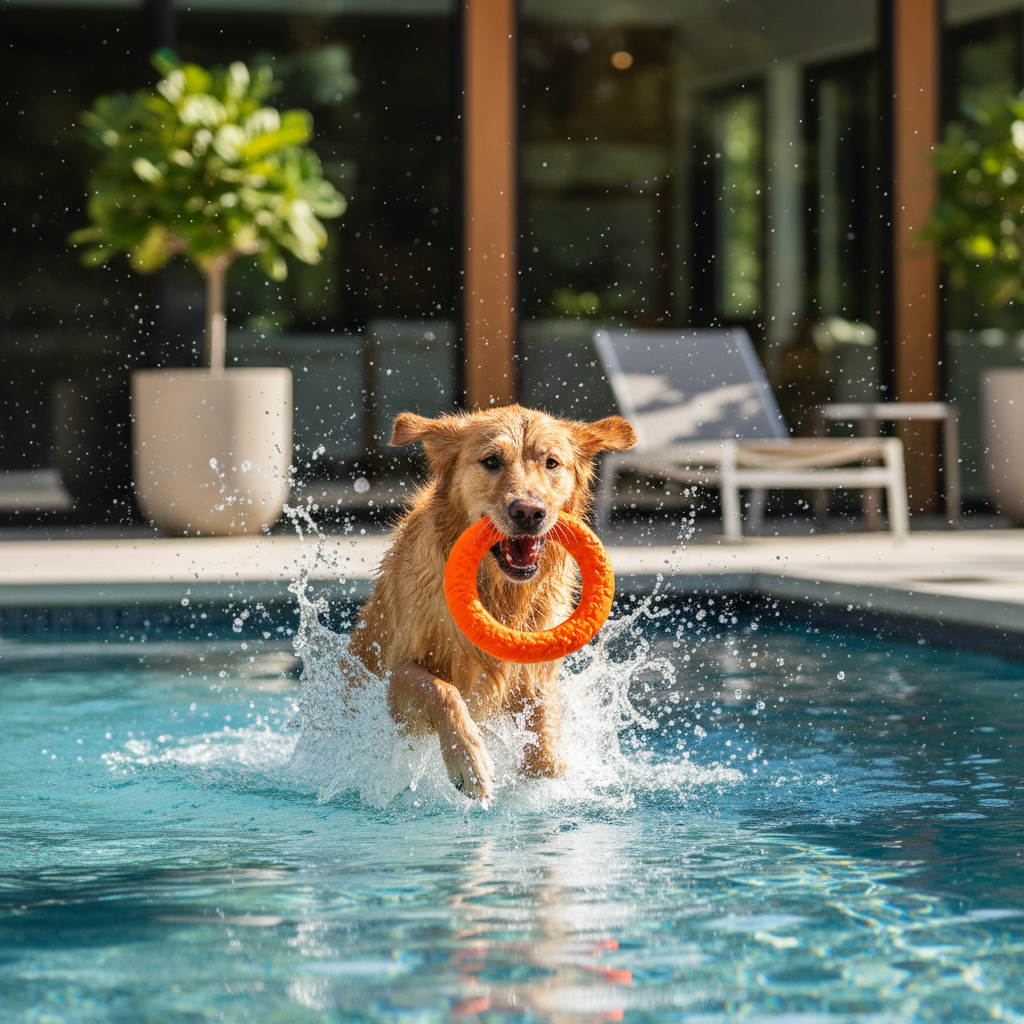
One more thing people often miss, “pool toy” and “lake toy” are not the same purchase. Pools reward easy-to-see, easy-to-clean toys, lakes reward long-distance visibility, strong float, and control around vegetation. Below is a practical way to choose, test, and use a water toy without turning it into guesswork.
What makes a good floating water toy (pool vs. lake)
Start with three traits that decide whether a toy works in water: buoyancy (stays up), visibility (you and your dog can track it), and grab comfort (your dog can pick it up while treading water).
- Buoyancy that stays consistent: Closed-cell foam and sealed air chambers tend to float more reliably. Toys that absorb water may start fine, then slowly sink or become heavy.
- High-contrast color: Bright orange, neon yellow, and vivid green usually stand out better against blue pool water and darker lake water. Pattern matters too, a simple solid color is often easiest to track.
- Shape your dog can “mouth” mid-swim: A small ring, a stick with textured grip zones, or a bumper-style toy often works better than a flat disc for many dogs in water.
- Material suited to chewing style: If your dog is a power chewer, soft rubber may become a snack. If your dog is gentle, overly hard plastic can be uncomfortable.
Pool-specific priorities are cleanability and control: smooth surfaces that rinse fast, plus a size that won’t smack tiles or get stuck in skimmers. Lake-specific priorities are distance and retrieval: toys that float high, resist punctures, and remain visible near reeds or chop.
Why floating toys fail in real water play
Most “fails” aren’t mysterious, they’re predictable mismatches between toy design and your environment. If you’ve already bought a dog floating toy for pool and lake and it disappointed you, it usually lands in one of these buckets.
- It takes on water: Seams, fabric covers, or porous foam can soak up water and reduce float.
- It’s too dark or too small: In lakes, even mild ripples can hide a toy. In pools, reflections can make a low-contrast toy vanish.
- It’s hard to grab: Smooth balls can be tricky for a dog to pick up while swimming, leading to “bopping” the toy rather than retrieving it.
- It’s built for tug, not swim: Some tug toys float, but the long tails/ropes can wrap around paws or snag vegetation, especially near shore.
- Chew damage changes buoyancy: A puncture can turn a great toy into a sinker within minutes.
There’s also a behavior angle: some dogs like water but dislike the feeling of biting a wet, slippery surface. Switching to a textured bumper or a ring with grip ridges can change everything.
Quick checklist: choosing the right toy for your dog and your water
If you want a fast “buying filter,” use this checklist before you commit. It helps you pick a dog floating toy for pool and lake that matches how your dog actually plays.
Dog factors
- Mouth size: Toy should be easy to carry without forcing a wide jaw stretch.
- Retrieve style: Does your dog scoop gently, chomp hard, or shake? Hard chompers need more puncture resistance.
- Swim confidence: New swimmers benefit from toys that float high and are easy to “win.”
- Focus level: Easily distracted dogs do better with loud colors and simple shapes.
Water factors
- Pool: Choose smoother surfaces and medium size for better control and cleanup.
- Lake: Prioritize high visibility, high float, and reduced snag risk around weeds and branches.
- Wind/current: A toy that floats “too low” may drift out faster than your dog can track.
Types of dog floating toys (with pros/cons table)
The “best type” depends on what you throw, how far, and what your dog does once it reaches the toy. Here’s a practical comparison.
| Type | Why it works | Watch-outs | Best for |
|---|---|---|---|
| Floating bumper | Easy to see, easy to grab mid-swim | Fabric covers can fray for heavy chewers | Lake retrieves, swim training |
| Floating ring | Grab-friendly, good for toss or gentle tug | Some rings flip and drift fast in wind | Pool play, short lake throws |
| Floating ball | Familiar, simple, rolls on deck too | Can be hard to grab in water, may sink if punctured | Pool fetch, confident retrievers |
| Foam stick / baton | Floats high, visible, easy carry | Foam can shred if your dog chews to “taste test” | New swimmers, low-chew dogs |
| Rope + float combo | Long throw, easy to pick up by rope | Potential tangling/snags near weeds, supervision important | Open water with clear shoreline |
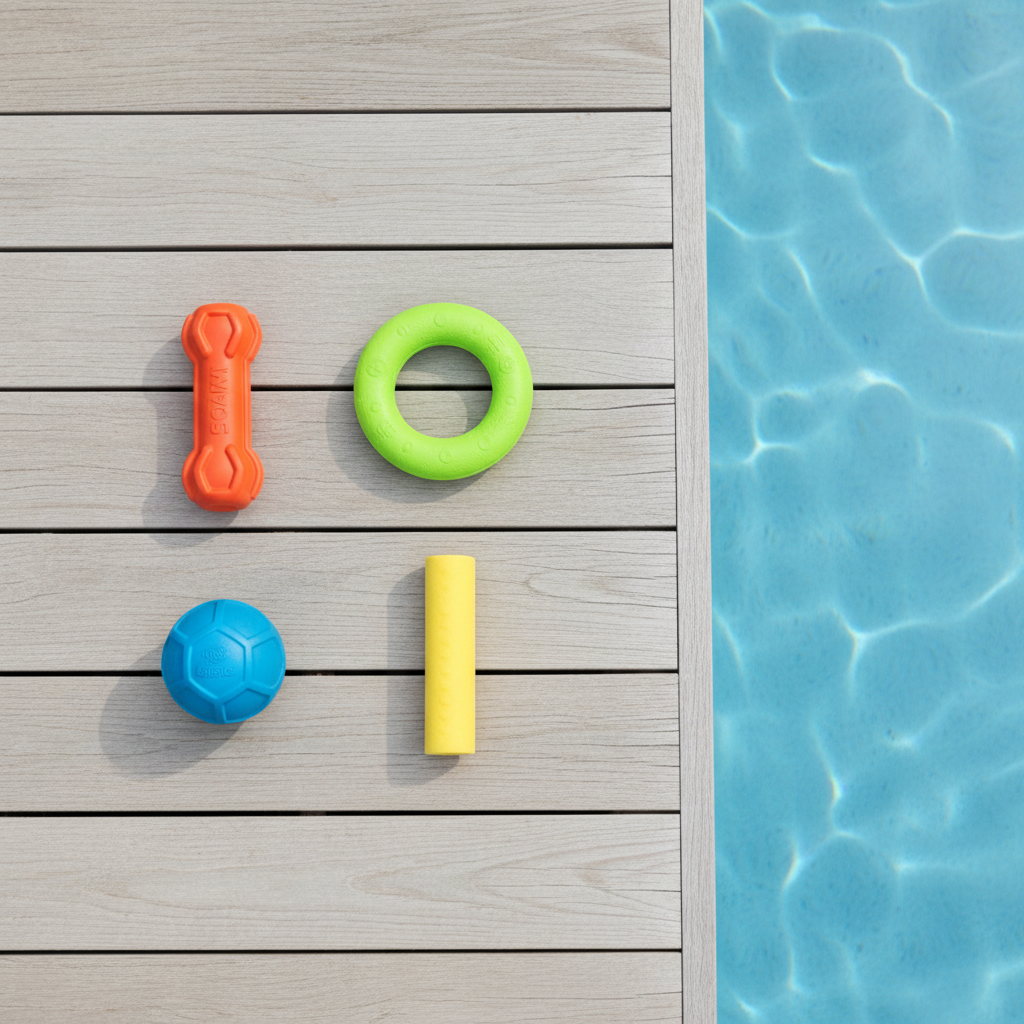
If you’re buying only one, many households do well with a bumper-style float toy because it’s easiest for most dogs to retrieve in water, especially in lakes where waves and chop make pickups awkward.
How to use a floating toy safely (pool + lake)
Water play looks harmless, but small choices add up. According to American Veterinary Medical Association (AVMA), water safety for pets includes active supervision and using appropriate flotation support when needed, especially for inexperienced swimmers.
- Supervise, even for “good swimmers”: Fatigue can show up fast, and dogs can misjudge distance on the return.
- Consider a dog life jacket: Many dogs do fine without one, but for open water, strong currents, seniors, or brachycephalic breeds, a life jacket is often a reasonable precaution. If unsure, ask your veterinarian.
- Mind the rope: If your toy has a rope, keep sessions close and controlled, avoid heavy vegetation, and skip it for chaotic group play.
- Avoid tiny parts and peeling covers: Once a toy starts delaminating, retire it. “One more throw” is how ingestion happens.
- Limit repetitive high-impact leaps: Dock-style launches can stress shoulders and back in some dogs, especially if they twist midair.
Pool tip that saves headaches: teach a consistent exit point, then toss in a way that brings your dog back toward that exit, not diagonally across the deep end.
Practical play plans: quick sessions that build skill
Most dogs don’t need marathon sessions, they need wins. These mini-plans fit both backyard pools and lakes, and they make a dog floating toy for pool and lake feel “rewarding” instead of confusing.
For first-time swimmers (5–10 minutes)
- Start in shallow water or near a gentle entry, toss the toy 3–6 feet.
- Use a bumper or ring that sits high on the surface.
- End while the dog still wants more, that’s how confidence sticks.
For distracted dogs (focus building)
- Pick one bright toy for water-only, keep it special.
- Use short throws, reward the return with praise or a quick treat on shore.
- If the dog starts scanning the shoreline instead of the toy, shorten distance.
For athletic retrievers (controlled intensity)
- Alternate long and medium throws to manage fatigue.
- Use a toy that’s easy to grab, so the dog doesn’t “mouth fight” the water.
- Stop if you see slower turns, wider paddling, or heavy panting.
Mistakes people make when shopping (and what to do instead)
Most shopping mistakes come from buying for the photo, not for the water. A few swaps usually fix it.
- Mistake: choosing cute colors over visible colors → Pick high-contrast shades that pop against your water and shoreline.
- Mistake: assuming “float” means “easy retrieve” → Favor shapes with grip zones, especially for beginners.
- Mistake: buying too soft for chewers → Choose tougher materials and inspect often, if your dog destroys toys on land, water won’t magically help.
- Mistake: ignoring where you play → For lakes, reduce snag points and boost visibility; for pools, go easy-clean and deck-friendly.
Also, don’t overbuy. Two well-chosen water toys, rotated, usually beat a bin of random floaties.
When you should ask a pro (vet or trainer)
If your dog shows panic, refuses to return to shore, or coughs repeatedly after water sessions, it’s worth pausing water play and checking in with a veterinarian. Breathing issues, persistent lethargy, or any concern about water inhalation can be time-sensitive, and internet advice is a poor substitute.
For behavior, a qualified trainer can help if your dog becomes overly frantic, guardy with the toy, or fixated on waves and splashes. Those patterns often improve with structured retrieves and calmer reinforcement, but they’re easier to address early.
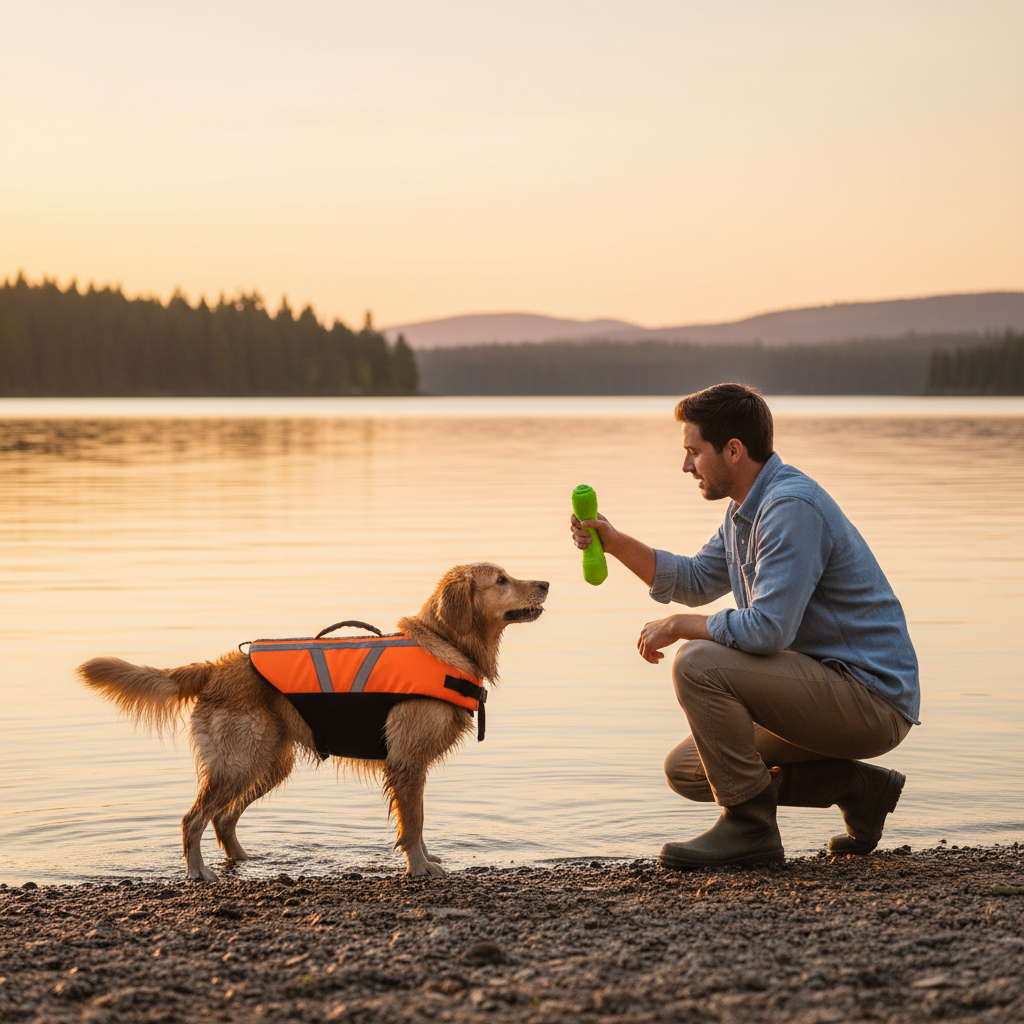
If you want a simple rule, confidence first, distance second. The right toy supports that, and you can always level up later.
Key takeaways and conclusion
Key points: pick visibility and easy grip over novelty, match toy type to pool vs. lake conditions, inspect for damage often, and keep sessions short enough that your dog ends happy, not exhausted. A well-chosen dog floating toy for pool and lake should float high, show up clearly, and survive your dog’s real bite habits.
If you’re deciding today, choose one high-visibility bumper or ring, test it with short throws, and adjust from what you see your dog do in the water. That feedback beats any product description.
FAQ
What color floating toy is easiest for dogs to see in a lake?
In many lake settings, bright orange or neon yellow is easier to track than blue or black because it contrasts with dark water and shoreline shadows. If your lake has lots of green vegetation, orange often stands out better.
Is a rope floating toy safe for swimming dogs?
It can be, but supervision matters more. Ropes may snag on weeds or wrap awkwardly during chaotic play, so they’re usually better for open, clear water and controlled throws, not crowded shorelines.
Why does my dog keep pushing the floating ball instead of grabbing it?
Balls can be slippery and hard to bite when a dog is paddling. Switching to a textured bumper or a ring often makes pickups easier, especially for newer swimmers.
How do I know if a floating toy is too small or too big?
If your dog struggles to clamp down while swimming, it’s likely too large or too smooth. If the toy disappears in small waves or your dog nearly swallows it, it’s too small, size up and prioritize a safer profile.
Can I use the same toy for pool and lake?
Usually yes, but you may notice performance differences. For mixed use, pick high-contrast color, strong float, and a shape that’s easy to rinse, bumpers and rings are common “middle ground” options.
How often should I replace a floating dog toy?
Replace when you see cracking, peeling layers, exposed foam, or pieces coming off. Water play can hide damage until the toy fails, so a quick inspection before and after sessions is a good habit.
Do dogs need a life jacket when playing fetch in water?
Some don’t, but many situations still benefit from one: open water, current, cold water, long retrieves, seniors, short-nosed breeds, or dogs new to swimming. If you’re unsure what’s appropriate for your dog, a veterinarian can give guidance.
If you’re trying to make water fetch easier and safer without overthinking it, focus on one durable, easy-to-see float toy and a routine your dog can repeat confidently. If you want help narrowing options for your dog’s size, chew style, and where you play, it’s worth asking a trainer or your vet for a quick, practical recommendation.