
Best cat trees for large cats are the ones that don’t wobble when a 15–25 lb cat launches onto the top perch, and that simple detail changes everything: safety, durability, and whether your cat actually uses it.
If you’ve ever bought a “tall” cat tree that started leaning within a week, you already know the problem isn’t height, it’s structure. Large cats put more force into every jump, and flimsy particleboard, thin posts, and undersized bases show their limits fast.
This guide focuses on what matters for big bodies and bold behavior: stable base geometry, real post thickness, perch size, and layouts that let heavier cats climb without awkward gaps. I’ll also flag common traps like overpaying for height and underbuying on footprint.
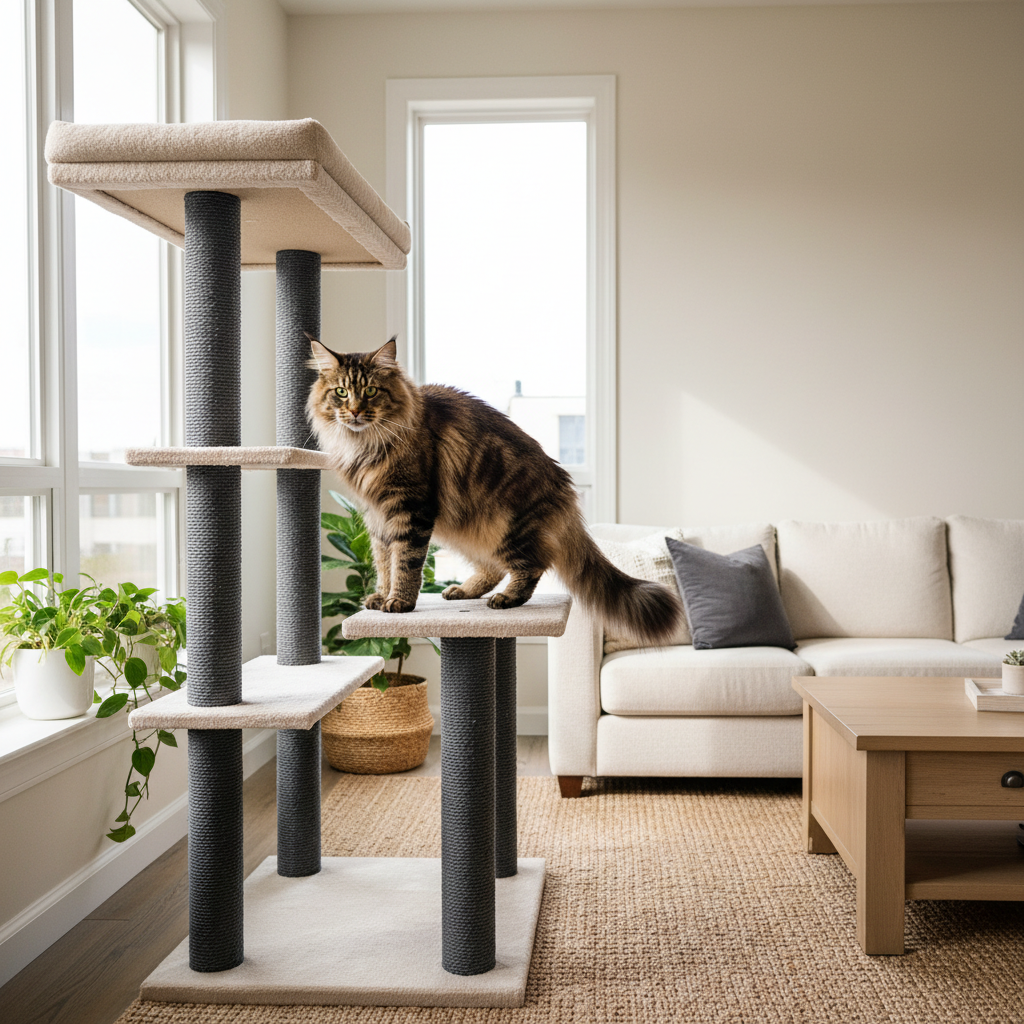
What “large cat” really means for cat tree design
“Large cat” usually means more than weight. It’s also longer body length, bigger turning radius, and higher impact when jumping. A tree that works for a 9 lb cat can fail quickly with a big-boned adult, especially if your cat likes top shelves.
According to the American Veterinary Medical Association (AVMA), providing appropriate environmental enrichment can support welfare, and for many cats that includes climbing and scratching options. For larger cats, “appropriate” often translates to sturdier construction and safer spacing.
Key dimensions that matter more than height
- Base footprint: Wider is usually better than taller, because it reduces tipping risk.
- Perch size: Look for lounging platforms that allow a full curl or side-sprawl without paws hanging off.
- Post diameter: Thicker posts generally flex less and feel stable under load.
- Vertical spacing: Shorter, more frequent “steps” can be easier on hips and knees than big leaps.
Quick “won’t wobble” checklist before you buy
If you’re shopping online, you can’t shake the tower in a store, so use a simple filter. Many returns happen because buyers focus on the number of levels and ignore the basic engineering.
- Base thickness and weight: A thin base paired with a tall tower is a classic wobble combo.
- Wall anchoring option: For extra-tall models, an included strap or bracket is a strong positive.
- Hardware quality: Metal bolts and washers beat soft screws that strip during assembly.
- Carpet attachment: Tight wrap and stapling under panels tend to last longer than loose fabric skins.
- Perch lip height: A small raised edge helps big cats feel secure while sleeping.
One more reality check: reviews that say “my kitten loves it” don’t tell you much. Try to find photos with adult cats, ideally heavier breeds, so you can judge scale and sag.
Best cat trees for large cats 2026: what to look for by category
There isn’t one perfect tower for every home. The “best” depends on whether your priority is stability, multi-cat traffic, scratch longevity, or fitting a small apartment. Use these categories to narrow choices without getting stuck in endless scrolling.
1) Heavy-duty tall towers (for vertical cats, bigger rooms)
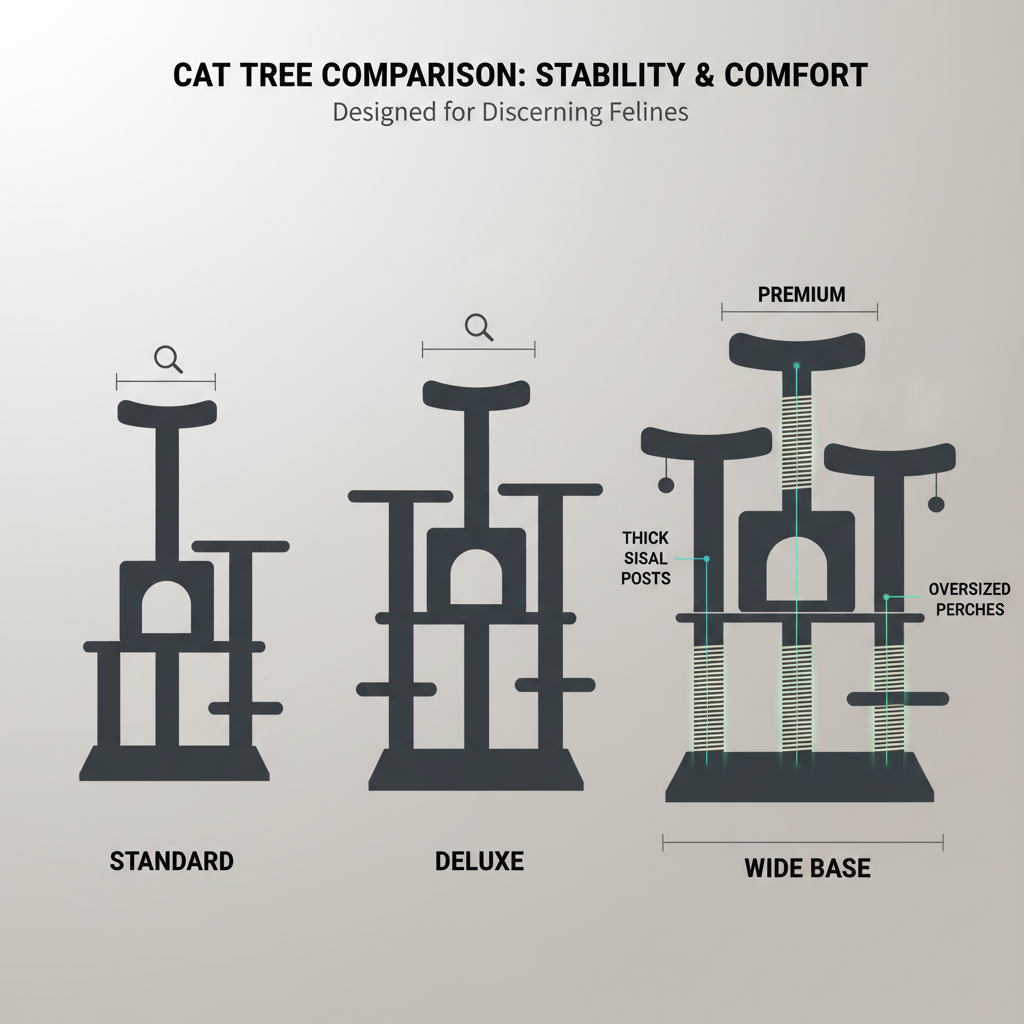
These are for big cats who insist on the highest seat in the house. For safety, the “tall” part should come with a wide base, thicker posts, and ideally a wall anchor. If a product claims 70+ inches tall but shows a narrow base, be skeptical.
- Best for: confident climbers, window viewing, single “alpha perch” households
- Watch-outs: top-heavy designs, small top bed, thin middle connectors
2) Low, wide trees (for stability and joint-friendly climbing)
If your large cat is older, less coordinated, or just not into big leaps, a lower build with broad platforms often gets used more. It also tends to feel more stable even if construction is average.
- Best for: seniors, long-bodied breeds, cautious jumpers
- Watch-outs: short scratch surfaces, cramped cubbies
3) Multi-cat “traffic” trees (for two or more big cats)
When multiple large cats share one structure, passing lanes matter. You want multiple routes up and down so cats don’t have to squeeze past each other on one narrow ladder.
- Best for: multi-cat homes, playful wrestlers, frequent zoomies
- Watch-outs: single small top perch that triggers resource guarding
4) Furniture-style trees (for living rooms where looks matter)
These can be great if the manufacturer doesn’t sacrifice structure for aesthetics. Look for real weight specs, thicker panels, and replaceable scratch parts when possible.
- Best for: design-conscious spaces, open-plan living rooms
- Watch-outs: slippery wood shelves without grip fabric, hard-to-clean cushions
Recommended sizing: perches, bases, and scratching posts
Numbers on listings are often incomplete, so you’re piecing together clues from photos, diagrams, and reviews. Still, a few sizing guidelines help you avoid the most common mismatches.
| Feature | What to aim for (large cats) | Why it matters |
|---|---|---|
| Top perch / bed | Oversized, with a supportive rim | Reduces “half hanging off” sleeping and sudden slips |
| Base footprint | Wide relative to height | Stability under side jumps and fast descents |
| Post thickness | Thick, rigid, well-anchored | Less flex, better scratching feel, fewer loose joints |
| Scratch length | Long enough for a full stretch | Encourages daily use, protects furniture |
| Step spacing | More intermediate platforms | Easier climbing, especially for heavier bodies |
Don’t get hung up on one magic measurement, because cats vary a lot. A long, lean Savannah-type cat and a stocky British Shorthair can weigh similarly but move differently. If your cat prefers sprawling, prioritize platform area over enclosed condos.
Setup tips that make big cat trees safer (and last longer)
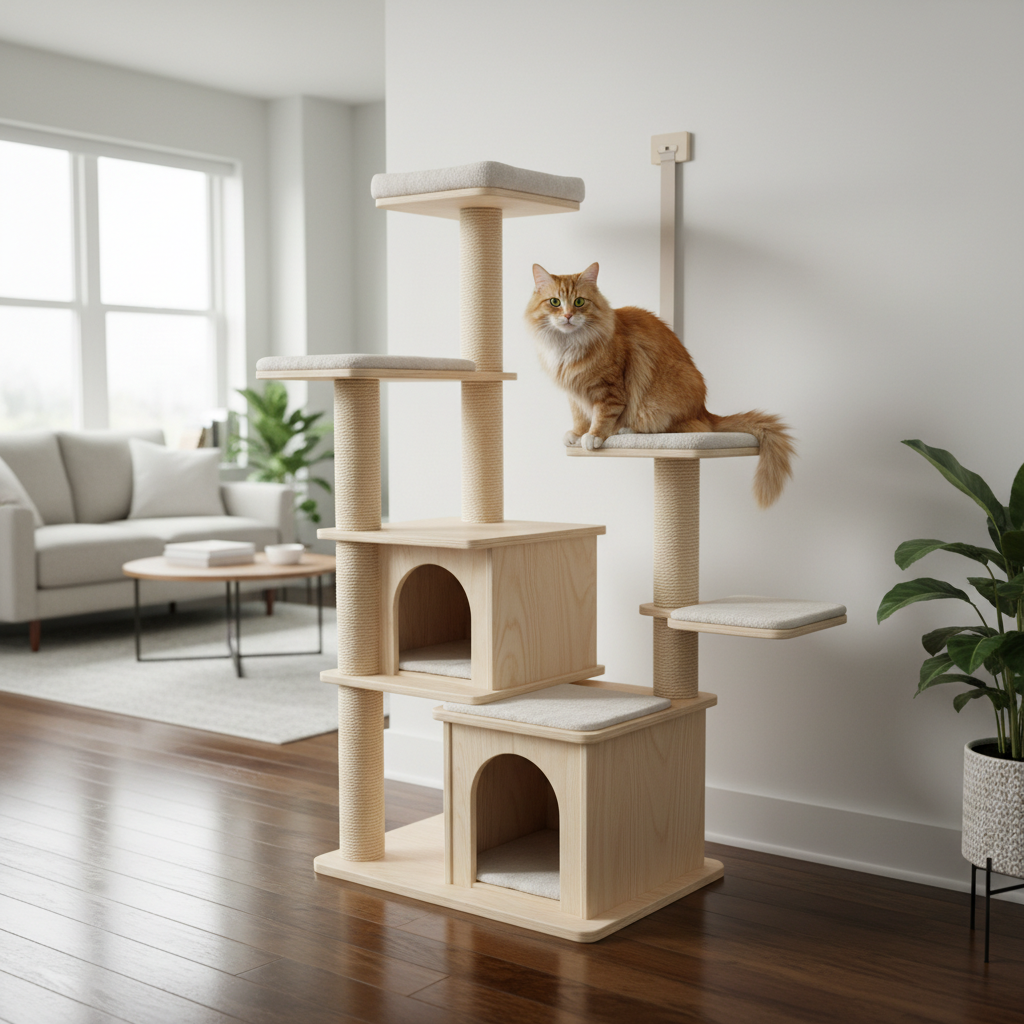
Even the best cat trees for large cats can feel unstable if assembly is rushed or the floor is uneven. Most wobble complaints come from tiny gaps at joints or a base sitting on thick carpet without support.
Stability first, then comfort
- Assemble on the final surface: Building on tile then moving to carpet can introduce wobble.
- Tighten twice: After the first full build, re-tighten bolts once panels settle.
- Use the wall anchor if provided: Especially for tall towers or athletic jumpers.
- Add traction: If platforms are slick, consider grip mats or covers made for pets.
Make it “obviously worth using”
- Place it near a window or your main room, not isolated in a spare corner.
- Rub a little catnip on scratch zones if your cat responds to it.
- Reward first climbs with treats, then fade treats out once it becomes routine.
Common mistakes shoppers make (and how to avoid them)
Big-cat owners often overcorrect by buying the tallest structure available. Height is fun, but for large cats, stability and scale usually decide whether the tree becomes a favorite spot or a pricey laundry rack.
- Buying for kittens, not adults: A tree can “work” at 8 months and fail at 2 years.
- Ignoring perch depth: A narrow top bed may look cute but won’t get used much.
- Underestimating scratching wear: Heavy scratchers can shred soft rope quickly, so replaceable sisal or durable wrap matters.
- Skipping maintenance: Loose bolts create wobble; a quick monthly check extends lifespan.
- Placing it on thick plush carpet: It can sink unevenly and sway, a flat board under the base often helps.
When to ask a vet or behavior pro for help
If your large cat suddenly stops climbing, hesitates before jumping, or vocalizes when landing, it might be more than “being lazy.” Joint pain, nail issues, and mobility changes can show up as avoidance of cat trees.
According to the American Association of Feline Practitioners (AAFP), mobility and pain in cats can be subtle. If you suspect discomfort, it’s worth discussing with a veterinarian; they can suggest safer activity setups and rule out medical causes.
Also, if the issue is conflict between cats, a certified cat behavior consultant can help with placement, resource distribution, and reducing guarding around high-value perches.
Bottom line: picking the right tree for your big cat in 2026
The best cat trees for large cats are the ones your cat trusts: stable under impact, roomy enough to lounge, and laid out so climbing feels natural. Start by choosing a category that matches your home and your cat’s movement style, then filter hard on base width, post thickness, and perch size.
If you do one thing today, measure the space where the tree will live and compare that footprint to the product base, not just the overall height. Then scan reviews for adult-cat photos to confirm scale before you buy.
Key takeaways
- Stability beats height for most large cats, especially in busy homes.
- Oversized perches get used more than tiny “cute” beds.
- More stepping platforms often helps heavier cats climb confidently.
- Wall anchors and re-tightening solve a lot of wobble complaints.
FAQ
- What size cat tree is best for a Maine Coon?
Most Maine Coons do better with oversized perches and thick posts, since they’re long-bodied and like to stretch out. Look for a wide base and roomy top bed rather than a narrow, ultra-tall tower. - Are tall cat trees safe for large cats?
They can be, but safety usually depends on footprint, build quality, and whether you can anchor it. If your cat launches sideways onto the top platform, a narrow base tends to feel sketchy. - How do I stop a cat tree from wobbling on carpet?
Try placing a flat, sturdy board under the base to create an even surface, then re-tighten all bolts. If the model supports anchoring, that often makes the biggest difference. - What material lasts longest for heavy scratching?
Sisal rope is common and usually holds up well, but durability varies by thickness and how tightly it’s wrapped. If your cat destroys scratch zones fast, replaceable scratch posts or panels are worth prioritizing. - Do large cats prefer condos or open platforms?
Many larger cats lean toward open platforms because tight condos can feel cramped, but it depends on personality. If your cat likes hiding spots, choose a condo with a wider entrance and enough interior space to turn around comfortably. - How many cat trees do I need for two big cats?
In many households, one large multi-level tree works if it has multiple resting spots and routes, but tension can still happen. If you see blocking or guarding, adding a second vertical option in another room often helps. - My cat won’t use the new tree, what should I do?
Move it closer to a window or where people spend time, add a familiar blanket, and reward short interactions. If avoidance is sudden and your cat used to climb before, consider checking with a veterinarian for possible discomfort.
If you’re trying to narrow down options quickly, focus on the unglamorous specs: base width, post thickness, perch dimensions, and whether the brand sells replacement parts. That short list usually gets you to a safer, longer-lasting pick without overthinking it.