
Pet dry bath spray sounds like a cheat code on busy days, but results vary a lot, some pets end up tacky, still smelly, or itching, and owners wonder if they used the product wrong or bought the wrong type.
This guide helps you get the “freshen up” benefit without turning your dog or cat into a sticky lint roller. We’ll cover what these sprays can and can’t do, how to choose one for your pet’s coat and skin, and how to apply it so it actually looks clean, not just perfumed.
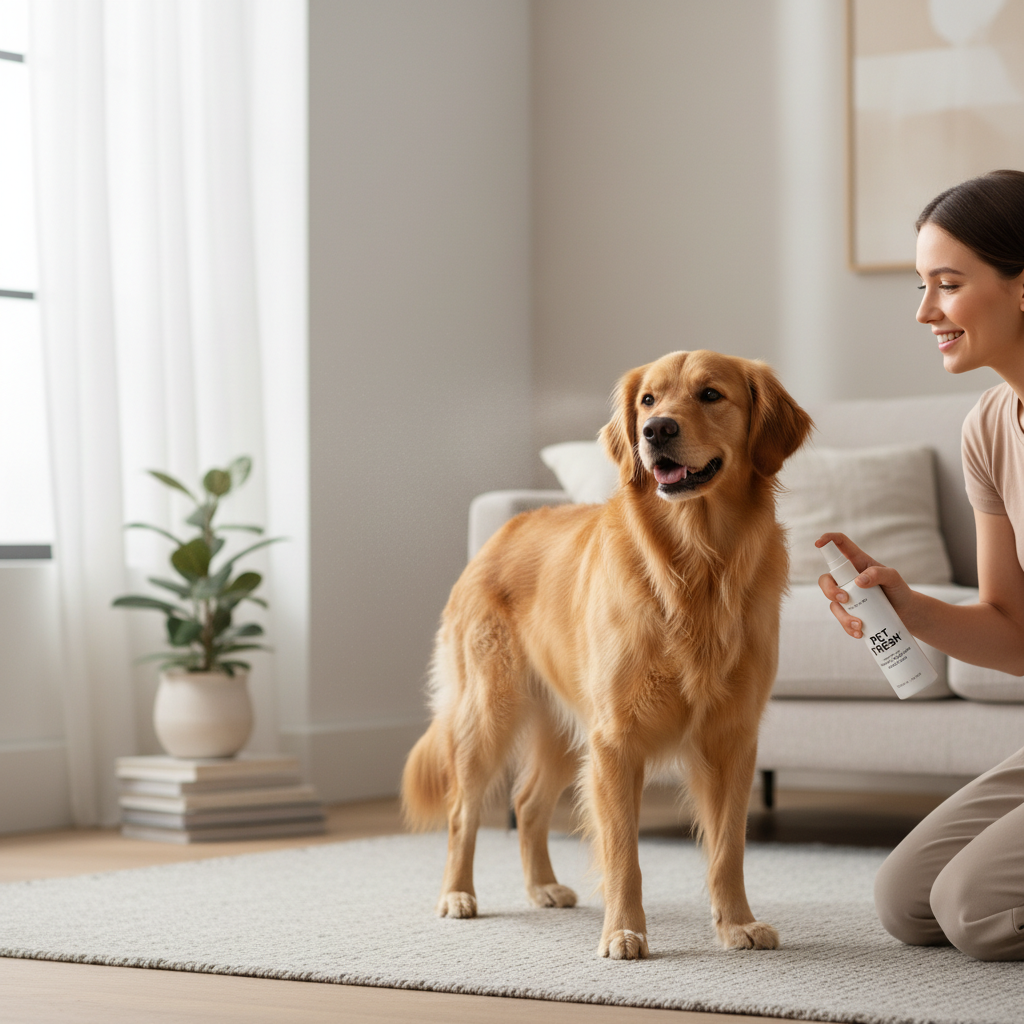
One quick reset: a waterless spray is usually for in-between baths, not a full substitute when your pet has heavy dirt, oily buildup, skunk spray, or a skin problem. If you treat it like a “mini groom” tool, it tends to shine.
What a no-water pet dry bath spray actually does (and what it doesn’t)
Most waterless grooming sprays work by loosening light grime, lifting oil a bit, and using mild surfactants or deodorizers so brushing or toweling removes what the spray brings to the surface. The better ones leave the coat feeling normal, not coated.
- Good for: light odors, post-walk dust, drool spots, “Frito feet” moments, quick cleanups between full baths.
- Not great for: thick mud, grease, urine saturation, skunk odor, flea “treatments,” or matted coats that need dematting.
- Not a medication: if there’s redness, hair loss, hot spots, or persistent itching, a spray won’t address the root cause.
According to the American Kennel Club (AKC), dogs generally need grooming tailored to coat type and skin needs, and some situations call for a real bath or professional help rather than quick fixes.
When a dry bath spray makes the most sense
In real life, the best use case is “my pet isn’t dirty-dirty, but they’re not cuddle-ready.” A pet dry bath spray often fits these common scenarios.
- Travel days: hotels, road trips, visiting family with “no dog smell” rules.
- Senior pets or anxious pets: anything that reduces bath stress can be worth it.
- Cold weather: when drying a full coat is a hassle, especially for thick double coats.
- Spot cleaning: paws, rear end area, belly, beard on doodle-type coats.
If your main problem is seasonal shedding or dander, sprays can help you brush more effectively, but they won’t replace a consistent grooming routine.
How to choose the right pet dry bath spray (quick comparison table)
Labels can look similar, so I’d pick based on your pet’s skin sensitivity and coat texture first, then fragrance preferences second. Scent can mask odor, but it also triggers reactions in some pets and humans.
| Pet / Situation | Look for | Use with extra caution |
|---|---|---|
| Sensitive skin, itchy tendencies | Fragrance-free or very lightly scented, simple ingredient list, hypoallergenic positioning | Strong perfumes, heavy essential oil blends |
| Oily coat, “doggy smell” returns fast | Deodorizing + light cleansing claim, pairs well with brushing | Overuse (can cause buildup and dullness) |
| Long coat / doodle coat | Detangling support, non-sticky finish | Spraying directly into mats (can tighten mats if you rub) |
| Cats (self-groomers) | Cat-specific labeling, minimal fragrance | Products not intended for cats; avoid getting near face |
Ingredient transparency matters. If your pet has a history of reactions, it’s reasonable to ask your veterinarian or a professional groomer what to avoid for that specific skin pattern.
How to use a pet dry bath spray so it doesn’t feel sticky
The biggest mistake is treating it like body spray: too close, too much, then rubbing hard. A better approach is “mist, wait, remove.”
Step-by-step (works for most dogs, and some cats if tolerated)
- Brush first to remove loose hair and surface dirt, sprays work better on a de-shedded coat.
- Shake the bottle if directions mention it, many formulas separate slightly.
- Mist from a distance (often 6–10 inches), aiming for lightly damp, not wet.
- Pause 30–60 seconds so the formula can break up oils and odor.
- Towel off using gentle pressure, don’t scrub like you’re cleaning a pan.
- Brush again to lift residue and restore the coat’s natural lay and shine.
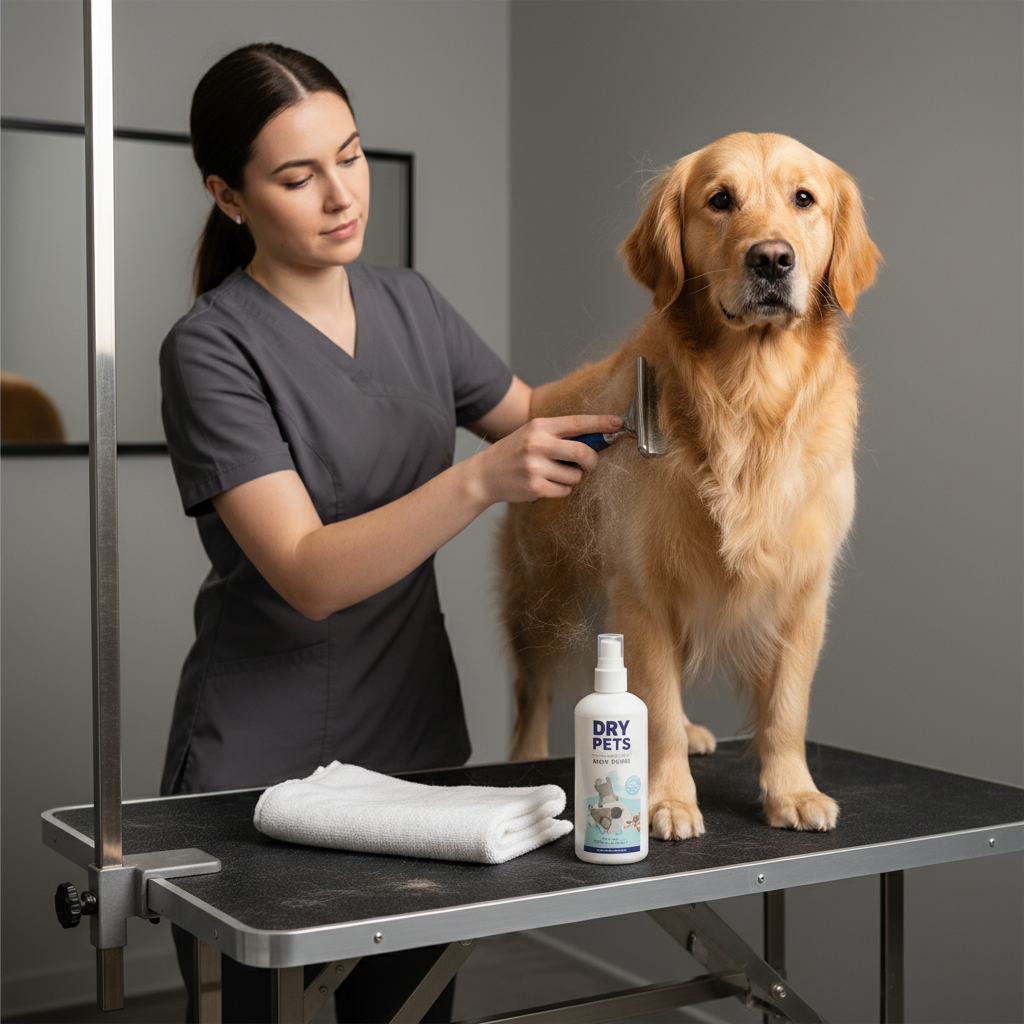
For paws and undercarriage, spray onto a cloth first, then wipe. It’s less messy, and you avoid accidentally misting eyes or nose.
According to the ASPCA, pet products should be used as directed and kept away from eyes and mouth; if irritation occurs, discontinue use and contact a veterinarian.
Quick self-check: are you using the right approach?
- Your pet’s coat looks cleaner but still feels tacky after drying.
- The smell improves for 10 minutes, then comes back.
- You see more dandruff after using the spray.
- Your pet tries to lick the sprayed area repeatedly.
- You’re using it daily because baths feel “too hard.”
If you checked one or two, you may only need less product and more brushing. If you checked several, I’d switch to a simpler formula, reduce frequency, and look at the underlying cause of odor, sometimes it’s ears, teeth, or skin rather than coat dirt.
Common mistakes and safety notes (the stuff people learn the hard way)
Waterless grooming is generally convenient, but “no water” doesn’t mean “no rules,” especially around eyes, ears, and sensitive skin.
- Mist near the face: avoid. Use a damp cloth for cheeks, chin, and around eyes.
- Assuming fragrance equals clean: strong scent can mask odor without removing oils, then the smell returns.
- Rubbing mats: friction can tighten tangles. Detangle gently or consult a groomer.
- Layering products: mixing sprays, leave-ins, and perfumes often creates buildup and a waxy feel.
- Using human products: human dry shampoos and fragranced sprays may contain ingredients that aren’t pet-appropriate.
If your pet has asthma-like symptoms, frequent sneezing, or skin flare-ups, consider fragrance-free options and ventilate the room. When in doubt, a veterinarian can help you decide what’s safe for that pet’s history.
Practical routines: “clean enough” plans for different households
Most people don’t need a complicated system, but a small routine beats random spraying when the dog already smells bad.
Busy weekdays (10 minutes)
- Brush high-friction zones: collar area, chest, behind ears.
- Use pet dry bath spray on a towel for paws and belly wipe-down.
- Finish with a quick brush to prevent residue.
After rainy walks
- Towel dry thoroughly first, moisture + odor tends to linger.
- Light mist on legs and underside, wait, then towel again.
- Check paw pads for grit, that’s often where the “funk” starts.
Multi-pet homes
- Separate towels per pet, shared towels move odor around fast.
- Spot clean the pet who “starts it,” rather than spraying everyone.
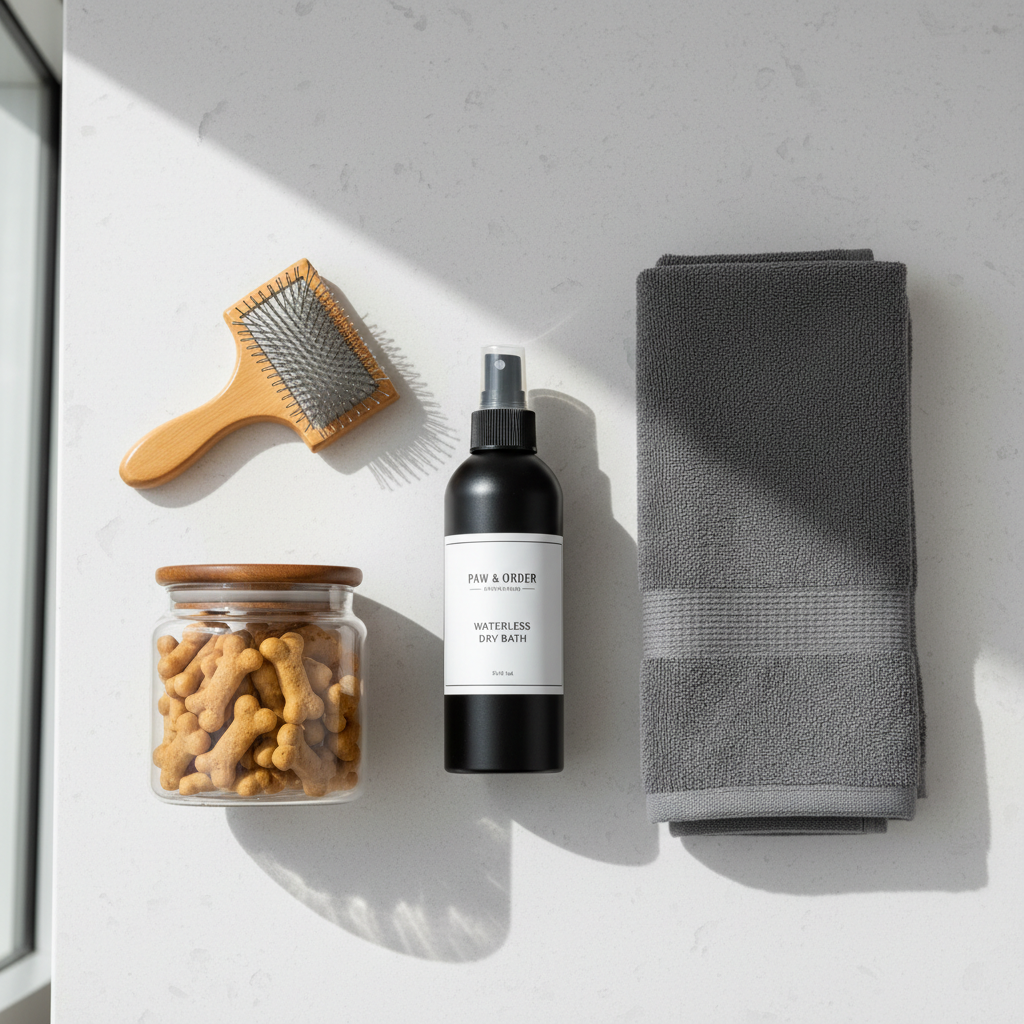
Key point: if you’re relying on a waterless spray multiple times a week for months, that’s usually a sign to adjust bath frequency, grooming tools, or check for skin and ear issues that create recurring odor.
Conclusion: keep expectations realistic, and the spray becomes genuinely useful
A pet dry bath spray earns its place when you treat it like a quick reset: light mist, towel, brush, done. It’s not meant to replace a full bath when your pet is truly dirty, and it shouldn’t cover up ongoing skin or ear problems.
If you want one action to take today, do a simple test run on a small patch of coat, then adjust the amount and brushing time until the finish feels natural. Small tweaks beat buying a new bottle every time something feels off.
FAQ
Is a pet dry bath spray safe for puppies or kittens?
Often it can be, but age, skin sensitivity, and licking behavior matter. Choose a product labeled for young pets when possible, use a small amount, and keep it away from eyes and mouth; if you’re unsure, ask a veterinarian.
Can I use waterless spray every day?
Many households can use it occasionally without issues, but daily use may cause buildup or dryness depending on the formula and coat type. If odor returns fast, it’s worth checking ears, teeth, bedding, and skin rather than increasing frequency.
Why does my dog feel sticky after using it?
Usually it’s too much product, not enough towel-off, or you skipped the final brush-out. Try spraying onto a towel first, then wiping, and finish with a thorough brush to lift residue.
Does waterless dry shampoo kill fleas or ticks?
Most dry bath sprays are not parasite treatments. If fleas or ticks are a concern, use veterinarian-recommended prevention and consult a professional for the right plan.
Can I use a pet dry bath spray on my cat?
Some cats tolerate it, many don’t. Stick to cat-labeled products, keep fragrance low, apply to a cloth instead of spraying the air, and stop if your cat shows stress or tries to lick heavily.
What if the smell is coming back within a few hours?
That often points to a source other than coat dirt, commonly ears, dental issues, anal glands, or yeast-related skin concerns. A groomer can flag patterns, and a veterinarian can rule out medical causes.
Should I choose scented or unscented?
If anyone in the home has sensitivities, or your pet has a history of itching, unscented is the safer bet. If you choose scented, keep it light and make sure it still cleans effectively, not just perfumes.
If you’re trying to pick a waterless option that fits your pet’s coat and your routine, it helps to share your pet’s breed, coat length, skin sensitivity history, and what “smell” you’re actually battling, then you can narrow down formulas and a simple use routine without wasting bottles.