
How to train a puppy to potty comes down to one thing: removing guesswork for your puppy and making the “right spot” easy to repeat. If you’re dealing with accidents, it usually isn’t stubbornness, it’s timing, supervision gaps, or a routine that changes day to day.
The good news, puppies learn patterns fast when you keep the plan simple. You don’t need fancy gear, you need a predictable schedule, clear rewards, and a way to prevent mistakes while your puppy figures it out.
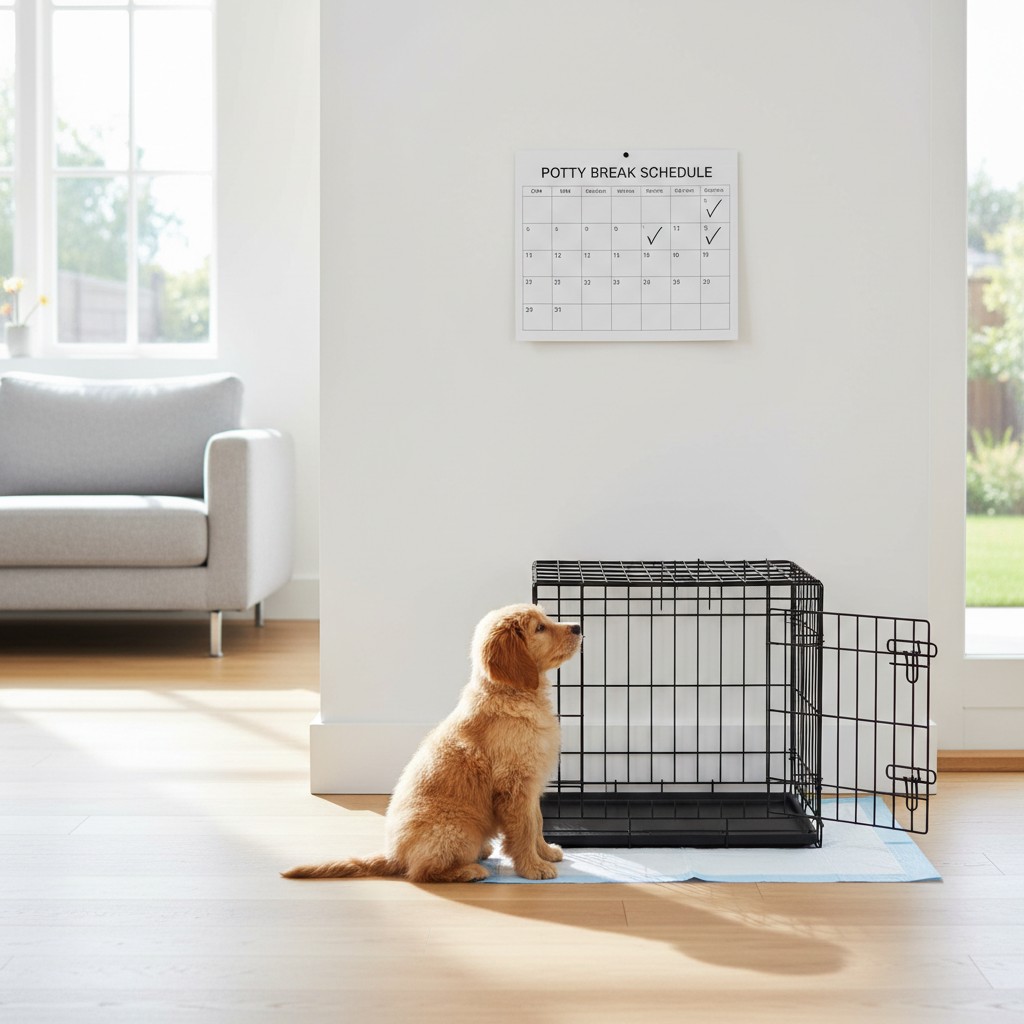
One quick expectation check though, “fast” often means consistent progress in 7–14 days, with occasional slip-ups. Smaller breeds, very young puppies, or rescues with unknown history may take longer, and that’s not a failure, it’s normal development.
Below you’ll get a practical setup, a simple timetable, and what to adjust when your puppy keeps missing the mark, plus a few safety notes when accidents might signal a health issue.
Why accidents keep happening (even with “good” puppies)
Most potty training problems are predictable, and once you name the pattern, fixing it gets a lot easier.
- Too much freedom too soon: if your puppy can roam, they will pick a quiet corner and start a habit.
- Breaks happen too late: puppies don’t “hold it” well, especially after sleep, meals, play, or excitement.
- Reward arrives late: if the treat happens after you return inside, your puppy may not connect it to the outdoor potty.
- Indoor scent remains: regular cleaners often leave trace odor, which tells a puppy “this is a bathroom.”
- Mixed signals: sometimes pee pads, sometimes outdoors, sometimes punished, sometimes ignored, it muddies the rule.
According to the American Kennel Club (AKC), house training works best when you lean on supervision, a routine, and immediate rewards, rather than punishment after the fact.
A quick self-check: what kind of potty training situation are you in?
Before you change everything, identify your current bottleneck. This list helps you pick the right fix instead of trying random tips.
- “We miss the cue”: accidents happen while you’re cooking, on a call, or distracted.
- “They go outside, then go again inside”: outdoor time feels like play, not business.
- “They pee every 20 minutes”: could be age, tiny bladder, stress, too much water at once, or sometimes a medical issue.
- “They only have accidents at night”: bedtime routine, crate setup, or late-evening water needs adjustment.
- “It’s worse in a new home / after a trip”: routine disruption and stress often reset progress.
If you can describe your pattern in one sentence, you’re already closer to a solution.
Set up your home for success (this is where “fast” comes from)
How to train a puppy to potty “fast and easy” usually starts with management, not training tricks. You’re preventing the wrong reps, because every indoor accident is practice.
Choose your potty plan: outdoors vs. pads
- Outdoor training works well if you can take frequent breaks and want a clear long-term rule.
- Pee pads can make sense for high-rise living or extreme weather, but many puppies generalize “soft surface equals bathroom,” so transitions may take extra patience.
Use a crate or a small pen (humanely)
A crate is a safety and supervision tool, not a punishment. Many puppies avoid soiling their sleeping area, so it helps you control timing. The crate should be large enough to stand, turn, and lie down, but not so large that one corner becomes a toilet.
Get the right cleaner
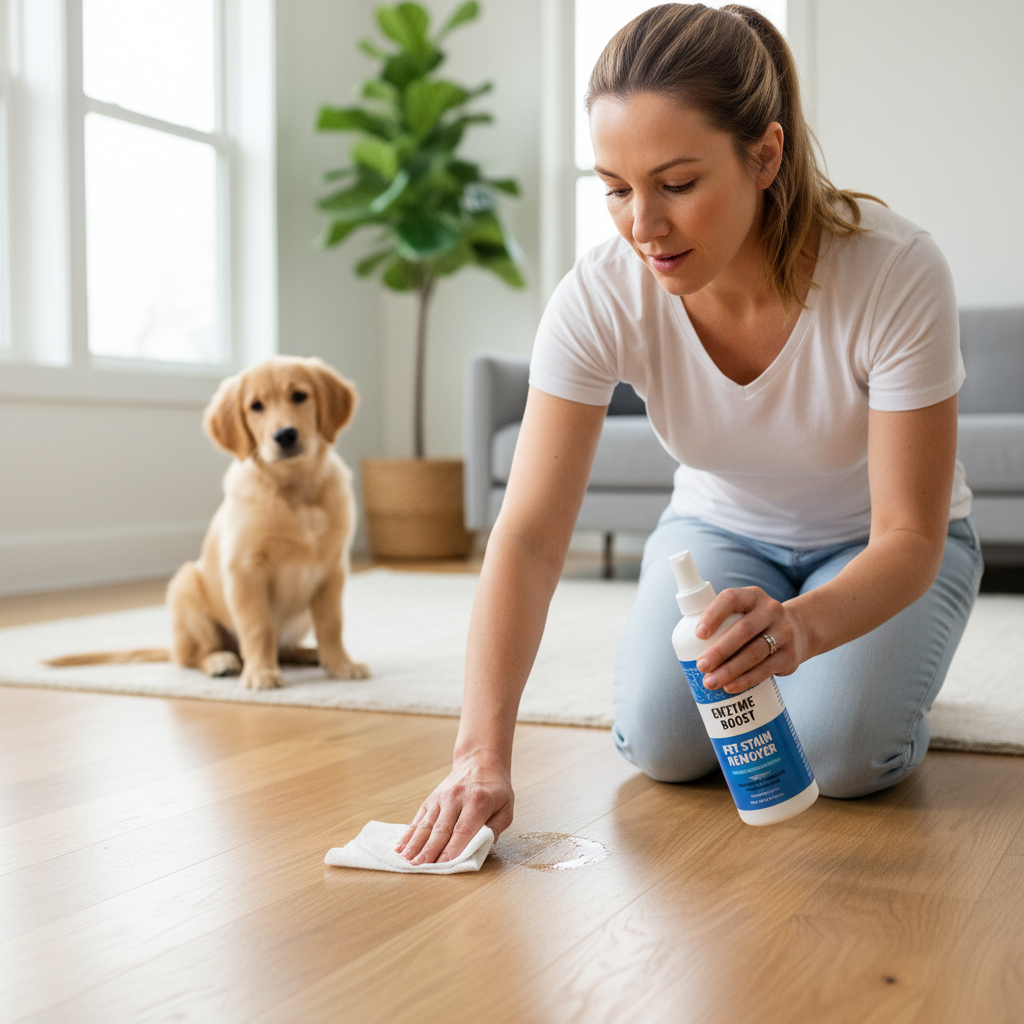
Use an enzymatic cleaner designed for pet urine. It breaks down odor compounds better than regular soap, which matters because your nose and your puppy’s nose are playing different sports.
The simple potty schedule that works for most puppies
When people ask how to train a puppy to potty, they usually want a clear “when do I take them out” answer. Use this as your baseline, then adjust based on your puppy’s age and accident pattern.
Go out at these high-success moments
- Right after waking up (nap or overnight)
- 5–15 minutes after eating
- After drinking a lot (especially big gulps)
- After play or excitement
- Before crating and right after you let them out
Quick reference table: break frequency (typical starting point)
These are common ranges, not promises. Individual puppies vary, and tiny breeds often need more frequent trips.
| Age | Typical daytime potty breaks | Nighttime expectation |
|---|---|---|
| 8–10 weeks | Every 30–60 minutes when awake | 1–3 breaks overnight is common |
| 10–12 weeks | Every 60–90 minutes when awake | 0–2 breaks overnight |
| 3–4 months | Every 90–120 minutes when awake | Often 0–1 break overnight |
| 4–6 months | Every 2–4 hours, plus event-based breaks | Many can sleep through, some still need a break |
Key point: if accidents happen between scheduled breaks, shorten the interval for a week, rebuild reliability, then stretch again.
The step-by-step method: cue, leash, reward, repeat
This is the “boring” routine that produces fast results because it’s the same every time. Puppies thrive on boring.
1) Take your puppy out on leash
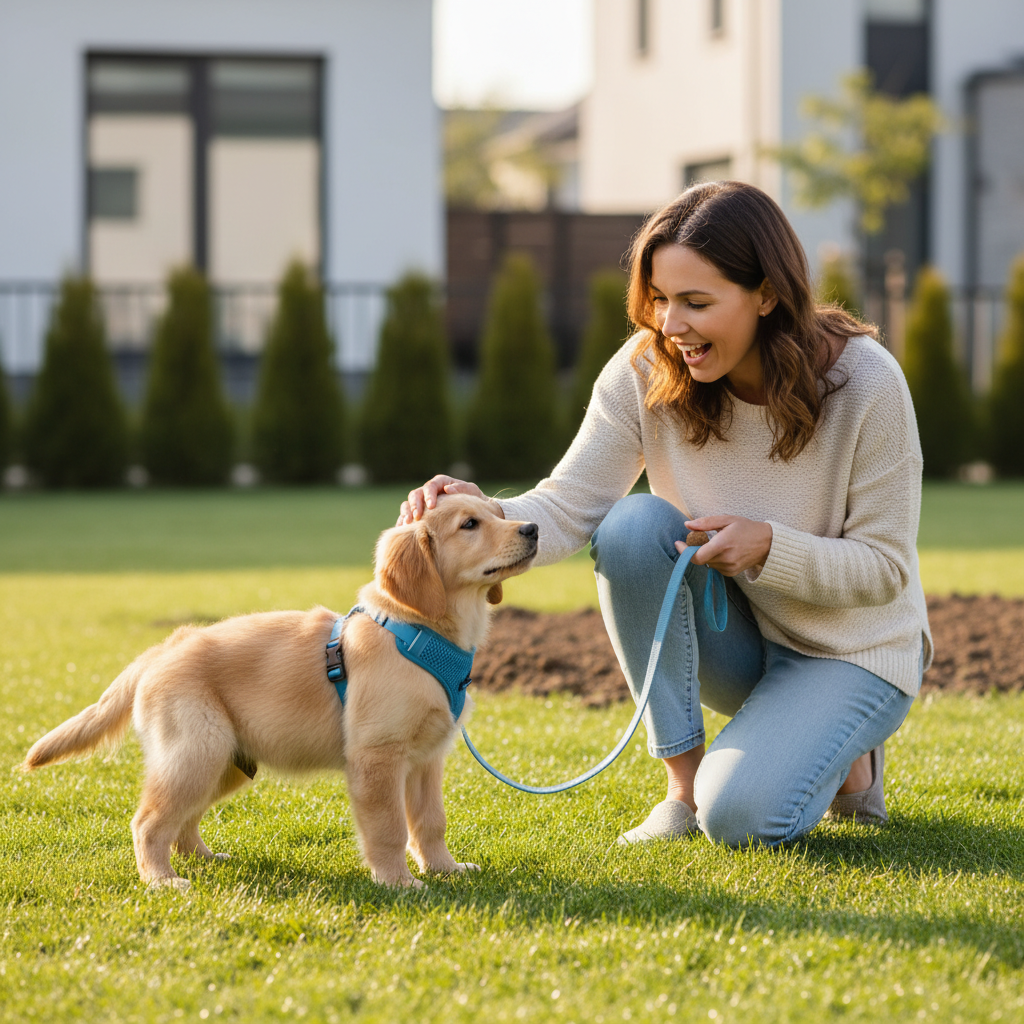
Even if you have a fenced yard, the leash keeps your puppy from turning the trip into a zoomies party. Walk to the same general spot so the scent helps the behavior.
2) Give one simple cue and wait
Say a cue like “go potty” once, then stay quiet. Talking, petting, and pacing can distract sensitive puppies.
3) Reward immediately after they finish
Treat and calm praise within a couple seconds, right there outside. This timing is a big part of how to train a puppy to potty without dragging things out.
- Reward type: small, high-value treats work well early on
- Reward order: potty first, then freedom/playtime
4) If nothing happens, reset instead of waiting forever
Give it 3–5 minutes. If no potty, go inside and supervise closely or crate for 10–15 minutes, then try again. This prevents the classic “went outside, came in, peed on the rug” loop.
Fixes for the most common “stuck” scenarios
When training stalls, it’s almost always one of a few situations. Pick the one that sounds like your home and try the targeted change for 5–7 days.
Puppy pees inside right after coming in
- Shorten outdoor trips, fewer distractions, same spot, leash on.
- Delay play until after potty, not before.
- Use the reset routine: crate briefly, then try again.
Puppy has accidents when you’re busy
- Use a pen, baby gate, or tether your puppy to you with a leash.
- Set phone reminders for breaks until the habit sticks.
- Watch for subtle cues: sudden sniffing, circling, wandering away.
Puppy does great for days, then “forgets”
- Assume the routine drifted, tighten the schedule again for a week.
- Clean any accident spot with enzymatic cleaner, even if you think it’s gone.
- If a life change happened (new room, visitors, travel), treat it like a mini reset.
Common mistakes that slow potty training (and what to do instead)
Some advice sounds tough-love, but it usually backfires with house training. Here are the big ones worth avoiding.
- Scolding after an accident: many puppies just learn to hide when they need to go, which makes it harder to teach the right place.
- Rubbing noses in it: it doesn’t teach location, it often adds fear and confusion.
- Changing the potty spot daily: consistency speeds up learning.
- Using ammonia-based cleaners: the smell can resemble urine and invite repeat accidents.
- Too much unsupervised time: freedom is earned; expand space slowly.
According to the American Society for the Prevention of Cruelty to Animals (ASPCA), positive reinforcement and consistent routines are more effective than punishment for house training.
When to consider a vet or trainer (don’t ignore these signs)
Most accidents are training-related, but sometimes they’re not. If anything feels “off,” it’s reasonable to check in with a professional rather than pushing harder.
- Sudden frequent urination after your puppy was improving
- Straining, crying, blood, or very strong odor in urine
- Excessive drinking or lethargy
- Persistent diarrhea or vomiting alongside accidents
According to the American Veterinary Medical Association (AVMA), behavior changes or elimination changes can sometimes be linked to medical conditions, so a veterinary exam may be appropriate if symptoms persist.
If the issue is mostly timing, fear outdoors, or a household routine that’s hard to maintain, a certified dog trainer can help you troubleshoot without guessing. Look for credentialed trainers who use reward-based methods.
Conclusion: keep it simple, keep it consistent
How to train a puppy to potty isn’t about a single magic tip, it’s about stacking small wins every day. Tighten supervision, stick to a predictable schedule, reward the moment your puppy gets it right, and prevent indoor practice while the habit forms.
- Action step for today: set a break timer for the next 48 hours and take your puppy to the same spot on leash.
- Action step for this week: shrink freedom indoors, then expand space only after several accident-free days.
If you want the “fast” version, don’t look for shortcuts, look for fewer chances to fail. That’s what makes the learning curve smoother for both of you.