
How to calm a hyper puppy starts with one slightly annoying truth: most “crazy” puppy behavior is normal, but the routine around it often isn’t.
If your pup bounces off the couch, grabs sleeves, and can’t seem to relax, you’re not failing at training, you’re usually missing a few basics like nap structure, the right kind of play, and a clear off-switch cue.
This guide focuses on natural, realistic ways to help a puppy settle, without relying on punishment or quick fixes. You’ll get a fast self-check, a simple daily rhythm, and a few calming tools that actually work in many households.
Why your puppy is “hyper” (and what it usually means)
How to calm a hyper puppy gets easier once you stop treating hyperness as one thing. In real life it can be excitement, stress, overtiredness, or unmet needs, and the solution changes depending on which one you’re seeing.
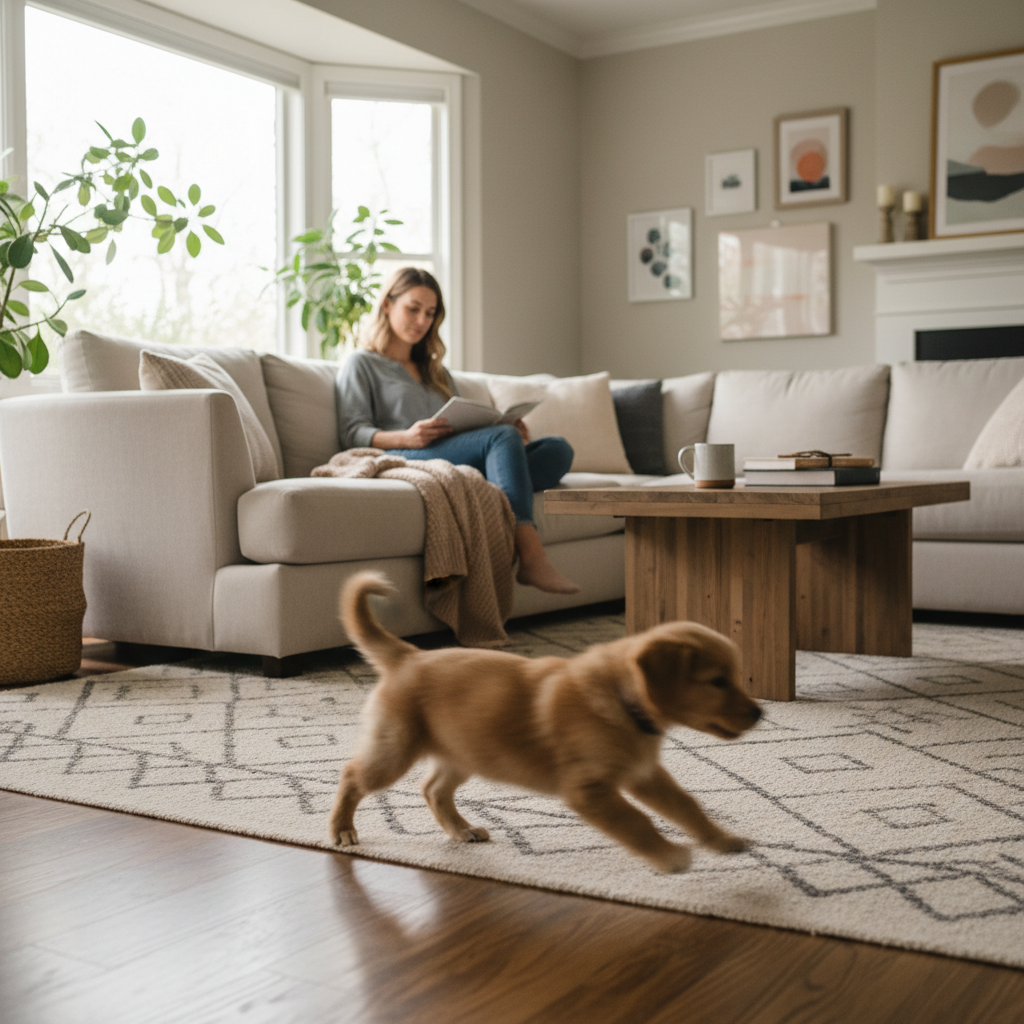
Common drivers look like this:
- Overtired puppy: the “wired but tired” spiral, extra biting, ignoring cues, frantic zoomies.
- Under-stimulated brain: plenty of walking, but little sniffing, problem-solving, or chewing.
- Over-aroused play: nonstop fetch/tug with no breaks, lots of chasing hands, big squeals, no settle practice.
- Too much freedom: the house becomes a playground, so the pup rehearses chaos and gets better at it.
- Stress signals: pacing, panting when not hot, dilated pupils, can’t disengage, hiding then exploding.
According to the American Veterinary Medical Association (AVMA)...
Quick self-check: which “hyper” pattern do you have?
Before you change everything, spend one day noticing what happens right before the madness. You’re looking for patterns, not perfection.
| What you see | Most likely cause | Best first move |
|---|---|---|
| Zoomies + biting after 60–90 min awake | Overtired | Structured nap in crate/pen |
| Restless after long walk | Needs sniffing/brain work, not miles | Sniff walk + short training game |
| Gets wild during play, can’t stop | Over-arousal | Play in 30–60 sec bursts + breaks |
| Calm in pen, wild with full-house access | Too much freedom too soon | Leash indoors or baby gates |
| Startles easily, frantic behavior in new places | Stress/overwhelm | Lower exposure, reward calm, ask pro help |
If you’re nodding at more than one row, that’s normal. Many pups are overtired and over-aroused, especially in busy homes.
The “calm routine” that works in most homes
When people ask how to calm a hyper puppy, they often expect a single trick. The faster win is a rhythm your puppy can predict, with short activity blocks and intentional downshifts.
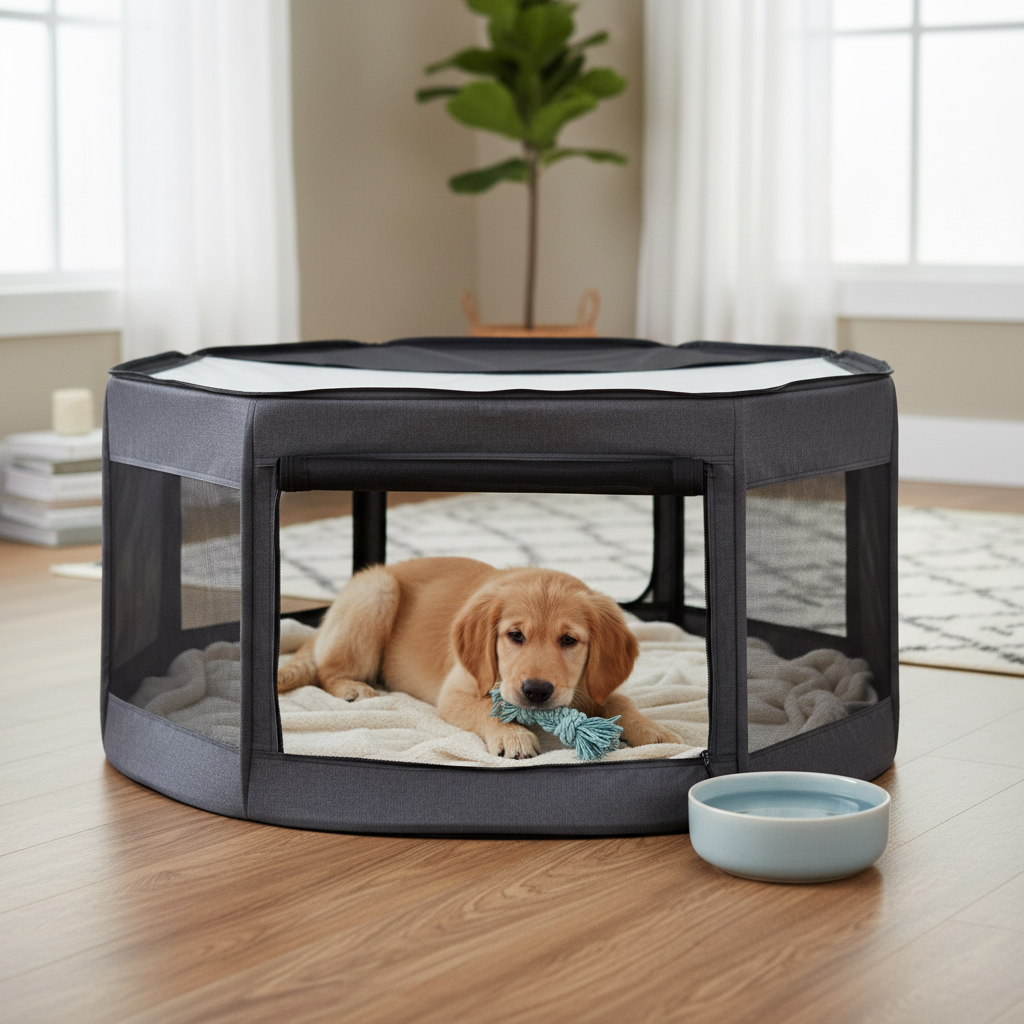
A practical starter schedule (adjust for age and breed):
- Awake 45–90 minutes: potty, sniffing, training, a little play.
- Nap 1–2 hours: crate/pen in a quiet spot, white noise can help.
- Repeat through the day, with meals used for training or enrichment.
The point isn’t strict timing, it’s avoiding the “three hours awake then chaos” pattern. Many puppies need more sleep than owners expect, and missed naps often show up as biting, barking, and zoomies.
According to the American Kennel Club (AKC)...
Natural ways to lower energy without “punishing it away”
Here are calming options that tend to work because they meet real needs: chewing, sniffing, and choice-based learning. Pick two or three and rotate.
1) Sniffing as exercise (more effective than extra miles)
Try a 10–20 minute “sniff walk,” where your pup leads on a long leash and you reward check-ins. You’ll often see better settling than from a fast-paced neighborhood loop.
2) Chew time that actually soothes
Chewing can reduce arousal for many pups, but safety matters. Choose size-appropriate chews, supervise, and avoid items that splinter. If your puppy swallows chunks, switch to safer options and ask your vet.
3) Lick mats and food puzzles (calm the mouth, calm the dog)
Use part of a meal in a puzzle toy, snuffle mat, or a simple scatter feed in the yard. These are “natural” in the sense that they mimic foraging, not because they’re magical.
4) Micro-training: 60 seconds, then stop
Short sessions keep excitement from boiling over. Practice sit, hand target, or name response, then release to a chew or a nap. The training isn’t only for skills, it teaches your pup to switch gears.
Teach an off-switch: settle on a mat (the calm skill most people skip)
If you want how to calm a hyper puppy to feel repeatable, teach a default calm behavior. “Go to mat” is simple, portable, and pairs well with real life, like dinner prep or Zoom calls.
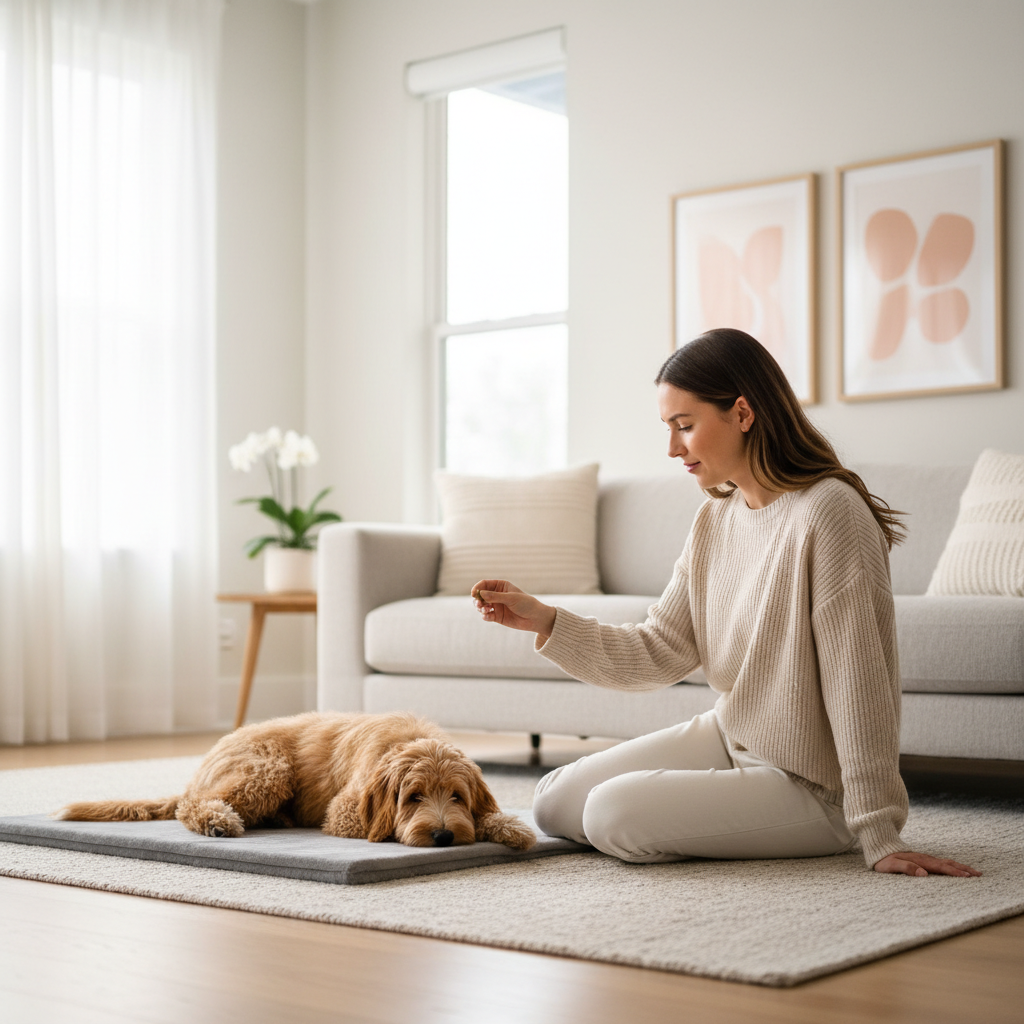
A straightforward way to build it:
- Place a mat or small bed on the floor, reward any step toward it.
- When your puppy sits or lies down, reward again, calmly.
- Add a cue like “mat” only after your pup repeatedly goes there.
- Increase duration by feeding one treat at a time for staying put, then pause.
- Gradually add mild distractions, keep sessions short.
Keep your voice boring, rewards small, and expectations realistic. Early on, 10 seconds of calm is progress.
What to do in the moment: a 2-minute de-escalation plan
Even with great routines, puppies still spike. In the moment, the goal is not “perfect behavior,” it’s bringing arousal down without adding drama.
- Freeze and get quiet: big reactions often fuel biting and jumping.
- Redirect to an approved outlet: chew, tug toy, or scatter a few kibble pieces.
- Lower the environment: reduce noise, end play, step behind a baby gate.
- Short reset: potty break, then nap/pen time if the pup is frantic.
If nipping is intense, manage your hands and clothes rather than “testing” your puppy. Put a leash on indoors, use gates, and prevent rehearsals.
Mistakes that keep puppies wound up (even with good intentions)
When people keep searching how to calm a hyper puppy, it’s often because the household accidentally reinforces the chaos. A few common traps:
- More running to fix running: constant fetch can create a better athlete, not a calmer pet.
- Inconsistent nap opportunities: the puppy never learns to rest, only to crash.
- Correcting without teaching: “No” without an alternate behavior leaves your pup stuck.
- Too many new experiences at once: socialization is important, but overwhelm can backfire.
- Expecting adult self-control: many young dogs need active help to settle.
According to the American Animal Hospital Association (AAHA)...
When to ask a vet or trainer for help
Sometimes “hyper” isn’t just high energy. If you see any of the below, it’s smart to bring in professional support, especially because early help can prevent bigger issues later.
- Inability to settle at all, even after naps and enrichment
- Aggressive-looking biting with stiff body language, guarding, or frequent hard stares
- Sudden behavior change, pain signs, limping, or sensitivity to touch
- Panic behaviors: nonstop pacing, drooling, self-injury, extreme distress when alone
A veterinarian can rule out medical contributors, and a qualified trainer (often a CPDT-KA or a veterinary behaviorist for complex cases) can help you build a plan that fits your dog and household. If you’re unsure, ask your vet for referrals.
Key takeaways and next steps
How to calm a hyper puppy is usually less about “burning energy” and more about teaching recovery, protecting sleep, and giving your puppy legal ways to use their brain and mouth.
- Start with a predictable awake/nap rhythm, many pups settle better within days.
- Swap some high-speed exercise for sniffing and food enrichment.
- Teach a mat settle, then use it daily in real moments.
If you want one action today, set up two structured naps and a 10-minute sniff walk, then see how your evening changes.
FAQ
- How to calm a hyper puppy at night without more exercise?
Many pups get wild at night because they’re overtired or overstimulated. Try an earlier last nap, a calm chew or lick mat, dim lights, and a short potty trip, then bedtime. - Is it normal for puppies to get the zoomies every day?
Often yes, especially in the evening. Frequent zoomies can also mean your puppy needs more naps or calmer enrichment, so watch the timing and triggers. - Do calming treats work for a hyper puppy?
Some products may help some dogs, but results vary and ingredients matter. It’s best to ask your veterinarian before using supplements, particularly for small pups or dogs with health issues. - Should I ignore my puppy when they jump and bite?
Ignoring can work only if it’s consistent and safe. Many households do better with management, like a leash indoors, a gate, and immediate redirection to a chew, then a nap if the pup is spiraling. - How much sleep does a puppy need to be calmer?
It varies by age and individual dog, but many puppies need lots of sleep across the day. If your puppy is awake for long stretches and gets “extra wild,” add structured nap time and reassess. - What’s the best game to tire a puppy mentally?
Short scent games, scatter feeding, and simple shaping training often create better calm than long fetch sessions. Keep it easy, end before your pup gets frantic. - When should I worry that my puppy is too hyper?
If your puppy can’t settle even with naps and enrichment, shows sudden behavior changes, or has intense biting with stiff body language, consider talking with your vet and a qualified trainer.
If you’re trying to calm a busy puppy while juggling work and a normal household, it can help to get a simple routine built around your dog’s age, breed tendencies, and your schedule, because the “right” plan usually looks different in an apartment than in a backyard home.