
how to stop dog from jumping on people usually comes down to one thing: your dog has learned that jumping works, even when people say “no.” The good news is you can change that pattern without being harsh, but it does take a plan that your household and visitors can follow.
Jumping is rarely “bad attitude.” In many homes it’s excitement, attention-seeking, or a habit that got reinforced by laughing, petting, or even pushing the dog away. And because greetings happen fast, people accidentally reward the exact behavior they dislike.
This guide breaks it into practical pieces: why jumping happens, how to tell what’s driving it in your dog, and a few training setups that hold up when the doorbell rings. I’ll also flag common mistakes that keep dogs stuck, even when owners feel like they’ve tried everything.
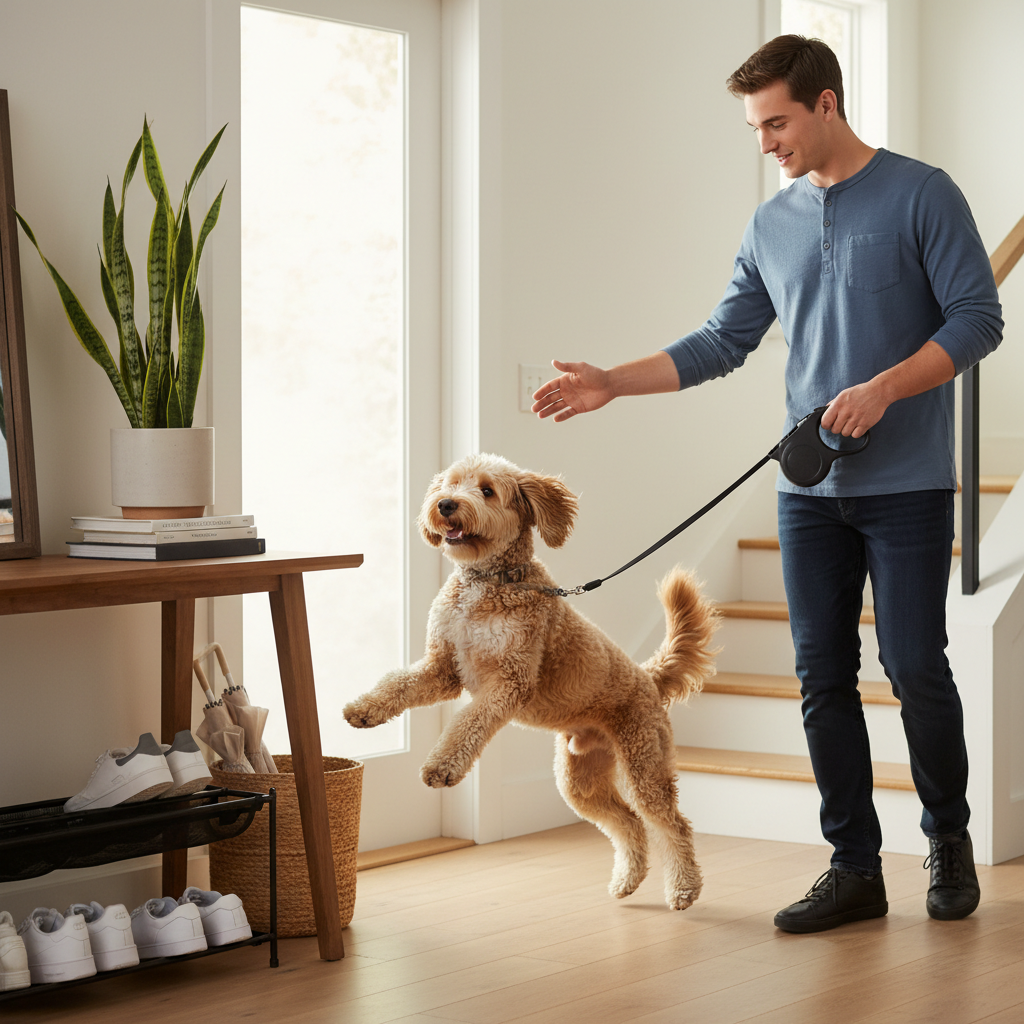
Why dogs jump on people (and why it keeps happening)
Most dogs jump because it works in the moment. Attention is a powerful reward, and dogs don’t care much whether it’s “good” attention or “stop it!” attention.
- Excitement and social greeting: Many dogs greet face-first, jumping gets them closer to hands and faces.
- Attention-seeking: If jumping reliably produces talking, touching, eye contact, or play, the dog repeats it.
- Over-arousal: Some dogs get flooded at the door, they lose impulse control and bounce like a spring.
- Inconsistent rules: One guest pets the dog while it jumps, another scolds, your dog hears mixed messages.
- Reinforcement by “pushing off”: Hands on chest can feel like play, plus it’s still contact.
According to the American Veterinary Society of Animal Behavior (AVSAB), reward-based training and consistency tend to be more effective and lower-risk than punishment-based approaches for most behavior issues, especially when you’re teaching an alternate behavior.
Quick self-check: what type of jumper do you have?
Before you train, get clear about the pattern. The same “no jumping” rule can require different setups depending on what triggers the behavior.
Use this checklist
- Door-only jumper: Mostly jumps when someone enters the home.
- Any-human jumper: Jumps on strangers on walks, at parks, in pet stores.
- Selective jumper: Jumps on kids, certain guests, or only when someone talks in a high voice.
- Stress-excited jumper: Body looks tense, frantic, lots of whining or spinning.
- “I need something” jumper: Jumps when you’re holding food, leash, toy, or when you sit down.
If your dog’s jumping comes with snarling, stiff posture, guarding, or repeated nipping, treat that as a different category. That can be safety-related and often benefits from a qualified professional evaluation.
The core strategy: teach an incompatible greeting
If you want to know how to stop dog from jumping on people, the most reliable path is teaching a behavior that can’t happen at the same time as jumping, then paying well for it.
Good “replacement behaviors”
- Sit to say hi (simple, but only works if the dog can hold it during excitement)
- Four on the floor (reinforce standing calmly with all paws down)
- Go to mat / place (best for doorways and guests)
- Hand target (“touch”) (gives the dog a job and a predictable routine)
Pick one and build it into a routine. Multiple “half-trained” options often crumble at the door.
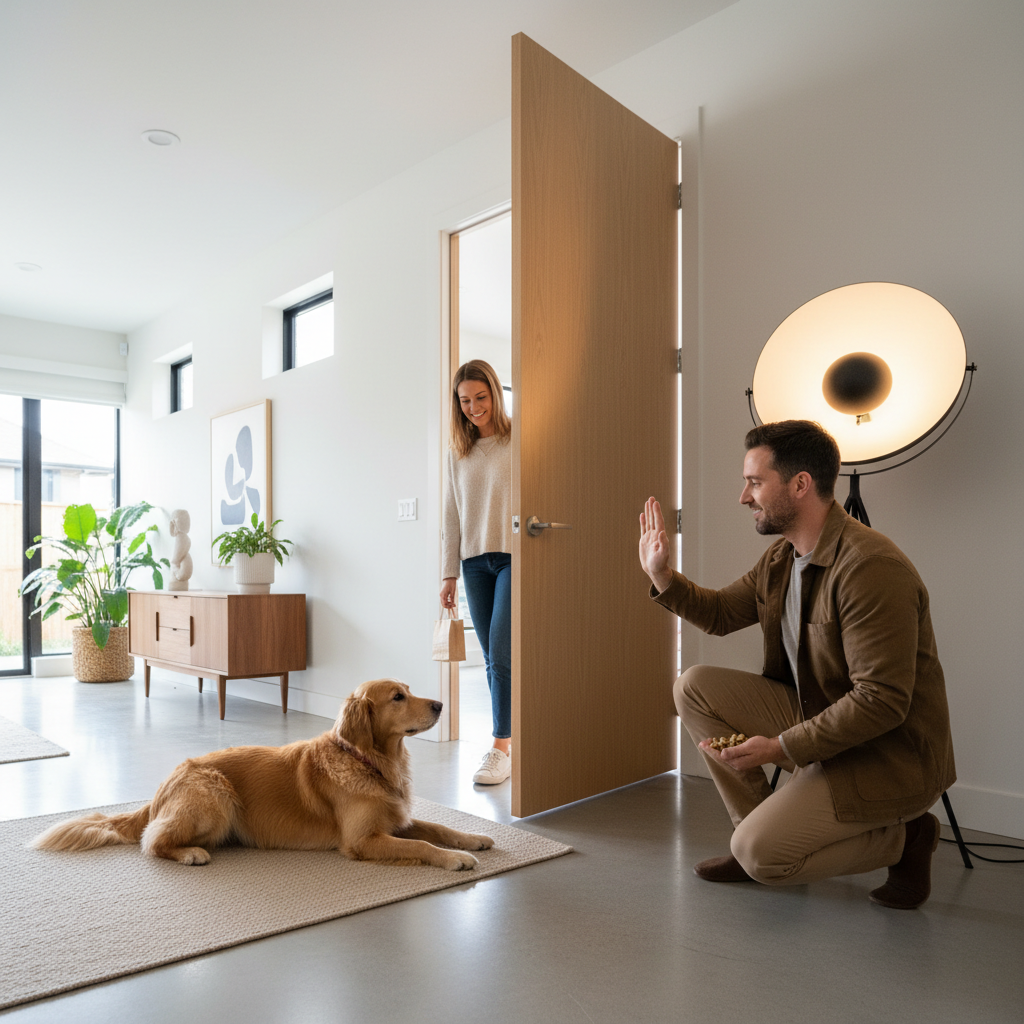
Step-by-step training plans (pick the one that fits your life)
Below are three setups that cover most households. You can combine them later, but start with one plan you can repeat daily.
Plan A: “Four on the Floor” for everyday greetings
- Stage it: Start with a familiar person who can follow directions.
- Pre-load rewards: Have small treats ready, or use calm petting if that’s reinforcing for your dog.
- Mark and reward: The instant all four paws are down, say “yes” (or click) and reward low, near the floor.
- Remove reward for jumping: If the dog jumps, the greeter turns away and goes still, no talking, no touching.
- Repeat fast: Short reps beat one long chaotic greeting.
What people miss: “turn away” only works if everyone commits. If even one person keeps petting the dog while it jumps, your dog learns to keep trying because sometimes it pays.
Plan B: “Go to Mat” for doorbells and visitors
- Teach the mat away from the door: Lure or toss a treat onto the mat, reward for staying there, then release.
- Add duration: Feed multiple small treats while the dog remains on the mat, then end the session.
- Move toward real life: Practice near the entryway, then add knocking sounds, then open/close door.
- Use management: During early stages, keep the leash on or use a baby gate to prevent rehearsal of jumping.
This is the plan I like for dogs who go “zero to 100” at the door, because it creates distance and a clear job.
Plan C: Leash-and-step for dogs who launch at guests
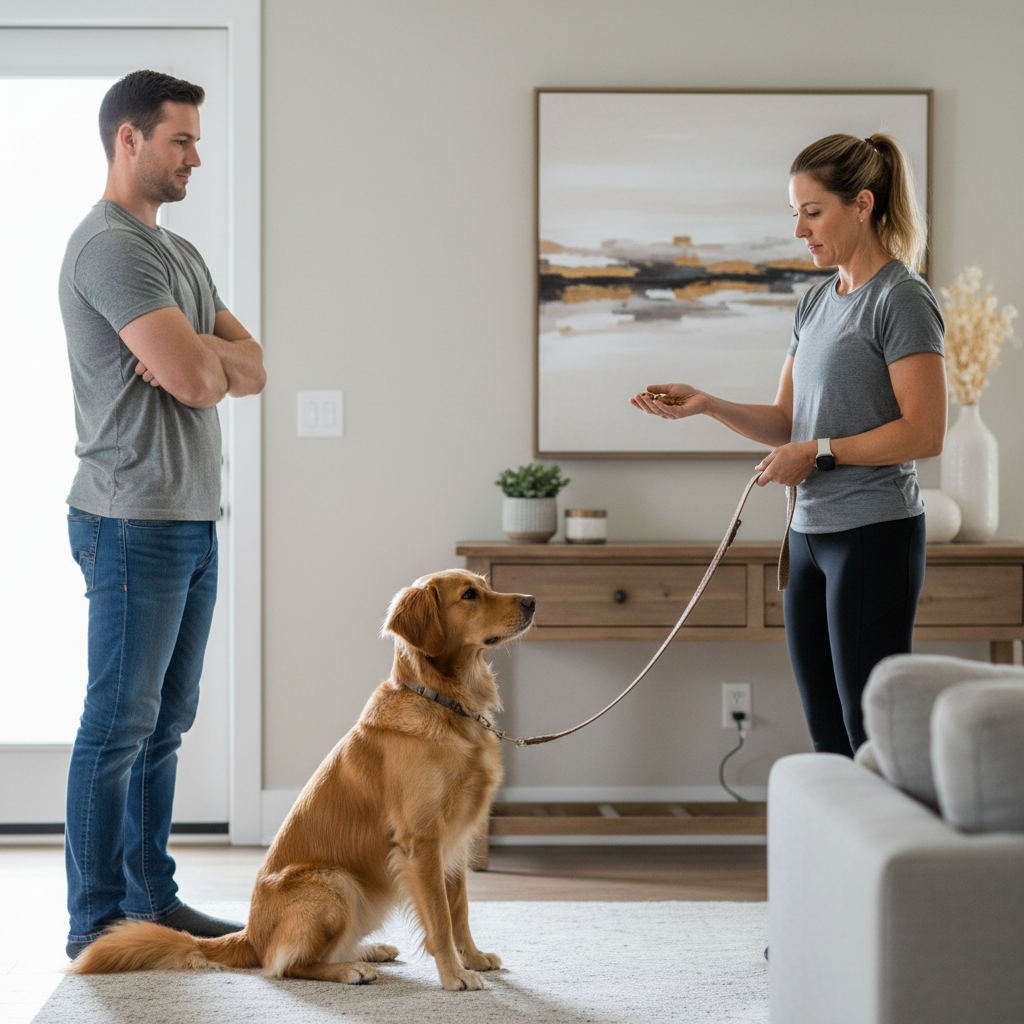
- Clip leash before anyone enters: Don’t wait until the dog is airborne.
- Stand on the leash: Leave just enough slack for the dog to stand or sit comfortably, not enough to jump up.
- Reward calm: Treat when paws are down, then let the guest greet briefly at the dog’s level.
- Keep greetings short: Two seconds of calm greeting beats ten seconds of chaos.
This approach is more “management-first,” and that’s fine. Many homes need management while training catches up.
A practical “what to do when someone walks in” script
People do better with a script than with a vague “don’t jump.” Put this on your fridge, text it to friends, say it out loud to guests.
- Before opening the door: leash on or dog behind a gate, treats ready.
- Guest instruction: “Please ignore him until he’s calm, then you can pet.”
- Dog instruction: cue “mat” or “sit” once, then reward.
- If jumping starts: guest turns away, you guide dog back to mat, reward the calm reset.
If you’re wondering how to stop dog from jumping on people in a busy household, this is often the turning point: everyone follows one routine, even when it feels a bit awkward for a week or two.
Common mistakes that quietly reinforce jumping
Most owners aren’t “failing,” they’re just paying the wrong moments. A few small tweaks change outcomes fast.
- Repeating the cue: “Sit, sit, sit” teaches your dog that the first two don’t matter.
- Rewarding after the jump: If the dog jumps, then sits, then gets petting, the jump becomes part of the sequence.
- Using hands to block: Many dogs interpret this as play and escalate.
- Guests hyping the dog up: High voices, fast hand movements, leaning in, it’s gasoline on a fire.
- Practicing only with real guests: Real guests are unpredictable, staged practice builds the skill faster.
According to the American Kennel Club (AKC), teaching an alternate behavior such as “sit” or “go to your place” and rewarding that behavior is a common, practical way to reduce jumping during greetings.
Troubleshooting by scenario (table)
Jumping shows up differently depending on context. Use this as a quick match-and-fix guide.
| Scenario | What’s probably happening | What to do this week |
|---|---|---|
| Dog jumps only at the door | Over-arousal + greeting habit | Go-to-mat practice daily, leash management for real visitors |
| Dog jumps on walks at strangers | Social seeking, impulse control gap | Increase distance, reward “four on the floor,” ask people not to pet until calm |
| Dog jumps more when you hold food/leash | Anticipation, learned routine | Pause and wait for calm, reward calm first, then pick up leash/food |
| Dog bowls over kids or elderly visitors | Excitement + poor body awareness | Use gates, tether or leash, structured greetings only, teach “place” |
| Dog jumps and mouths hands | Overstimulated, possibly under-exercised or under-enriched | Short training reps, calm enrichment, consider pro help if nipping escalates |
When to get professional help (and what kind)
Some jumping is just annoying, some becomes a safety problem. If your dog regularly knocks people down, targets children, or pairs jumping with nipping, it’s reasonable to get help sooner rather than later.
- Certified trainer: Look for a credentialed, reward-based professional who can coach timing and setups in your home.
- Veterinarian: If your dog’s arousal seems extreme, sudden, or out of character, a vet visit can rule out medical factors that might contribute.
- Veterinary behaviorist: If there’s aggression, intense anxiety, or repeated biting, this specialist can assess behavior and discuss a broader plan, which may include behavior modification and, in some cases, medication.
According to the American College of Veterinary Behaviorists (ACVB), board-certified veterinary behaviorists are trained to address complex behavior concerns and can work alongside your primary veterinarian and trainer.
Key takeaways you can use today
- Stop paying for jumping: attention (even scolding) can keep the behavior alive.
- Teach one clear alternate greeting: “place” or “four on the floor” usually beats a shaky “sit.”
- Manage while you train: leash, gate, and short rehearsals prevent backsliding.
- Make guests part of the plan: a simple script keeps greetings consistent.
If you want how to stop dog from jumping on people to stick, aim for boring consistency, not dramatic corrections. A calm routine feels slow at first, then suddenly your dog starts offering the right behavior without being asked.
FAQ
How long does it take to stop a dog from jumping on people?
It varies by dog and by household consistency. Many people see improvement in a couple weeks, but reliable door greetings often take longer because real-life triggers are intense and unpredictable.
Should I knee my dog in the chest or push them down?
Usually no. Besides potential injury risk, physical pushing often becomes attention or play, and it doesn’t teach what you want instead. A replacement behavior plus consistent follow-through tends to hold up better.
What if my dog jumps because guests encourage it?
That’s common. Use management tools such as a gate or leash, and give guests one simple instruction: ignore until calm. If someone won’t follow the rule, protect your training by limiting access during greetings.
Is “sit” enough to prevent jumping?
For some dogs, yes, especially if they can hold a sit under excitement. For high-arousal door greeters, “go to mat” often works better because it adds distance and structure.
How do I stop my dog from jumping on kids?
Assume management first: leash, gate, or separation during peak excitement. Then train calm greetings with adults before you try with kids, and keep kid greetings brief and structured for safety.
My dog jumps and licks or mouths hands, what should I do?
That can be overexcitement. Shorten greetings, reward calm earlier, and increase enrichment and training reps when the house is quiet. If mouthing escalates or breaks skin, consult a qualified professional.
How to stop dog from jumping on people when they come home from work?
Change the “arrival routine.” Walk in, pause, ask for “place” or reward four paws on the floor, then greet. If you greet first and train second, most dogs keep jumping because the exciting part stays upfront.
If you’re juggling a busy household, guests, or a strong dog, and you want a more predictable plan to stop jumping without turning greetings into a daily fight, consider working with a credentialed positive-reinforcement trainer who can tailor the setup to your doorway, your schedule, and your dog’s triggers.