
Dog life vest small breed shoppers usually want one thing, confidence that a tiny dog can stay afloat without feeling pinned down or tipping sideways.
If you’ve ever watched a small dog paddle hard, drift into deeper water, or get tired faster than expected, you already know why fit and buoyancy matter more here than with big dogs. A “cute” vest that rides up or twists can turn a fun day into a stressful one.
This guide breaks down what buoyant really means, what features actually help in real water, how to size a vest for small bodies, plus a quick comparison table to make shopping easier.
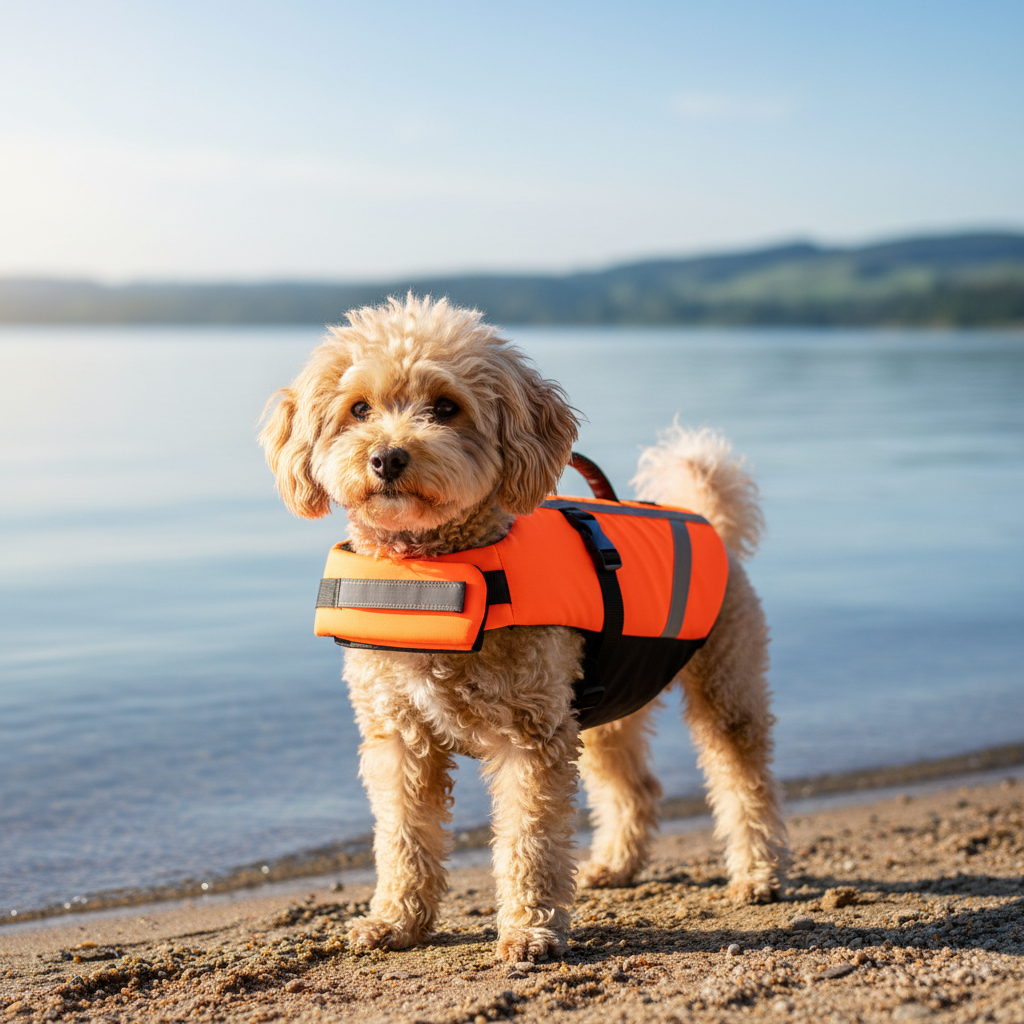
Why small breeds need “buoyant” (not just “floaty”)
Buoyancy sounds simple, but for small dogs it’s often the difference between stable floating and awkward rolling. Tiny frames have less mass and less natural stability in choppy water, and many also have shorter legs, so they work harder to keep their head up.
In practical terms, buoyant means the vest adds lift in the right places so your dog can keep a neutral, level position without constantly fighting the water.
- Chest lift: helps keep the head and neck above water, especially when a dog gets tired.
- Balanced side panels: reduces tipping and “barrel rolling” when paddling.
- Back support: improves stability when waves, wakes, or currents hit.
According to the American Veterinary Medical Association (AVMA), supervision is still essential around water, even for good swimmers. A vest helps, but it doesn’t replace close attention or safe access points in and out of the water.
Quick self-check: does your dog truly need a life vest?
Some small dogs swim surprisingly well, others panic fast. If you’re not sure where your dog lands, this quick checklist usually clears it up.
- Your dog is under about 25 lb, especially toy and small breeds with short legs
- They fatigue quickly after a minute or two of paddling
- They dislike water but might fall in on docks, boats, or paddleboards
- You’ll be in open water (lake, ocean) or near boat traffic and wake
- Your dog is senior, recovering, or has reduced stamina (ask a vet if you’re unsure)
If two or more apply, a dog life vest small breed fit is usually a sensible safety step, not overkill.

How to choose the right size (and avoid the common “rides up” problem)
Most sizing failures come from guessing weight only. Small dogs vary a lot in chest shape, and chest girth typically matters more than pounds on a scale.
Measure these 3 points
- Chest girth: widest part behind the front legs
- Neck circumference: where a collar naturally sits
- Back length: base of neck to base of tail (brand-specific, but helpful)
Fit signs you want
- Snug, not tight, you can slide two fingers under straps
- Front chest panel lies flat, no bunching under armpits
- When lifted by the top handle briefly, the vest stays aligned, not twisting
- Neck opening doesn’t push into the throat when the dog looks up
If the vest rides up toward the ears, it’s usually too loose in the chest or the neck opening is too large for that body shape. In many cases, sizing down and extending straps slightly works better than sizing up “for comfort.”
Features that matter for small-breed buoyancy (and what’s mostly marketing)
Small dogs benefit from a few very specific design choices. Beyond that, you’re often paying for styling.
Worth paying attention to
- High-visibility color + reflective trim: makes spotting easier in glare or waves.
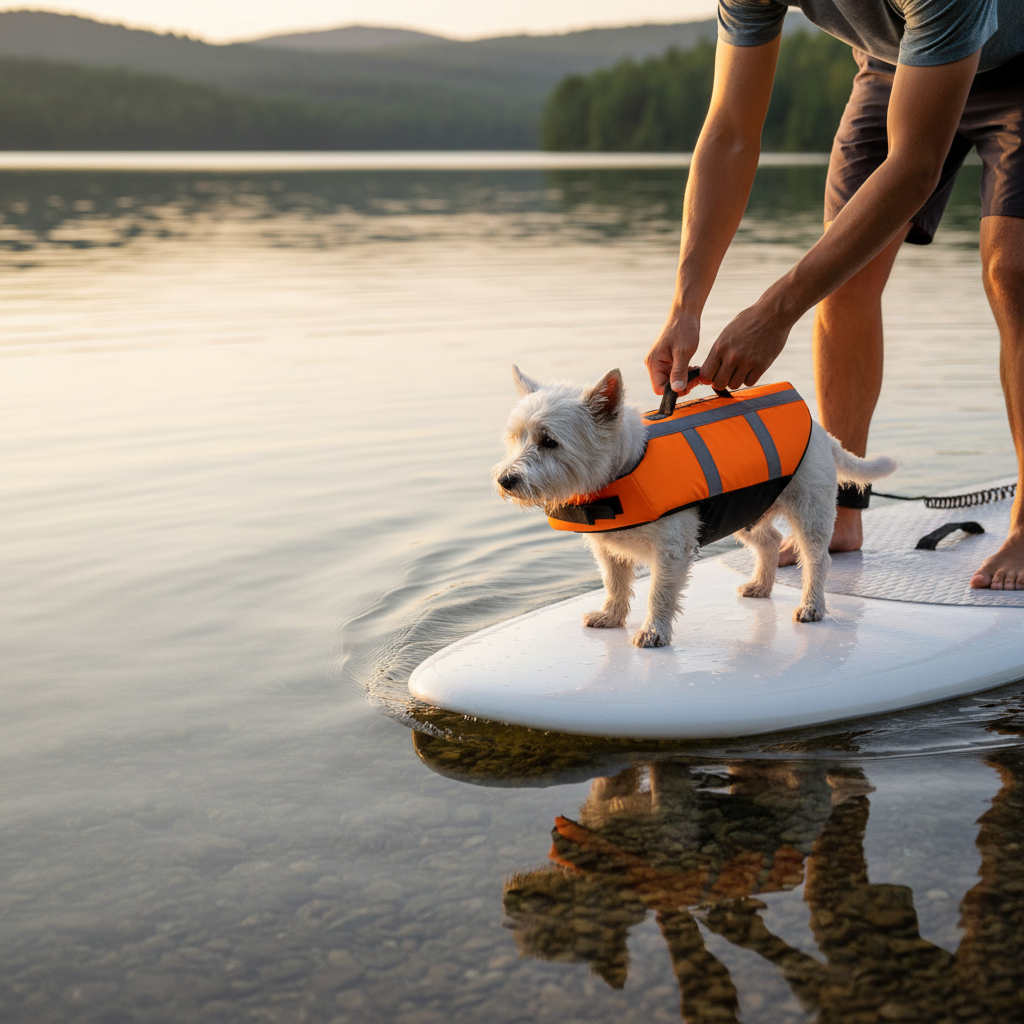
- Sturdy top handle: lets you assist at docks, pool edges, or onto a SUP without grabbing straps.
- Dual belly straps: spreads pressure and reduces shifting on narrow torsos.
- Chin float or front buoyancy panel: can help keep the nose up when a dog tires.
- Secure D-ring placement: some vests allow leash attachment for dock walking, but avoid towing in water.
Nice, but not essential
- “Shark fin” styling, costume shapes
- Extra pockets (often add drag and shift balance)
- Ultra-thick foam everywhere (can restrict shoulder movement)
A buoyant vest should support without making your dog paddle like they’re wearing a stiff backpack. If shoulder movement looks choppy on land, it usually feels worse in water.
Comparison table: what to prioritize by your water activity
Different water setups create different risks, and the “best” configuration changes with the day. Here’s a practical way to prioritize features.
| Activity | Top risks for small dogs | What to prioritize | What to de-prioritize |
|---|---|---|---|
| Pool (backyard) | Slipping in, exhaustion, hard-to-grab exits | Top handle, snug chest fit, easy-to-adjust straps | Heavy padding, pockets |
| Lake / calm water | Fatigue, drifting, surprise depth | Balanced buoyancy, bright color, reflective trim | Costume shapes that snag |
| Boat / dock | Falls, panic swimming, ladder re-entry | Strong handle, secure buckles, chest lift | Loose neck openings |
| Ocean / waves | Waves, currents, salt irritation | High visibility, stable side panels, quick-dry material | Anything that rubs under arms |
| Paddleboard / kayak | Sudden splashes, tipping, frequent lift-outs | Comfortable handle, low-bulk design, anti-shift straps | Oversized foam that limits movement |
How to introduce a life vest without creating stress
Many dogs dislike the first wear, especially small breeds that are used to harnesses with minimal bulk. The goal is to make the vest feel like normal “gear,” not a punishment.
- Start indoors, 2–5 minutes, treat and praise for calm body language
- Let your dog walk, sit, and do a few turns, watch for rubbing near armpits
- Move to shallow water where paws still touch, keep sessions short
- Practice gentle lifts with the handle for one second, then reward
If your dog freezes, pants, or tries to bite the vest, slow down. In some cases anxiety around water can be improved with a trainer who uses positive reinforcement, especially if a dog previously had a scary fall-in.
Safety tips and common mistakes (the stuff people regret later)
Most issues happen from small oversights rather than big hazards. A few checks prevent a lot of drama.
- Don’t rely on leash pulling in water: it can twist a vest and stress the neck, guide by the handle instead.
- Re-check fit when wet: straps can loosen slightly, especially on smooth-coated dogs.
- Watch for chafing: redness under arms or along the chest means adjust, add a thin rash-guard shirt, or switch models.
- Plan exits: pool steps, a ramp, a dock ladder, or a clear shore entry, small dogs tire fast when they can’t “finish.”
- Rinse after salt or chlorine: reduces skin irritation and helps materials last longer.
According to the Centers for Disease Control and Prevention (CDC), close supervision is a core part of drowning prevention around water. For pets, that translates to staying within reach, especially on boats and docks where falls can happen suddenly.
Key takeaways (the quick shopping filter)
- A dog life vest small breed option should prioritize balanced lift, not bulky foam everywhere.
- Measure chest girth and neck, don’t buy by weight alone.
- Choose a strong top handle and anti-shift straps for docks, boats, and paddleboards.
- Test fit dry, then re-check wet, rubbing and twist show up fast.
Conclusion: pick stability first, then comfort, then looks
If you’re choosing between two vests and one “feels more secure” in the chest and stays centered when your dog moves, that’s usually the better call, even if the other one looks cuter. Start with correct sizing, prioritize balanced buoyancy and a real handle, then build confidence with short, calm practice sessions.
If you want an easy next step, measure your dog today and shortlist 2–3 models that match chest girth and activity, then do a dry fit test before your first water day.
FAQ
What size life vest is best for a small breed dog?
Most brands size primarily by chest girth, with weight as a secondary check. If your dog is between sizes, the better choice often depends on chest shape, a snug chest fit that doesn’t rub under the arms tends to matter more than extra length.
How buoyant should a small dog life vest be?
You want enough lift to keep the head comfortably above water without forcing the dog into an unnatural angle. Too much foam can make paddling stiff, while too little can allow the nose to dip when the dog tires.
Is a handle on a dog life vest really necessary?
For small dogs, it’s one of the most useful features because you’ll often lift them onto a dock, into a boat, or back onto a paddleboard. A solid handle also gives you control without grabbing straps or collar areas.
Can my dog wear a life vest all day at the beach?
Many dogs can, but check for heat, rubbing, and wet-sand irritation, and give breaks. If your dog seems uncomfortable or develops redness, it’s worth shortening wear time and adjusting fit.
Should I attach a leash to the vest’s D-ring near water?
It can be fine for walking around a dock or shoreline, but it’s usually not ideal to use a leash to pull a dog through water. In water, the top handle is often the safer way to assist.
My small dog panics in water, will a life vest fix that?
A vest can add safety and confidence, but it doesn’t automatically remove fear. Gentle introductions and shallow-water practice help, and if panic is intense, a trainer or veterinary professional may be a better next step.
How do I know if the vest fit is wrong?
Common signs include riding up toward the ears, twisting sideways when your dog walks, rubbing under the armpits, or a neck opening that presses the throat when the dog looks up. Any of those usually means adjust straps or try a different size or cut.
If you’re shopping and feel stuck between two sizes or two styles, it often helps to choose the vest that stays centered and feels stable when you lift gently by the handle, and then fine-tune straps after a wet test in shallow water.