
Cat grass for indoor cats often helps with everyday digestive annoyances like hairballs, mild constipation, and that “I’m going to puke on the rug” look. It’s not magic, but for many indoor cats it’s a simple tool that supports normal gut movement and gives them a safe plant to nibble.
Indoor cats don’t have easy access to the variety of grasses outdoor cats may chew, and that matters because grooming plus dry indoor air can add up to more swallowed fur. People usually start searching for cat grass after a few hairball episodes, some random gagging, or when their cat keeps attacking houseplants.
This guide breaks down what cat grass is, why it can help digestive comfort, how to choose and serve it, and when “try grass” is not the right answer. I’ll also point out common mistakes that turn a helpful habit into a mess on your floor.
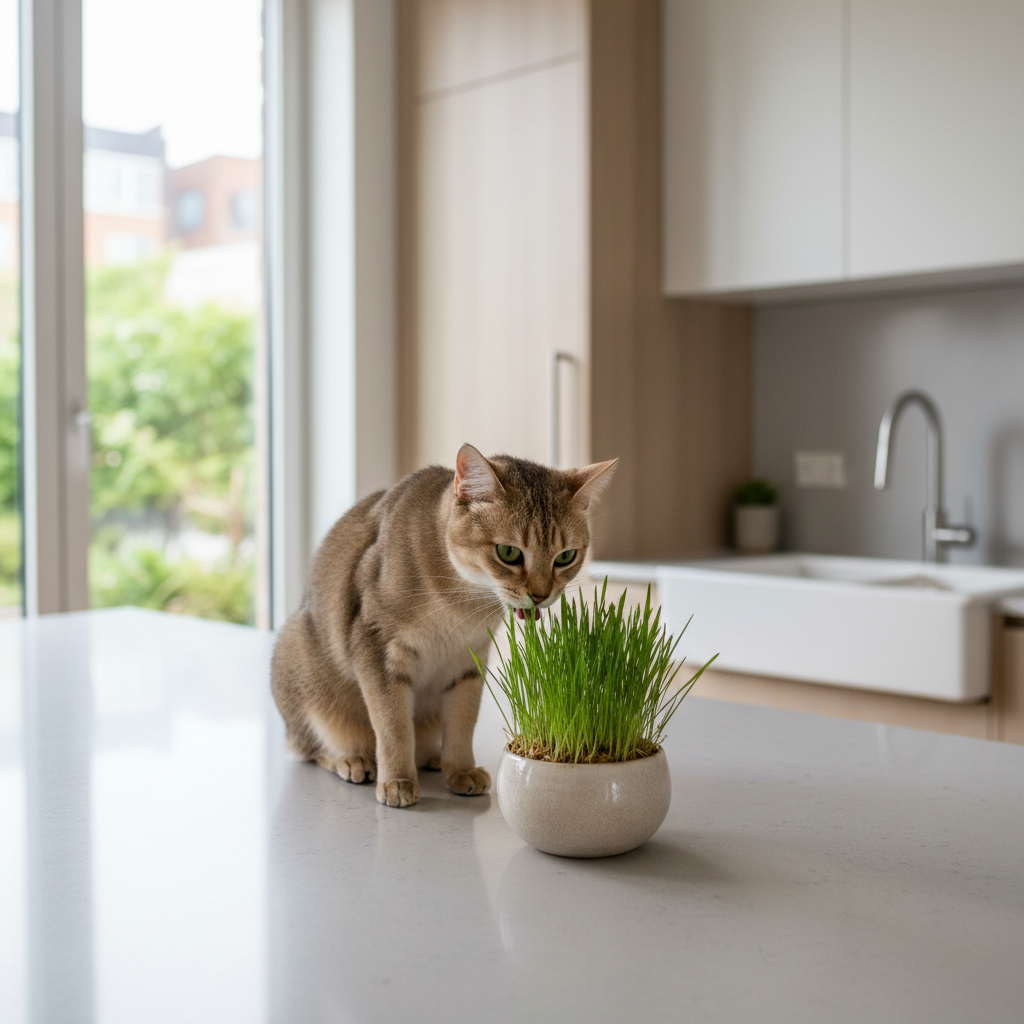
What “cat grass” actually is (and what it is not)
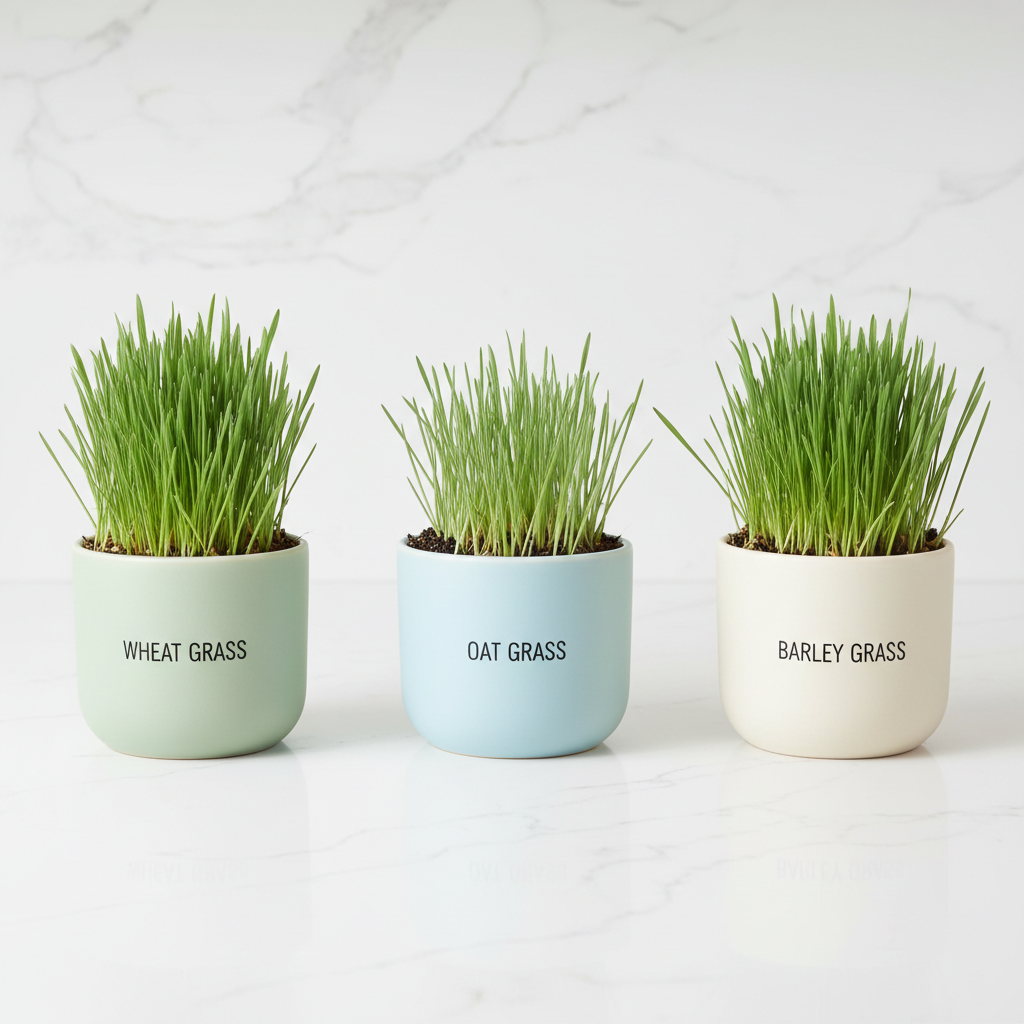
“Cat grass” is usually a mix of young cereal grasses, most commonly wheat grass, oat grass, barley grass, or rye grass. It’s grown to the tender sprout stage, so it stays easy to chew and less pokey than mature lawn grass.
It’s not catnip, and it won’t reliably make cats act silly. Catnip is an herb (Nepeta cataria) with aromatic oils that affect behavior, while cat grass is mostly about chewing and digestion support.
Also, cat grass is different from “letting your cat eat yard grass.” Outdoor lawn grass may carry fertilizer, herbicides, parasites, or sharp blades that irritate the throat. If you want a safer routine, a clean indoor pot is usually the better bet.
Why cat grass can support digestive health in indoor cats
Most cats chew grass for a reason, even if that reason looks weird to us. With cat grass for indoor cats, the goal is usually one of these outcomes, and the “right” outcome depends on the cat.
- Hairball management: Grass fiber may help move swallowed hair through the GI tract. Some cats also vomit after chewing, which can bring up hair and stomach contents. Neither response is automatically “good” or “bad,” it’s about frequency and comfort.
- Gentle fiber boost: A small amount of plant fiber can support regular stool in cats that tend to get a bit backed up, especially if they eat mostly dry food.
- Behavioral outlet: Plenty of indoor cats chew plants out of boredom or instinct. Offering a safe option reduces the chance they sample toxic houseplants.
- Hydration nudge: Fresh greens add tiny amounts of moisture. It won’t replace a water fountain, but it can help a little in dry environments.
According to the ASPCA Animal Poison Control Center... many common houseplants can be toxic to cats, so redirecting chewing behavior to a safe grass can be part of a practical home safety plan.
Quick self-check: is cat grass likely to help your cat?
Before you buy seeds or a pricey pre-grown tray, it helps to be honest about what you’re seeing at home. Use this as a quick sorting tool, not a diagnosis.
Cat grass is often worth trying when you see:
- Occasional hairballs (not daily, not worsening fast)
- Mild constipation signs: smaller stools, less frequent stools, straining without producing much
- Frequent plant-chewing or digging in planters
- Random gagging that seems tied to grooming (and your vet has not flagged bigger issues)
Skip the experiment and call a vet sooner if you see:
- Repeated vomiting, lethargy, hiding, or refusal to eat
- Blood in vomit or stool, or black/tarry stool
- Suspected string/foreign body ingestion (common with toys, ribbon, hair ties)
- Constipation that lasts more than a day or two, especially in older cats
According to the American Veterinary Medical Association (AVMA)... persistent vomiting or signs of illness warrant veterinary attention, because causes range from mild to urgent. If you feel unsure, that’s already a good reason to ask.
How to choose cat grass: seeds, trays, and store-bought pots
There’s no single best option, but there is usually a best fit for your home and your cat’s habits.
- Pre-grown cat grass (pet store or online): Convenient, quick results. Downside is shelf time, mold risk if overwatered, and you don’t always know how it was grown.
- Grow-your-own kits: A middle ground, usually cleaner and cheaper long-term than pre-grown. Good for people who want a predictable routine without hunting seeds.
- Bulk seeds + potting setup: Cheapest per batch, and easy to refresh weekly. Best if your cat demolishes grass fast.
Tip that saves headaches: Choose a wider, heavier pot or place the pot inside a heavier bowl. Many indoor cats treat cat grass like a wrestling opponent, not a salad.
Serving cat grass safely (portion, placement, and routine)
The biggest mistake people make is treating cat grass like “free unlimited greens.” Many cats do fine with that, but some overdo it and vomit more than you’d like.
A simple routine most households can follow
- Start small: Offer 5–10 minutes of access once daily, then adjust based on what happens over the next few days.
- Pick the right spot: Easy to supervise, easy to clean. Bathroom or kitchen works for a lot of homes.
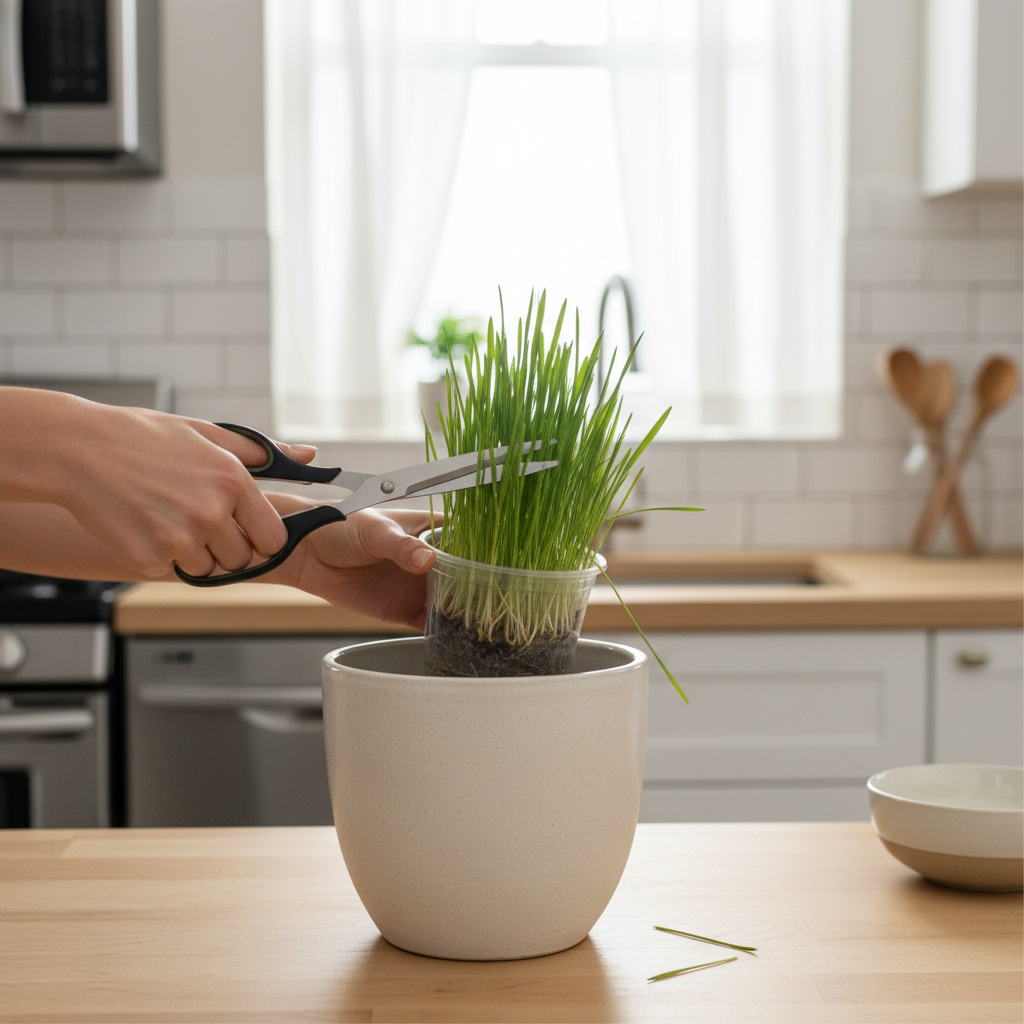
- Keep it clean: Rinse blades if they collect dust, and trim brown tips. Toss the whole pot if you see fuzzy mold.
- Rotate batches: A fresh pot every 1–2 weeks tends to stay softer and less irritating than older, tougher blades.
If your cat tends to scarf it down, you can switch to “supervised grazing” only, or place the pot up on a counter and bring it down like a scheduled snack.
Cat grass vs other digestive supports: what to try first
Cat grass is one tool. Sometimes it’s enough, sometimes it’s a small add-on while you fix the real driver, like low moisture intake or poor grooming tolerance.
| Option | What it may help with | Watch-outs |
|---|---|---|
| Cat grass | Chewing outlet, mild fiber support, some hairball relief | Overeating may trigger vomiting; mold if grown/kept too wet |
| Wet food increase | Hydration, softer stools, fewer constipation issues | Diet changes should be gradual; some cats need prescription diets |
| Regular brushing | Less swallowed hair, fewer hairballs | Some cats need slow desensitization to avoid stress |
| Hairball gel or paste | Lubrication for hair passage in some cats | Use per label; if frequent need, ask a vet to rule out issues |
| Vet-recommended fiber (e.g., psyllium) | Constipation support in select cases | Dosing matters; wrong use can worsen constipation or cause gas |
If your main goal is fewer hairballs, pairing cat grass for indoor cats with brushing usually beats either one alone. If the main problem is constipation, moisture and diet composition often matter more than greens.
Common mistakes and safety notes (the stuff that causes “cat grass didn’t work”)
Most “bad outcomes” come from setup issues, not the grass itself.
- Letting it get moldy: Cat grass likes moisture, mold likes it more. Use well-draining soil, avoid soggy trays, and replace early if it smells off.
- Assuming vomiting is always normal: Occasional vomit after chewing happens, but frequent vomiting should be treated as a symptom, not a lifestyle.
- Using unknown outdoor grass: Lawn treatments and parasites are real risks, and you usually can’t “see” the problem.
- Ignoring houseplant hazards: Cat grass helps redirect chewing, but you still want toxic plants out of reach. According to the ASPCA Animal Poison Control Center... lilies are especially dangerous for cats, so prevention matters more than “maybe they won’t eat it.”
- Overcorrecting diet too fast: If you add grass, switch foods, and start a hairball gel all in the same week, you won’t know what helped or what caused GI upset.
If your cat has a history of pancreatitis, inflammatory bowel disease, chronic constipation, or urinary issues, it’s smart to ask your veterinarian how greens fit into the bigger plan. The answer may be “sure,” but dose and timing can matter.
Practical step-by-step: a 7-day plan to see if it’s helping
This is the simplest way to test without turning your home into a science fair.
- Day 1–2: Offer supervised access once daily. Note stool, appetite, and any vomiting.
- Day 3–4: If no vomiting and stools look normal, keep the routine. If vomiting increases, reduce access time or switch to every other day.
- Day 5–7: Add one supportive habit: a short daily brush session, or a small shift toward wetter meals. Keep everything else the same.
Key point: Improvement often looks boring, fewer gagging episodes, easier litter box visits, less obsession with houseplants. If you’re seeing dramatic symptoms, that’s usually a different category of problem.
Key takeaways you can use today
- Cat grass for indoor cats can support digestion, but it’s mainly a gentle helper, not a cure.
- Choose clean, indoor-grown grass and replace it before it turns tough or moldy.
- If vomiting becomes frequent, or your cat seems unwell, pause the grass experiment and contact a veterinarian.
- For many homes, the best combo is grass + better hydration + regular brushing.
Conclusion: a small habit that can make indoor life easier
Cat grass won’t solve every hairball or stomach issue, but it often earns its spot in an indoor cat routine because it’s simple and low-drama when done right. Start with a small, supervised offering, keep the pot clean, and watch your cat’s pattern rather than chasing one-off events.
If you want one action step, set up a fresh pot and pair it with a week of quick brushing. If the gagging, vomiting, or constipation keeps showing up anyway, that’s your cue to bring those notes to your vet and get a more specific plan.
FAQ
How often should I give cat grass to an indoor cat?
Many cats do well with daily access, but a timed “snack window” works better for cats that overeat greens. If vomiting increases, reduce access or switch to every other day.
Does cat grass help with hairballs or does it just make cats vomit?
Both can happen. Some cats pass hair more smoothly with a little extra fiber, others vomit after chewing and bring up hair that way. If vomiting becomes frequent or your cat seems uncomfortable, it’s worth checking in with a veterinarian.
Is wheat grass safe for cats?
Wheat grass is one of the most common cat grass options and is generally considered safe when grown cleanly indoors. The bigger risks tend to come from moldy pots, pesticides, or sharp mature blades.
My cat eats cat grass and then has diarrhea, what should I do?
Stop offering it for now and return to your cat’s normal routine. Mild GI upset can happen from overeating or a sensitive stomach, but ongoing diarrhea should be discussed with a vet, especially if your cat seems tired or stops eating.
Can kittens have cat grass?
Usually yes in small, supervised amounts, but kittens are more likely to nibble impulsively. If your kitten tends to swallow without chewing, keep sessions short and monitor for vomiting.
What’s the difference between cat grass and catnip for digestion?
Cat grass is mainly about chewing and fiber, while catnip is about behavioral stimulation for many cats. Catnip doesn’t consistently support digestion, and some cats ignore it entirely.
Can cat grass replace a hairball remedy or a vet visit?
It can be a helpful routine add-on, but it’s not a substitute when symptoms are frequent, worsening, or paired with appetite changes. Chronic hairballs can sometimes signal grooming problems, diet issues, or GI disease that needs professional input.
If you’re trying to make cat grass for indoor cats part of a calmer, cleaner routine, it can help to pick a setup that’s stable, easy to refresh, and matched to your cat’s habits, especially if you’re juggling hairballs, plant-chewing, and a sensitive stomach at the same time.