
Cat treat dispenser toy options can be a game-changer for bored indoor cats, but only if you pick the right style and set it up in a way your cat actually understands. The common pain point is simple: you buy one, your cat ignores it, or they figure it out in 30 seconds and yell for more.
This guide is here for the real-life version, how these toys fit into feeding, behavior, and daily routines, plus what to watch for so “interactive” doesn’t turn into “frustrating.” You’ll get a quick way to match toy type to cat personality, a short training plan, and safety notes that matter more than the marketing copy.
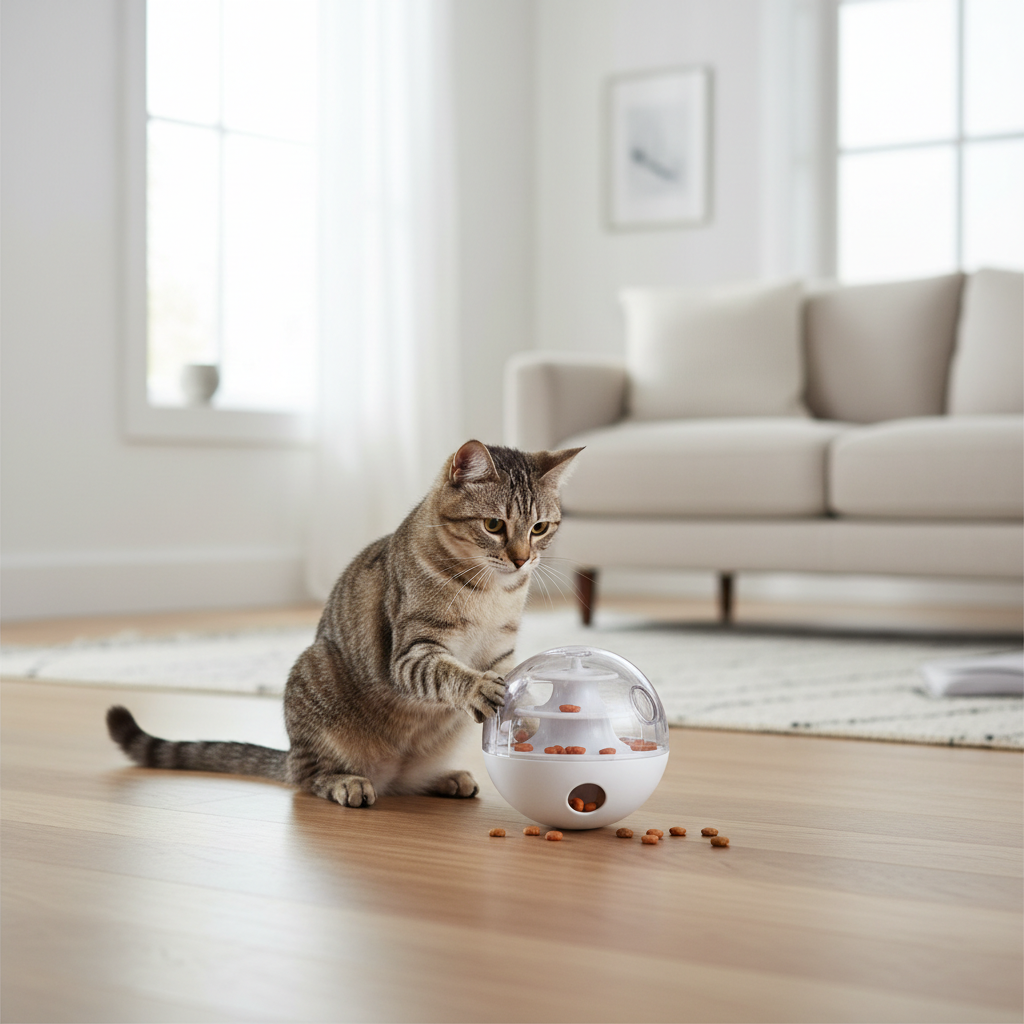
One quick misconception to clear up: treat toys are not just “cute entertainment.” Many households use them as a small piece of enrichment, a way to slow down fast eaters, and a tool to redirect energy that would otherwise land on your couch corners at 2 a.m.
Why cats love treat-dispensing toys (and why some don’t)
The appeal is hunting behavior in a living-room-friendly format: sniff, paw, chase, get a reward. When it clicks, a cat treat dispenser toy can make a short alone-at-home window feel less empty, and it can turn treats into an activity instead of a handout.
But some cats walk away, and it’s not “your cat is lazy.” Usually it’s one of these:
- Reward mismatch: the treat smell isn’t strong enough, or the piece is too big to release reliably.
- Difficulty jump: the toy demands too much problem-solving right away.
- Noise or movement sensitivity: certain cats dislike rattling plastic or sudden rolling.
- Motivation timing: if you offer it right after a full meal, there’s no reason to work.
According to the American Veterinary Medical Association (AVMA), enrichment supports animal welfare by encouraging species-typical behaviors. Treat puzzles can be one small part of that, as long as the experience stays positive and safe.
Types of cat treat dispenser toy designs (and what they’re best for)
Most products fall into a few patterns. Picking the right one is less about “best overall” and more about matching your cat’s style.
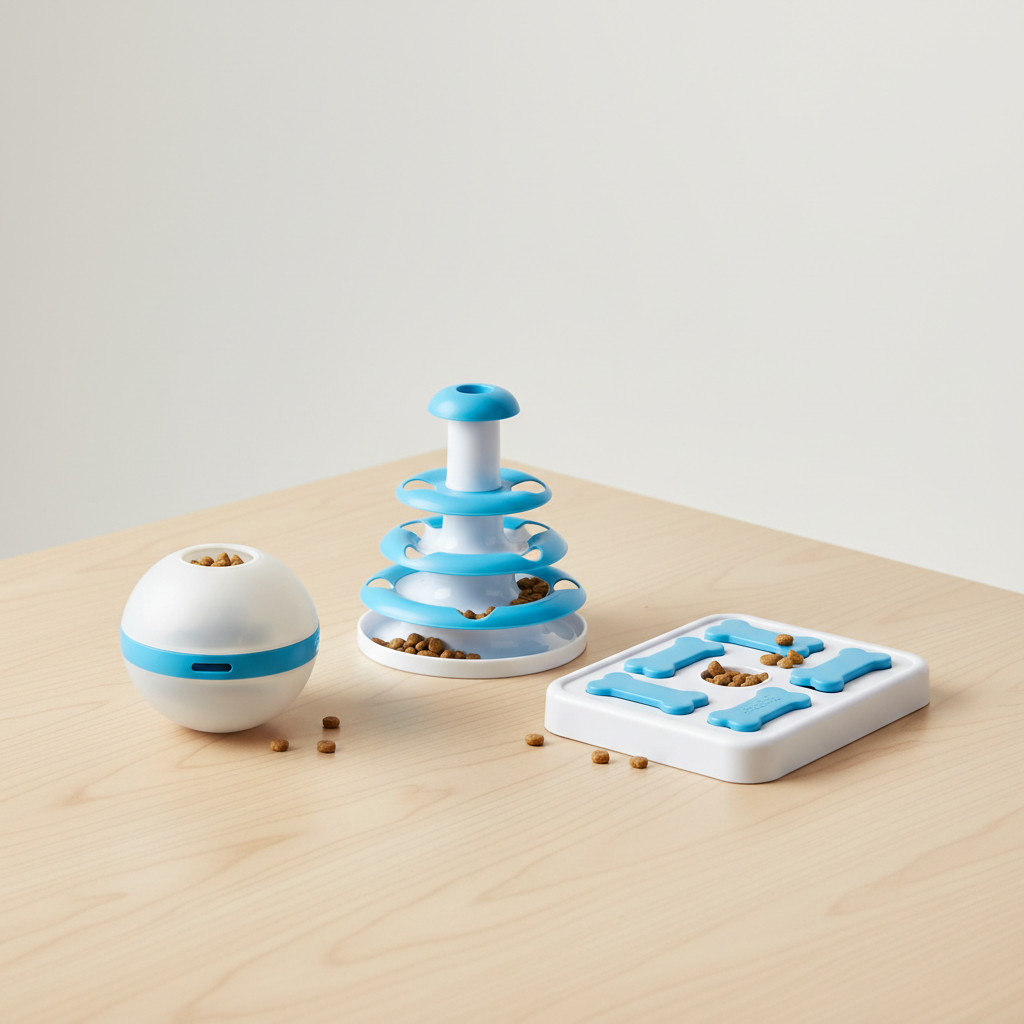
- Rolling treat balls: great for cats who like to chase, not ideal for cats spooked by noise or for homes with lots of stairs.
- Stationary puzzle boards: better for “thinkers” and senior cats, easier to control mess.
- Tower/maze dispensers: good middle ground, usually slower dispensing with less runaway rolling.
- Soft treat pouches and snuffle-style mats: quieter, strong on sniffing behavior, but need regular cleaning.
If your cat tends to bat small toys under the couch and cry about it, a stationary puzzle often saves your sanity.
Quick self-check: which toy fits your cat and your home?
Use this as a fast filter before you buy a second toy “just to see.”
- Your cat gives up fast → start with a simpler puzzle board or a dispenser with a wide opening.
- Your cat is food-obsessed and scarfs meals → consider a slow-release design and smaller treat pieces.
- You live in an apartment with downstairs neighbors → avoid loud rolling plastic, look for rubberized or stationary options.
- Multiple cats → plan on more than one unit to reduce guarding and stress.
Choosing the right treats (release reliability matters)
This is where many setups fail. A cat treat dispenser toy can look perfect, but if treats don’t drop consistently, your cat learns “this thing lies.” Keep it boring at first: small, dry, uniform pieces.
Practical guidelines that usually help:
- Size: choose pieces that can pass through the opening without wedging, you want a predictable payout.
- Smell: stronger aroma often boosts engagement, but avoid overly crumbly treats that gum up the mechanism.
- Calories: treats add up quickly, especially if the toy becomes a daily habit, consider using a portion of kibble as the “treat.”
According to the Association for Pet Obesity Prevention (APOP), many pets in the US struggle with excess weight, and treats can be a contributing factor. If weight is already a concern, it’s smart to ask your veterinarian how to adjust daily calories before you increase treat-based play.
How to introduce it so your cat doesn’t ignore it
Most cats need a short “win streak” before they commit. You’re building the idea that interaction leads to food, with minimal frustration.
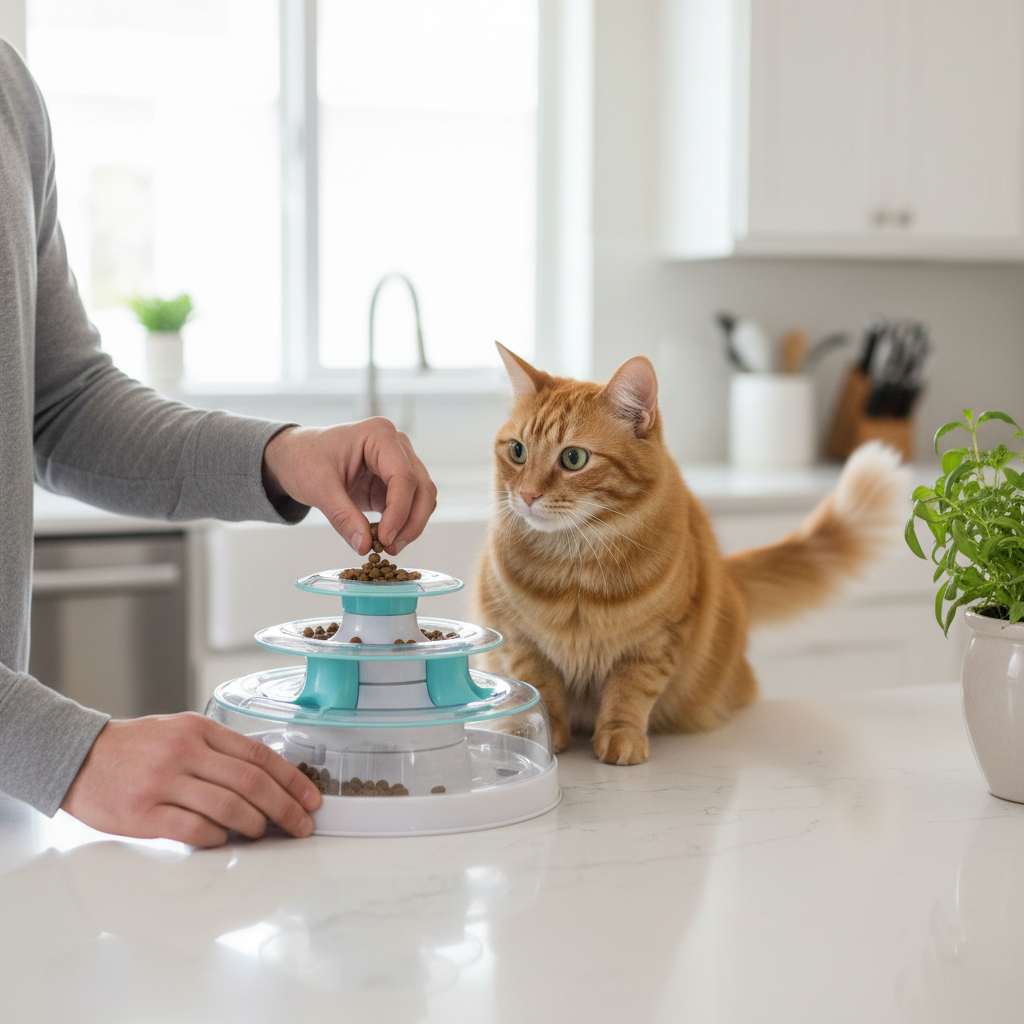
Beginner setup (5–10 minutes)
- Start easy: set the opening to the easiest level, or partially “pre-load” treats so the first few fall out with a gentle nudge.
- Place it on the right surface: a rug can slow rolling toys, a smooth floor can make them too wild, adjust based on your cat’s confidence.
- Show, don’t lecture: tap the toy once so one treat drops, then step back.
- Stop early: end while your cat still wants more, it keeps motivation high next time.
Leveling up without creating frustration
- Only increase difficulty after your cat clears the current level comfortably for a few sessions.
- If your cat starts biting the toy or walking away, drop difficulty back down for a day or two.
- Rotate the toy location occasionally, but keep the first week consistent so learning sticks.
Practical routines: when and how often to use it
The most sustainable use is small and predictable. Think of it as a “mini hunt” rather than a constant snack machine.
- Morning energy spike: swap part of breakfast kibble into the dispenser for a calmer start.
- Pre-work call: offer the toy right before you sit down, it can reduce attention-seeking interruptions.
- Evening play arc: do a short wand-toy session first, then let the puzzle end the cycle with a food reward.
Key point: if the toy becomes the only way your cat gets treats, some cats develop “demand behavior” and nag. Keeping it on a routine, not random all day, usually helps.
Comparison table: which style fits common scenarios?
Use this as a quick decision map, not a rulebook.
| Home/Cat Situation | Better Toy Style | Why it tends to work |
|---|---|---|
| Shy or noise-sensitive cat | Stationary puzzle board or snuffle-style | Lower sound, less sudden motion |
| High-energy “chaser” | Rolling treat ball | Movement creates engagement fast |
| Senior cat, stiff joints possible | Low-profile puzzle board | Less bending and chasing |
| Fast eater | Slow-release tower/maze | Encourages pacing and paw work |
| Multi-cat household | Multiple identical puzzles | Reduces guarding and conflict risk |
Safety, cleaning, and common mistakes to avoid
Interactive feeders are generally low-risk, but the details matter. If you notice gum irritation, vomiting, sudden aggression around the toy, or obsessive behavior, it’s worth pausing and asking a veterinarian or a qualified behavior professional for guidance.
- Choking risk: avoid treats that splinter or swell, and don’t use pieces larger than the toy’s intended openings.
- Plastic damage: if your cat chews hard, inspect for sharp edges and retire cracked toys.
- Overfeeding drift: measure treats like you would food, “a few extra” stacks up fast.
- Dirty buildup: wash per the manufacturer instructions, oils and crumbs can cause jams and odors.
- Frustration spiral: the toy should feel winnable, if it becomes a daily fight, simplify.
According to the American Association of Feline Practitioners (AAFP), cats benefit from predictable routines and low-stress handling. In practice, that means a treat toy should support calm engagement, not escalate anxiety.
Key takeaways before you buy (or try again)
- Match the toy to your cat, not to the product photos.
- Start with easy wins, then increase difficulty slowly.
- Use consistent, small treats or measured kibble for reliable dispensing.
- Keep an eye on calories and on frustration signals, both matter.
If you want one next step that tends to work, set up a beginner-friendly session using part of a meal, then stop while your cat still looks interested. That single change often flips “ignored toy” into a routine your cat expects.
FAQ
How do I get my cat to use a cat treat dispenser toy?
Make the first sessions extremely easy, so treats drop with minimal effort, and use a higher-smell, small treat. If your cat walks away, try again before a meal when motivation is higher.
Are treat dispenser toys good for cats that overeat?
They can be, because they slow the pace and add effort, but the calories still count. Many owners do better using measured kibble in the toy and keeping treats as a small bonus.
What treats work best in interactive dispenser toys?
Dry, uniform pieces that don’t crumble tend to dispense more reliably. If the toy jams often, it’s usually the treat size or shape, not your cat “doing it wrong.”
Can I leave an interactive treat toy out all day?
Some cats handle it fine, but others start fixating or pestering you to refill it. If demand behavior ramps up, put it away between short sessions and keep a simple routine.
Is a cat treat dispenser toy safe for kittens?
Often yes with supervision, but choose a design without small breakable parts, and keep difficulty low. If you’re unsure about treat size or choking risk, ask your vet for kitten-safe guidance.
What if my cat gets frustrated and starts biting the toy?
That’s usually a signal the challenge is too hard or the reward is inconsistent. Lower the difficulty, switch to better-dispensing treats, and end sessions earlier so your cat leaves on a win.
Do these toys help with nighttime zoomies?
They can help as part of an evening routine, especially if you do active play first and use the puzzle as a calm “cool down.” If nighttime hyperactivity is intense or sudden, it may be worth checking in with a veterinarian.
If you’re trying to reduce boredom scratching or mealtime chaos, an interactive treat toy can be a simple upgrade, but it works best when it matches your cat’s temperament and your household rhythm, choose one style, run a one-week easy intro, and adjust based on what your cat actually does.