
Automatic cat feeder dry food timers can be a lifesaver, until the bowl stays empty, the portions come out wrong, or your cat learns to camp the dispenser like it’s a slot machine. This guide breaks down what actually matters, what problems are normal, and how to set up a timed routine that stays consistent.
If you’re using a feeder for workdays, early mornings, weight management, or multi-cat peacekeeping, the small details add up: kibble shape, portion style, power backup, bowl design, and how the schedule interacts with your cat’s behavior.
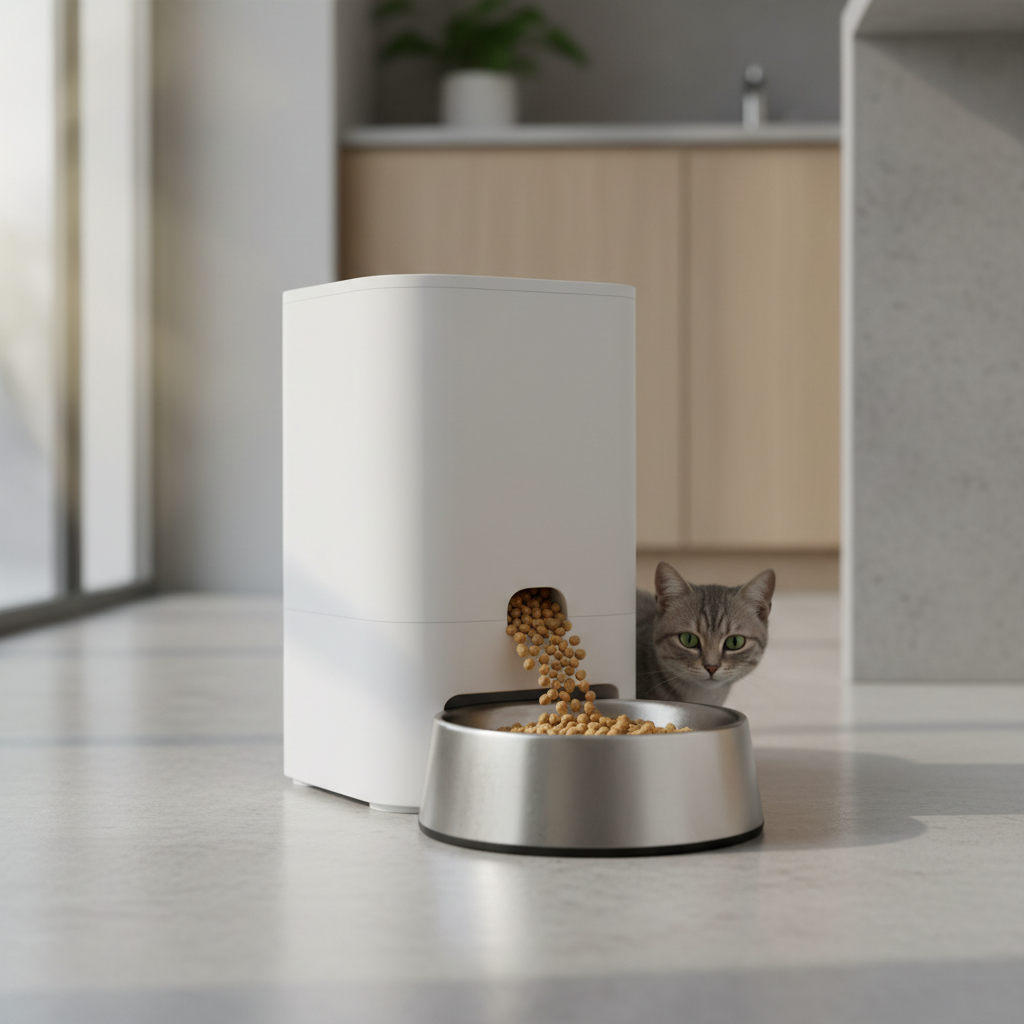
One quick promise before we start: there isn’t a single “best” feeder for every home. But you can usually narrow it down fast if you know your constraints, your cat’s habits, and the two or three failure points that cause most complaints.
What a timed feeder can (and can’t) solve
A timed feeder is great when you need predictable delivery, not necessarily when you need perfect nutrition decisions. It handles the “when” very well, and handles the “how much” reasonably well, as long as the portion system matches your kibble and your expectations.
- Works well for: early breakfast without you waking up, consistent lunch while you’re out, splitting daily food into smaller meals, reducing begging tied to your presence.
- Less ideal for: cats who must eat prescription diets and are prone to stealing, very humid environments that soften kibble, households where a feeder can be knocked over easily.
According to the American Veterinary Medical Association (AVMA), healthy weight management often involves portion control and regular monitoring, so a feeder can support consistency, but it still helps to check body condition and adjust with your veterinarian if weight is drifting.
Why automatic dry food feeders miss schedules or portions
Most “it didn’t dispense” stories come from a few predictable categories, and it’s not always a defective unit. The tricky part is that these issues can look the same in the bowl.
Common causes in real homes
- Kibble jams: irregular shapes, very large kibble, oily coating, or crumbs that build up in the chute.
- Portion mismatch: many feeders measure by volume, not calories, so “1 portion” varies a lot by kibble brand and size.
- Power and clock drift: weak batteries, loose adapters, or a clock reset after an outage.
- Cat behavior: some cats paw the bowl, head-butt the feeder, or wait under the chute, causing bounce-outs or tipping.
- Humidity: kibble may clump slightly, especially if the hopper isn’t well sealed or you’re near a dishwasher/washer.
If your automatic cat feeder dry food setup is “almost right,” these are usually the levers worth pulling before you replace the device.
A quick self-check: what kind of feeder problem do you have?
Use this as a fast triage. You don’t need tools yet, just a clear look at patterns.
- Problem A: Nothing dispenses, but the feeder “acts like it did.” Usually a jam, a motor stall, or a portion too small to notice.
- Problem B: Dispenses, but at the wrong time. Usually clock/time zone, app sync, DST change, or power reset.
- Problem C: Portion sizes vary meal to meal. Usually kibble size inconsistency, low hopper level, or a worn/dirty dispensing wheel.
- Problem D: Cat overeats anyway. Usually multi-cat theft, grazing behavior, or treats/extra calories elsewhere.
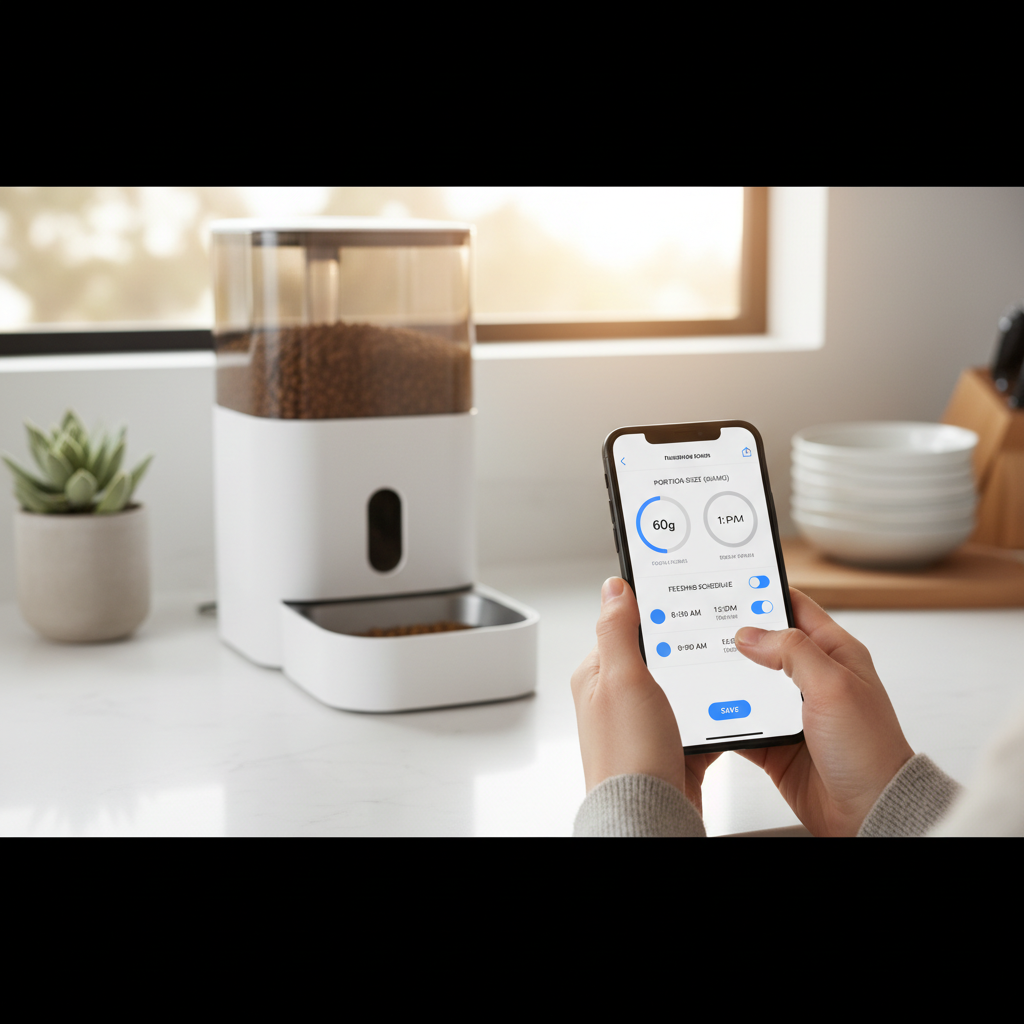
Once you know which bucket you’re in, the fix tends to be straightforward. The mistake is treating every issue as “the feeder is broken,” then repeating the same setup that caused the problem.
Choosing the right timed feeder: a practical comparison table
Spec sheets can blur together. Here’s the short version of what matters most in a timed unit, especially if you’re buying for reliability rather than gimmicks.
| Feature | Why it matters | Best for | Watch-outs |
|---|---|---|---|
| Portion method (auger vs. rotating wheel) | Controls jam risk and consistency | Medium kibble, routine feeding | Very large kibble can stall some designs |
| Hopper seal + desiccant slot | Reduces staleness and clumping | Humid homes, bulk kibble storage | Seal wear over time, needs cleaning |
| Battery backup | Prevents schedule loss in outages | Storm-prone areas, travel days | Some units keep time but won’t dispense on battery |
| Anti-tip design / locking lid | Stops “smart cats” from breaking in | Food-motivated cats, multi-pet homes | Still may need wall placement or mat |
| Manual button feed + logs | Easy testing and accountability | Dialing in portions, shared caregiving | Logs depend on app connectivity |
If your priority is just “timed meals that actually happen,” put your money toward jam resistance, power stability, and a lid your cat can’t defeat. Cameras and voice recording are nice, but they don’t fix dispensing reliability.
Setup that actually works: step-by-step for timed dry food feeding
This is the part most people rush, then spend weeks tweaking. Give yourself one calm evening and treat it like setting up a coffee maker you’ll rely on daily.
1) Calibrate portions using your kibble, not the manual
- Pick one bowl and keep it consistent.
- Run 5–10 test dispenses at the same “portion” setting.
- Measure the output with a kitchen scale, then average it.
- Translate into your cat’s daily plan, and adjust slowly if weight changes.
According to the U.S. Food & Drug Administration (FDA), pet food labels provide feeding directions, but individual needs vary. In practice, the feeder’s portion unit is just a starting point, your cat’s body condition and your vet’s guidance carry more weight.
2) Schedule around behavior, not your ideal timeline
- If your cat wakes you at 5 a.m., try a small pre-dawn meal and a normal breakfast later.
- If scarf-and-barf happens, split into 3–5 smaller meals.
- If you have two cats, consider separate feeding zones or microchip solutions if food theft is constant.
3) Place the feeder to reduce mess and tampering
- Back it near a wall so it can’t be pushed easily.
- Use a low-lip mat to catch bounce-out kibble.
- Avoid right next to steam sources or damp basements.
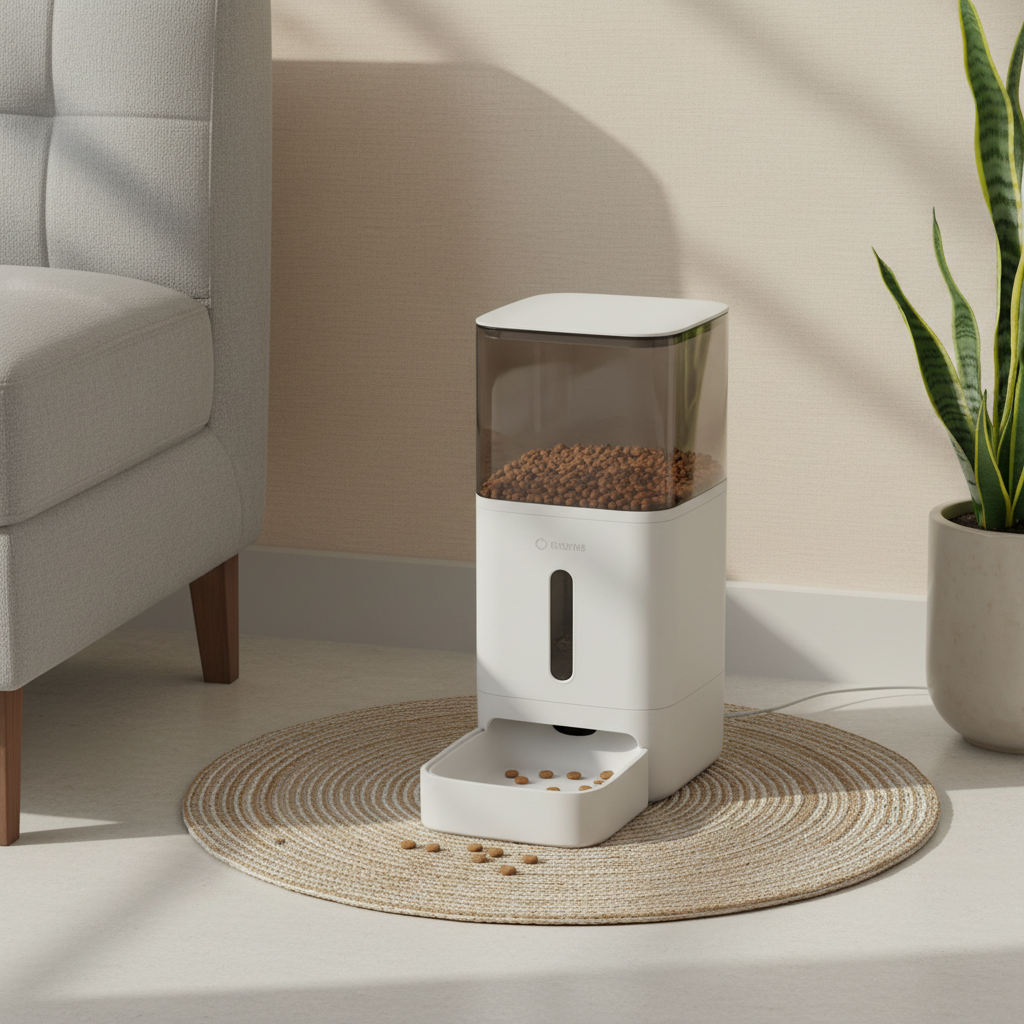
If you’re using an automatic cat feeder dry food schedule for the first time, expect a short adjustment period. Many cats need a few days to stop associating you with the food event, and that’s normal.
Maintenance and troubleshooting: keep it reliable
Timed feeders fail quietly. A tiny crumb in the wrong place can become a “missed meal” story, so the best approach is light maintenance on a repeatable rhythm.
Weekly quick care (10 minutes)
- Wipe the bowl and the chute area where dust collects.
- Check the hopper level, very low levels can change how consistently some units dispense.
- Test one manual dispense and watch for slow turning or odd sounds.
Monthly deeper clean (or sooner if oily kibble)
- Empty remaining kibble, then vacuum or brush crumbs from the hopper.
- Clean removable parts per manufacturer guidance, fully dry before refilling.
- Replace desiccant packs if your model uses them.
If it stops dispensing
- Power-cycle, then re-check time settings.
- Try a different kibble size as a test, some formulas jam more.
- Run a few small portions, a large portion can jam a partially blocked chute.
- Confirm the lid is seated correctly, some units won’t run if the sensor thinks it’s open.
Safety, health, and household edge cases
Most cats do fine with timed dry feeding, but there are a few situations where you should be more cautious and possibly ask a professional.
- Diabetes, kidney disease, or prescription diets: meal timing and diet type may need tighter planning, talk with your veterinarian before big changes.
- Fast eaters: consider smaller, more frequent portions, or a slow-feed bowl attachment if compatible.
- Multi-cat homes: a timed device can accidentally feed the “wrong cat,” especially if one cat guards the bowl.
- Travel: even with an automatic cat feeder dry food unit, it’s smart to have a backup plan, a pet sitter check-in, or at least a camera, because mechanical things can jam.
According to the American Animal Hospital Association (AAHA), regular veterinary checkups help catch weight and health changes early, which matters if you’re leaning on automated feeding for routine control.
Key takeaways (so you can decide fast)
- Reliability usually comes from jam resistance + stable power, not extra features.
- Calibrate portions with a scale, because “portion” is not a calorie unit.
- Schedule for your cat’s behavior, then refine over 1–2 weeks.
- Light maintenance prevents missed meals, especially if kibble is dusty or oily.
Conclusion: a timed feeder should reduce stress, not add new chores
A timed feeder earns its keep when it runs quietly in the background and your cat stops negotiating every meal. Start by choosing a design that matches your kibble and your household, then do one careful calibration session, that’s the step most people skip.
If you want the simplest next move, pick one meal to automate first, verify consistency for a week, then expand the schedule once you trust the setup.
FAQ
What’s the best way to set portions on a timed dry food feeder?
Use a kitchen scale and average several test dispenses. Many feeders dispense by volume, so the same setting can mean different calories across kibble brands.
Why does my feeder dispense sometimes but not others?
Intermittent issues often point to partial jams, low hopper level, or a power/clock reset. Watching one manual test dispense can tell you more than the app notification.
Can an automatic feeder help my cat lose weight?
It can support consistency by preventing extra scoops and “just a little more,” but weight loss still depends on total calories and the cat’s health status. A vet check is smart if weight changes are significant or rapid.
Is dry food okay to leave in the hopper for weeks?
Many people do, but freshness depends on seal quality, humidity, and kibble formulation. If the food smells stale or looks oily, shorter refill cycles and cleaning tend to help.
What if my cat tips the feeder over or breaks into it?
Look for locking lids, wider bases, and placement against a wall on a grippy mat. In persistent cases, physical barriers or a heavier platform may be needed.
How do I prevent ants around an automatic feeder?
Keep the area crumb-free, use a feeding mat you can wipe, and avoid placing it near doors or windows where pests enter. If ants persist, it may help to consult local pest control guidance.
Do I need Wi‑Fi for a timed automatic feeder?
Not always. Basic timers work offline, while app models may need Wi‑Fi for remote changes and logs. If your main goal is “feeds on time,” offline reliability can be a plus.
If you’re trying to pick an automatic cat feeder dry food model that fits your exact routine, multi-cat reality, and kibble type, it may help to make a short checklist first, then compare only the few devices that meet it, it saves money and avoids the return-carousel.